

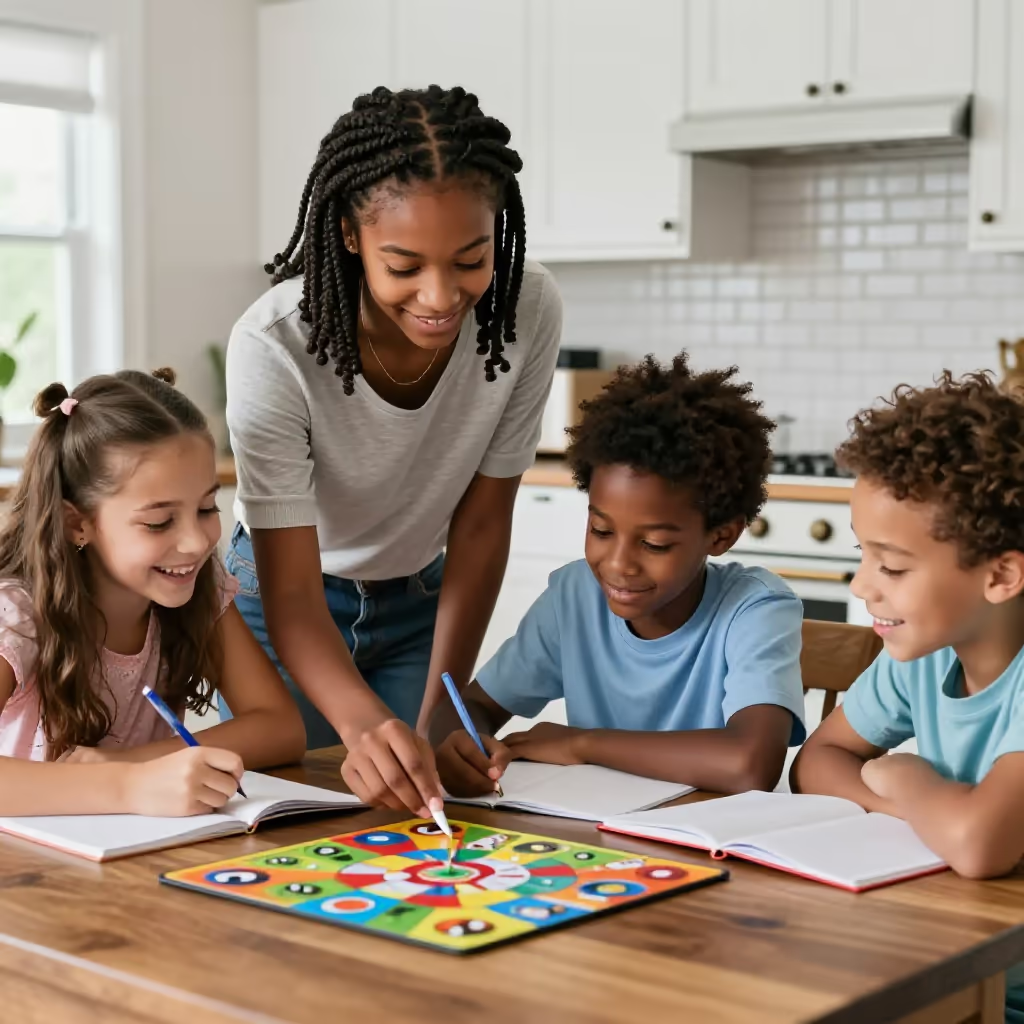
Geschwister
siblings
A person's brothers and sisters taken together.
EXAMPLE
Ich habe zwei Geschwister, einen älteren Bruder und eine jüngere Schwester.
I have two siblings, an older brother and a younger sister.
siblings
Loading your saved state.
siblings
A person's brothers and sisters taken together.
Ich habe zwei Geschwister, einen älteren Bruder und eine jüngere Schwester.
I have two siblings, an older brother and a younger sister.
As with other words with the prefix 'Ge-' (e.g., Gebirge, Gepäck), 'Geschwister' (siblings) is a collective term. It groups together 'Schwestern' (sisters; historically used for all close relatives).
Meine Geschwister und ich verstehen uns sehr gut.
My siblings and I get along very well.
'Geschwister' (siblings) is a plural form that stands for brothers and sisters together. However, the word can also be used for a single person when you do not know the gender or it does not matter.
Hast du Geschwister? – Ja, eine Schwester.
Do you have siblings? – Yes, a sister.
The typical question is: 'Hast du Geschwister?' (Do you have siblings?). To state the number, you say, for example, 'Ich habe zwei Geschwister.' (I have two siblings.) or 'Wir sind drei Geschwister.' (There are three of us siblings.). The second phrasing includes the speaker in the count.
Wie viele Geschwister hast du?
How many siblings do you have?