

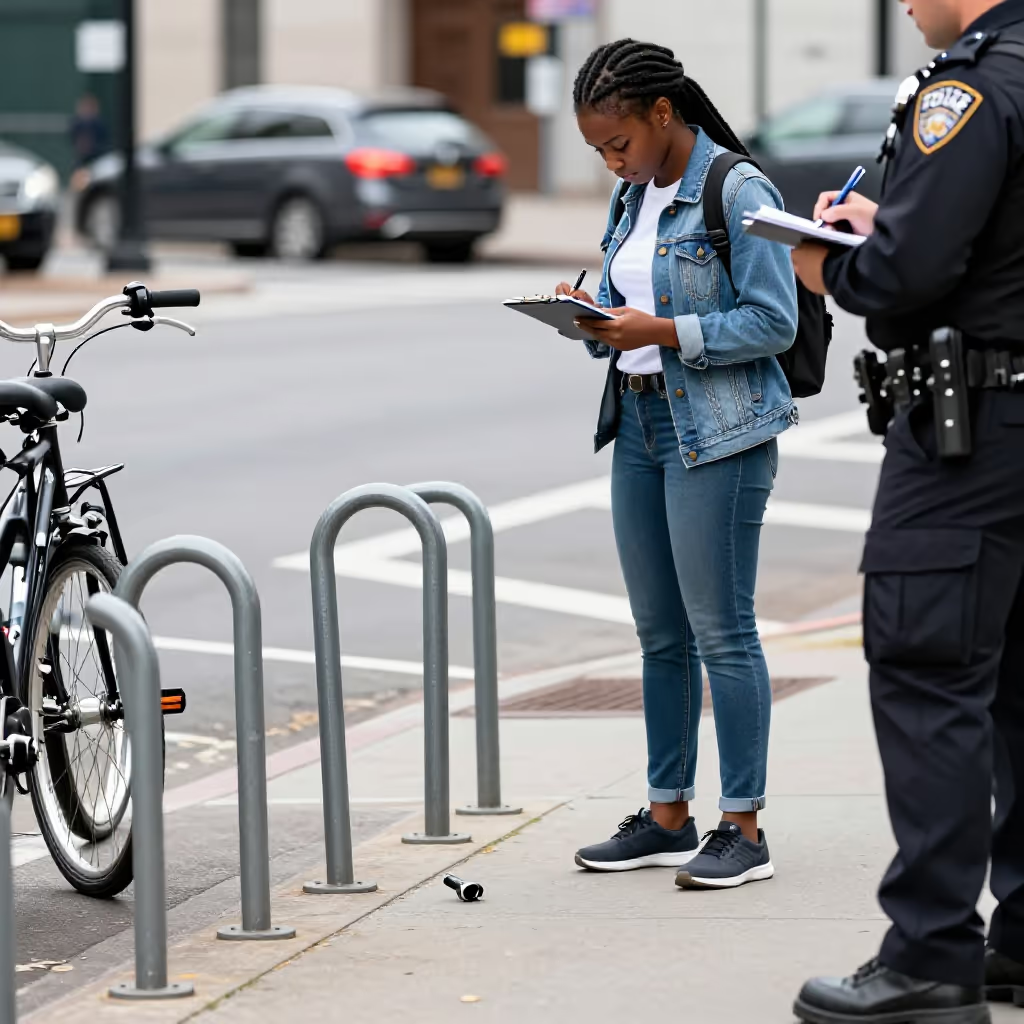
gestohlen
stolen
Describes an object that was taken from someone without permission.
EXAMPLE
Die Polizei hat das gestohlene Auto am Stadtrand wiedergefunden.
The police found the stolen car on the outskirts of the city.
stolen
Loading your saved state.
stolen
Describes an object that was taken from someone without permission.
Die Polizei hat das gestohlene Auto am Stadtrand wiedergefunden.
The police found the stolen car on the outskirts of the city.

to be done with someone/something
A colloquial idiom expressing that a person or thing is completely indifferent to someone, or that they no longer want anything to do with them.
Nach all den Lügen kann er mir gestohlen bleiben!
After all those lies, he can stay out of my life!
'Gestohlen' (stolen) is the past participle of the irregular verb 'stehlen' (to steal). It is often used like an adjective before a noun to describe an object that has been stolen.
Er hat eine Anzeige bei der Polizei wegen seines gestohlenen Portemonnaies gemacht.
He filed a report with the police about his stolen wallet.
The idiom 'jemandem gestohlen bleiben können' has a fixed structure. The person being rejected is in the nominative, while the person doing the rejecting is in the dative.
Nach diesem Streit kann er mir gestohlen bleiben.
After that argument, I'm done with him.
This idiom is very colloquial and expresses strong rejection or indifference. It should only be used in informal situations and with caution.
Ganz ehrlich? Deine Meinung kann mir gestohlen bleiben.
Honestly? I couldn't care less about your opinion.