

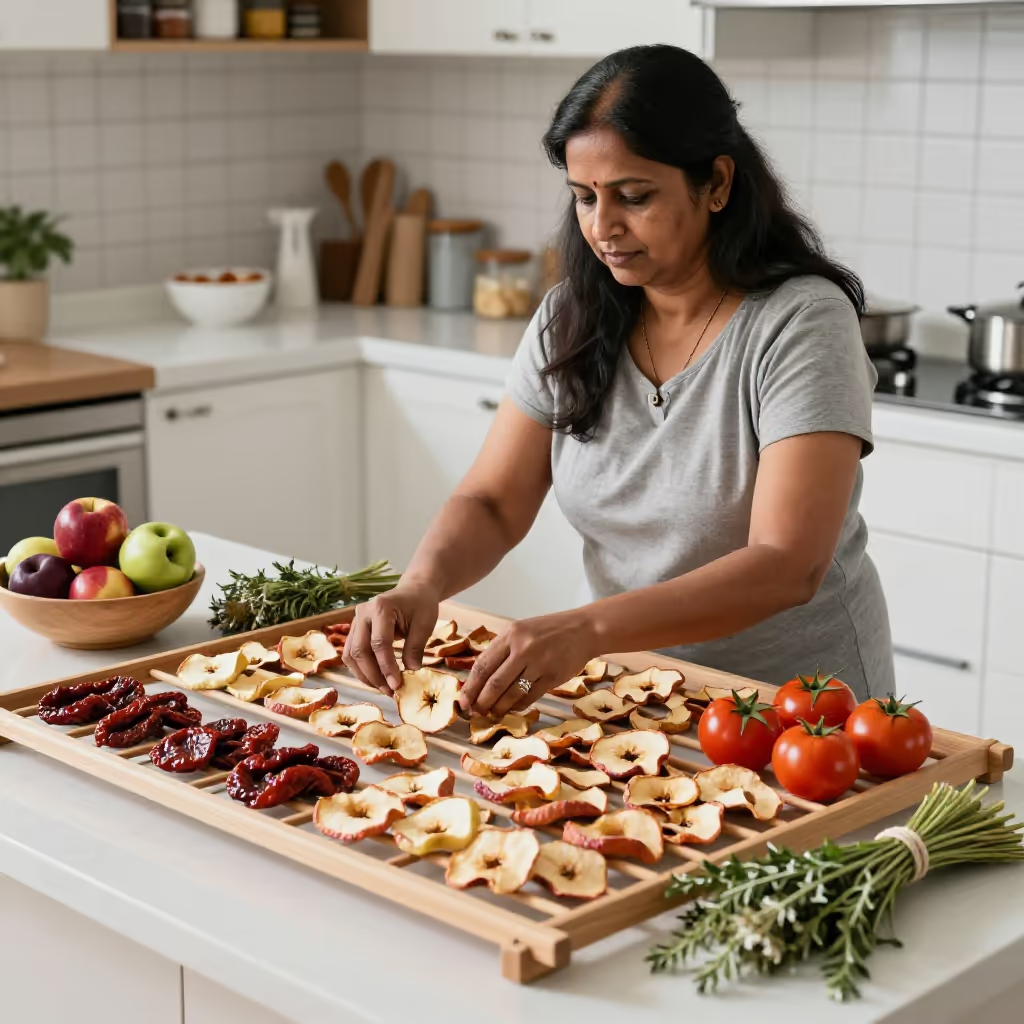
getrocknet
dried
A state in which moisture has been removed from an object or food, often for preservation or further processing.
EXAMPLE
Für das Müsli verwende ich am liebsten getrocknete Früchte.
For muesli, I prefer to use dried fruit.
dried
Loading your saved state.
dried
A state in which moisture has been removed from an object or food, often for preservation or further processing.
Für das Müsli verwende ich am liebsten getrocknete Früchte.
For muesli, I prefer to use dried fruit.
'Getrocknet' (dried) is the past participle of the verb 'trocknen' (to dry). It is used as an adjective to describe a state in which something no longer contains moisture.
Die Wäsche ist endlich getrocknet.
The laundry has finally dried.
'Getrocknet' (dried) is especially often used with foods that have been preserved by drying. Typical examples are 'getrocknete Früchte' (dried fruit), 'getrocknete Tomaten' (dried tomatoes), or 'getrocknete Kräuter' (dried herbs).
Ich gebe gerne getrocknete Kräuter in die Soße.
I like to add dried herbs to the sauce.
As a participle, 'getrocknet' can be part of the perfect tense (action) or describe a state as an adjective. Compare: 'Die Sonne hat die Blumen getrocknet' (The sun dried the flowers) and 'Die getrockneten Blumen stehen in der Vase' (The dried flowers are in the vase).
Die Farbe an der Wand ist noch nicht ganz getrocknet.
The paint on the wall has not completely dried yet.
dry
Trocken describes only the current state of having no moisture. Getrocknet additionally shows that moisture has been removed from an object or food through a process. Use trocken when only the state matters; use getrocknet when you want to emphasize the result of processing.

Die Kräuter auf dem Tisch sind getrocknet und für die spätere Verwendung haltbar gemacht.
The herbs on the table have been dried and preserved for later use.
Die Kräuter auf dem Tisch sind trocken und fühlen sich nicht mehr feucht an.
The herbs on the table are dry and no longer feel damp.