

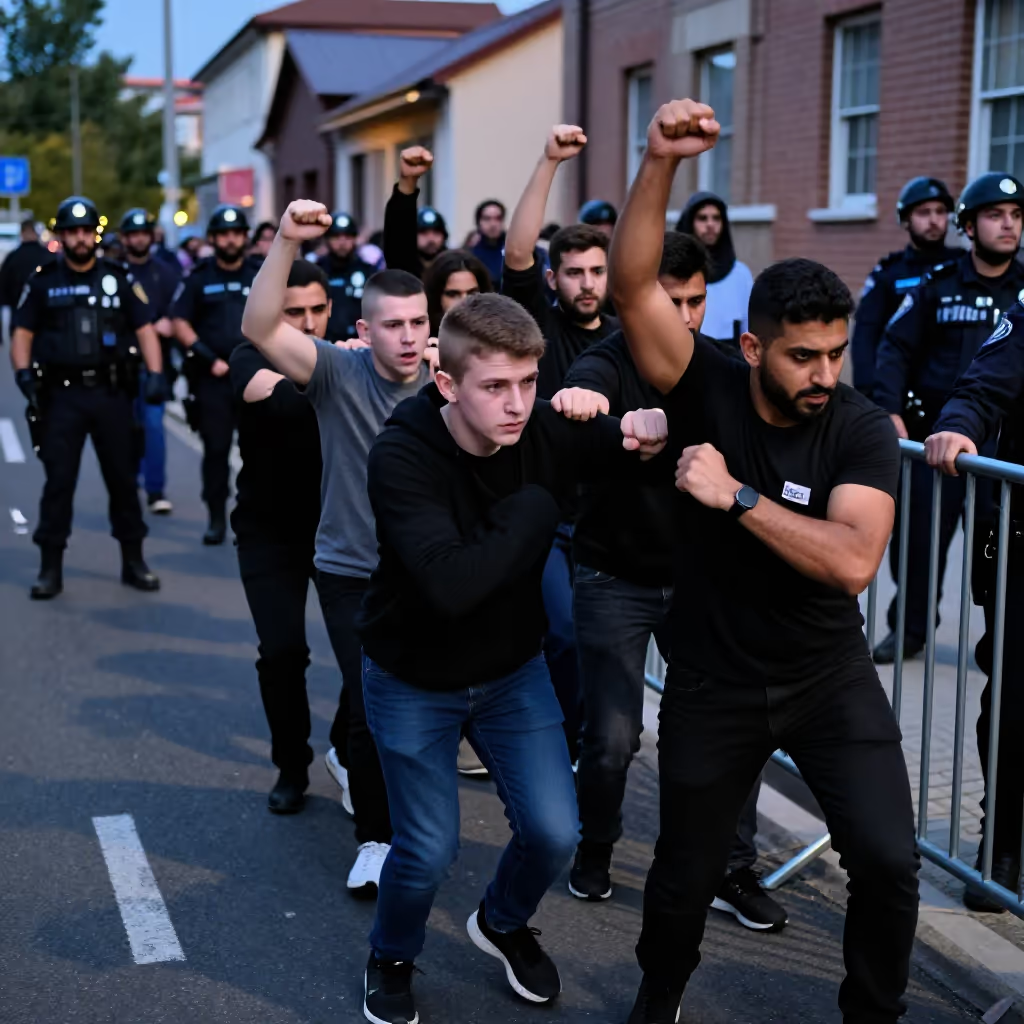
The quality of a person or group being ready or inclined to use physical violence in order to achieve goals or resolve conflicts.
example
Die Polizei beobachtete eine Gruppe gewaltbereiter Demonstranten.
The police observed a group of demonstrators prone to violence.
Usage tips
Compound structure
The adjective is made up of the noun 'die Gewalt' (violence) and the adjective 'bereit' (ready). So it literally means 'ready for violence'.
EXAMPLE
Die Stimmung wurde aggressiv und gewaltbereit.
The mood became aggressive and prone to violence.
Typical collocations
'Gewaltbereit' (prone to violence) usually describes people or groups. Typical combinations are: 'gewaltbereite Jugendliche' (young people prone to violence), 'gewaltbereite Fans' (fans prone to violence), or 'eine gewaltbereite Szene' (a violent milieu / scene).
EXAMPLE
Die Polizei nahm mehrere gewaltbereite Hooligans fest.
The police arrested several hooligans prone to violence.
Context and style
This word has a strongly negative meaning and is mainly used in news reports, police reports, or sociological texts to talk about conflicts and crime.
EXAMPLE
Sozialarbeiter versuchen, mit gewaltbereiten Jugendlichen zu sprechen.
Social workers try to talk with young people prone to violence.
Compare with
antonym
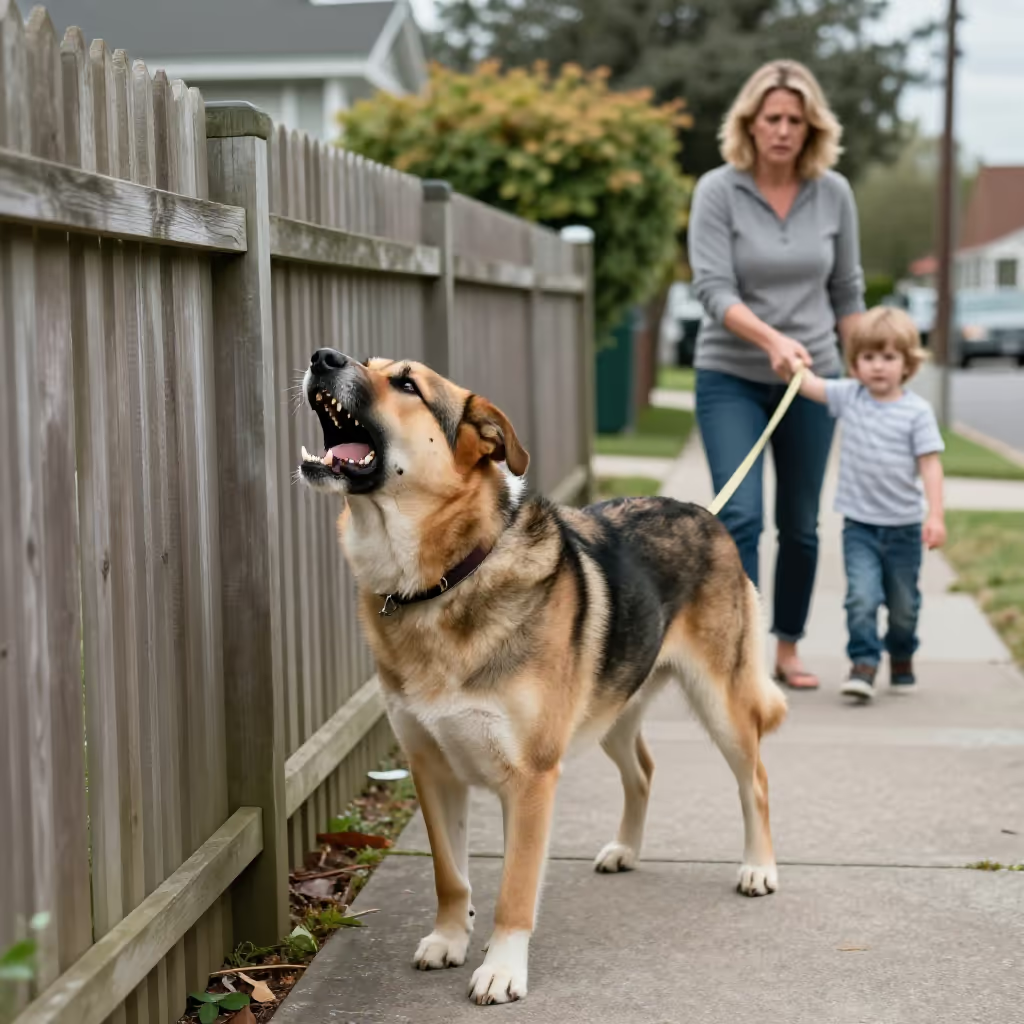
gewaltbereit vs friedlich
peaceful
'friedlich' and 'gewaltbereit' describe how people or groups deal with conflicts. 'friedlich' means that someone does not seek conflict or violence. The word fits people, animals, demonstrations, or situations without aggression. 'gewaltbereit' is the opposite: a person or group is ready to use physical violence. When talking about protests, conflicts, or dangerous groups, 'gewaltbereit' is more precise than just 'aggressive'.
gewaltbereit
Die Polizei beobachtete eine gewaltbereite Gruppe vor dem Stadion.
The police observed a group prone to violence in front of the stadium.
friedlich
Die Demonstration blieb den ganzen Abend friedlich.