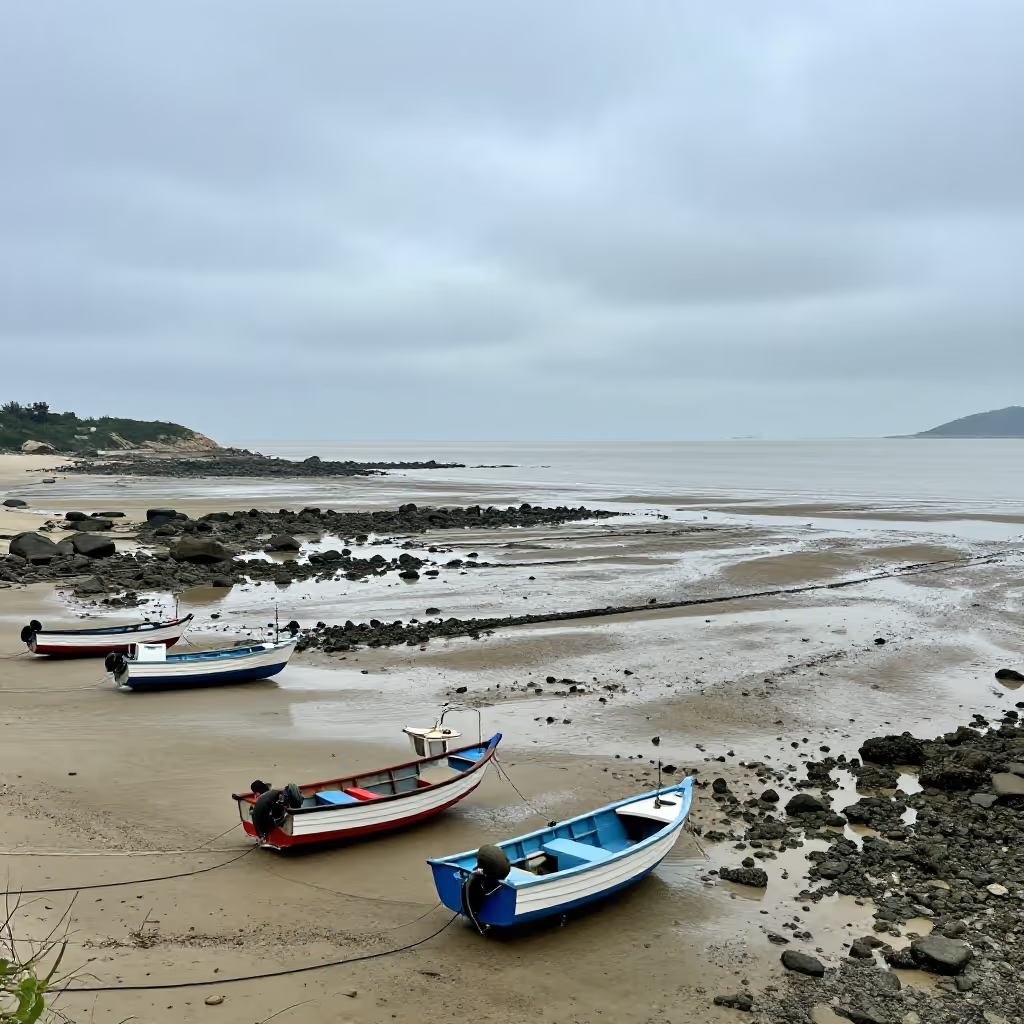
The regular rising and falling of sea level caused by the gravitational forces of the moon and the sun. A distinction is made between 'Ebbe' (ebb tide, receding water) and 'Flut' (flood tide, incoming water). The word is used almost exclusively in the plural.
example
An der Nordsee muss man bei einer Wattwanderung immer die Gezeiten beachten.
On the North Sea, you always have to pay attention to the tides when hiking across the mudflats.
Usage tips
Word family
The word 'Gezeit' is closely related to 'Zeit' (time). The prefix 'Ge-' here suggests a recurring, completed period of time, which fits well with the rhythm of ebb and flood tide.
EXAMPLE
Die Gezeiten sind ein ewiger Kreislauf der Zeit am Meer.
The tides are an eternal cycle of time by the sea.
Use in the plural
In the meaning 'Tide' (tide), this word is used almost exclusively in the plural 'die Gezeiten' (the tides). The singular 'die Gezeit' is very rare in this context.
EXAMPLE
Die Gezeiten bestimmen das Leben an der Küste.
The tides determine life on the coast.
Typical collocations
The two phases of the tides are called 'Ebbe' (ebb tide; the water goes out) and 'Flut' (flood tide; the water comes in). A typical phrase is 'der Rhythmus der Gezeiten' (the rhythm of the tides).
EXAMPLE
Ebbe und Flut sind die zwei Seiten der Gezeiten.
Ebb and flood tide are the two sides of the tides.
Register and style
The meaning 'Epoche' (era) or 'Zeitabschnitt' (period of time) is outdated and today is used only in poetic or very elevated language to create a special historical mood.
EXAMPLE
Es war eine düstere Gezeit voller Unsicherheit und Angst.
It was a dark time full of uncertainty and fear.
Compare with
near_synonym · confusable
Gezeit vs Zeit
time
'die Zeit' and 'die Gezeit' look similar and can therefore easily be confused. 'Zeit' is the normal word for a period or duration. 'Gezeit' can also mean a period of time in old or poetic language, but that is rare today. In modern German, people almost always use the plural 'die Gezeiten', meaning the tides at the sea. In everyday language, 'Zeit' is therefore almost always correct when you are talking about duration or a period of time. 'Gezeiten' fits when you are talking about the sea and the water level.
Gezeit
An der Nordsee muss man die Gezeiten beachten, bevor man ins Watt geht.
On the North Sea, you have to pay attention to the tides before going out onto the mudflats.
Zeit
Vor dem Wochenende hatte ich wenig Zeit zum Einkaufen.
Before the weekend, I had little time for shopping.