01
giessen
to water
To provide plants with water.
example
Im Sommer muss ich meine Balkonblumen jeden Tag gießen.
In summer, I have to water my balcony flowers every day.
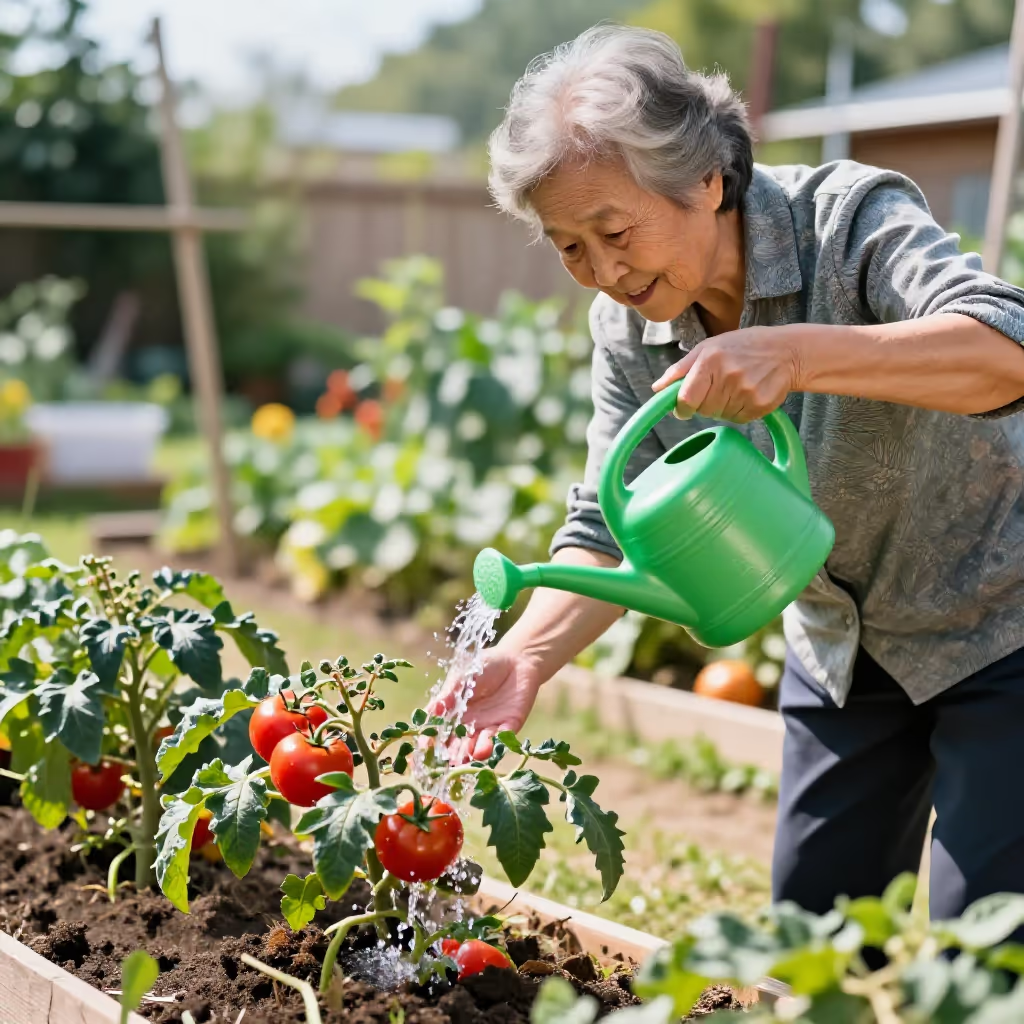
to water / pour
Loading your saved state.
to water
To provide plants with water.
Im Sommer muss ich meine Balkonblumen jeden Tag gießen.
In summer, I have to water my balcony flowers every day.
The spelling 'giessen' with 'ss' is common in Switzerland. In Germany and Austria, this word is written 'gießen' with 'ß'.
Vergiss bitte nicht, die Blumen zu gießen.
Please don't forget to water the flowers.
The meaning of 'gießen' (to water / pour) is easy to recognize from context: Does it refer to plants, drinks, the weather, or the production of objects made of metal?
Der Gärtner goss die jungen Bäume.
The gardener watered the young trees.
When it is about plants, the most common objects are 'Blumen' (flowers), 'Pflanzen' (plants), 'den Rasen' (the lawn), or 'den Garten' (the garden).
Nach dem Urlaub mussten wir als Erstes den Garten gießen.
After the vacation, the first thing we had to do was water the garden.
When pouring liquids, a prepositional phrase with 'in' and the accusative often follows to indicate the destination. For example: 'etwas in die Tasse gießen' (to pour something into the cup).
Sie goss die heiße Suppe in die Teller.
She poured the hot soup into the bowls.
To describe heavy rain, the impersonal form 'es gießt' (it is pouring) is used. This is often intensified with 'in Strömen' (in streams / heavily) or 'wie aus Eimern' (as if from buckets).
Nimm einen Schirm mit, es gießt in Strömen!
Take an umbrella with you; it's pouring with rain!
This meaning belongs to the technical language of metalworking or art. Typical objects are 'Glocken' (bells), 'Figuren' (figures), or 'Statuen' (statues).
In dieser Werkstatt werden traditionell Glocken aus Bronze gegossen.
In this workshop, bells are traditionally cast from bronze.
to rain
'giessen' and 'regnen' can both describe weather with water coming from above. 'regnen' is the normal word for water droplets falling from the clouds. In this context, 'giessen' is used only for very heavy rain, usually impersonally: 'Es gießt.' It sounds stronger and a bit more figurative than 'es regnet'. Learners may confuse the words because both occur in rainy weather. For normal weather, you say 'es regnet'; for very heavy rain, you say 'es gießt'.
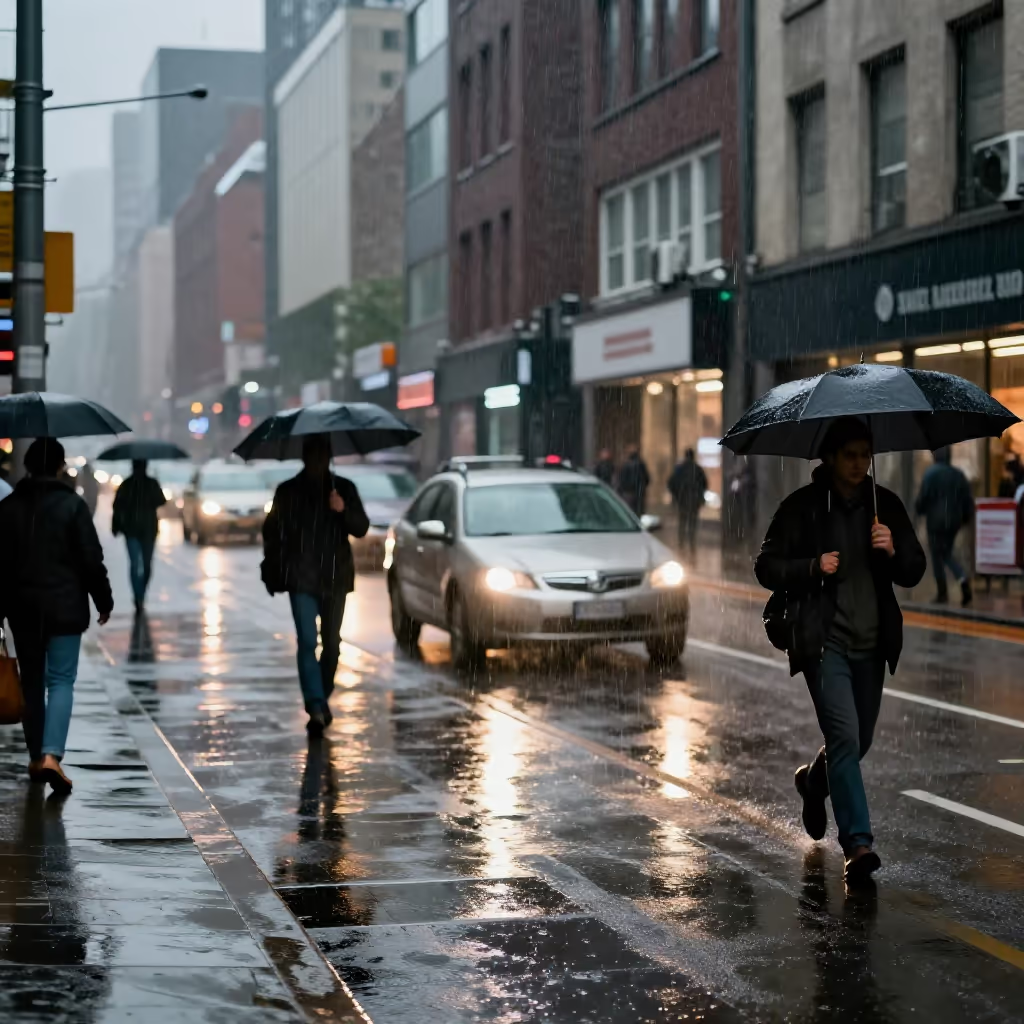
Heute gießt es so stark, dass wir lieber zu Hause bleiben.
It's pouring so hard today that we'd rather stay at home.
Am Bahnhof warten viele Leute, weil es seit einer Stunde regnet.
Many people are waiting at the train station because it has been raining for an hour.