


das Glas
glass
A container made of glass that you drink from.
EXAMPLE
Stell die Gläser für die Gäste schon mal auf den Tisch.
Go ahead and put the glasses on the table for the guests.
glass / jar
Loading your saved state.
glass
A container made of glass that you drink from.
Stell die Gläser für die Gäste schon mal auf den Tisch.
Go ahead and put the glasses on the table for the guests.
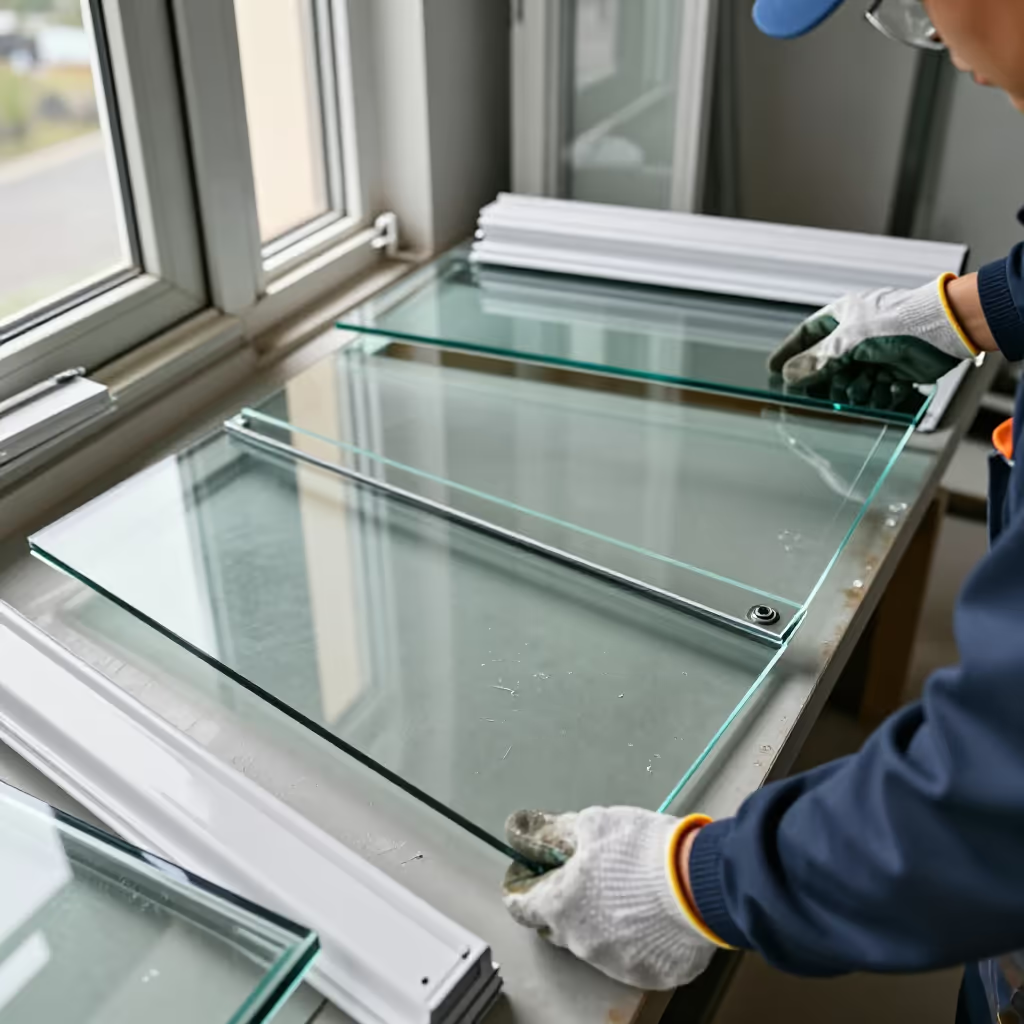
glass
The transparent, hard, and breakable material that windows, bottles, and drinking glasses are made of.
Die Vitrine ist komplett aus Glas gefertigt.
The display case is made completely of glass.

a glass
The amount of a liquid or food that fits into a drinking glass or glass container.
Ich hätte gern noch ein Glas von dem Rotwein.
I would like another glass of the red wine.
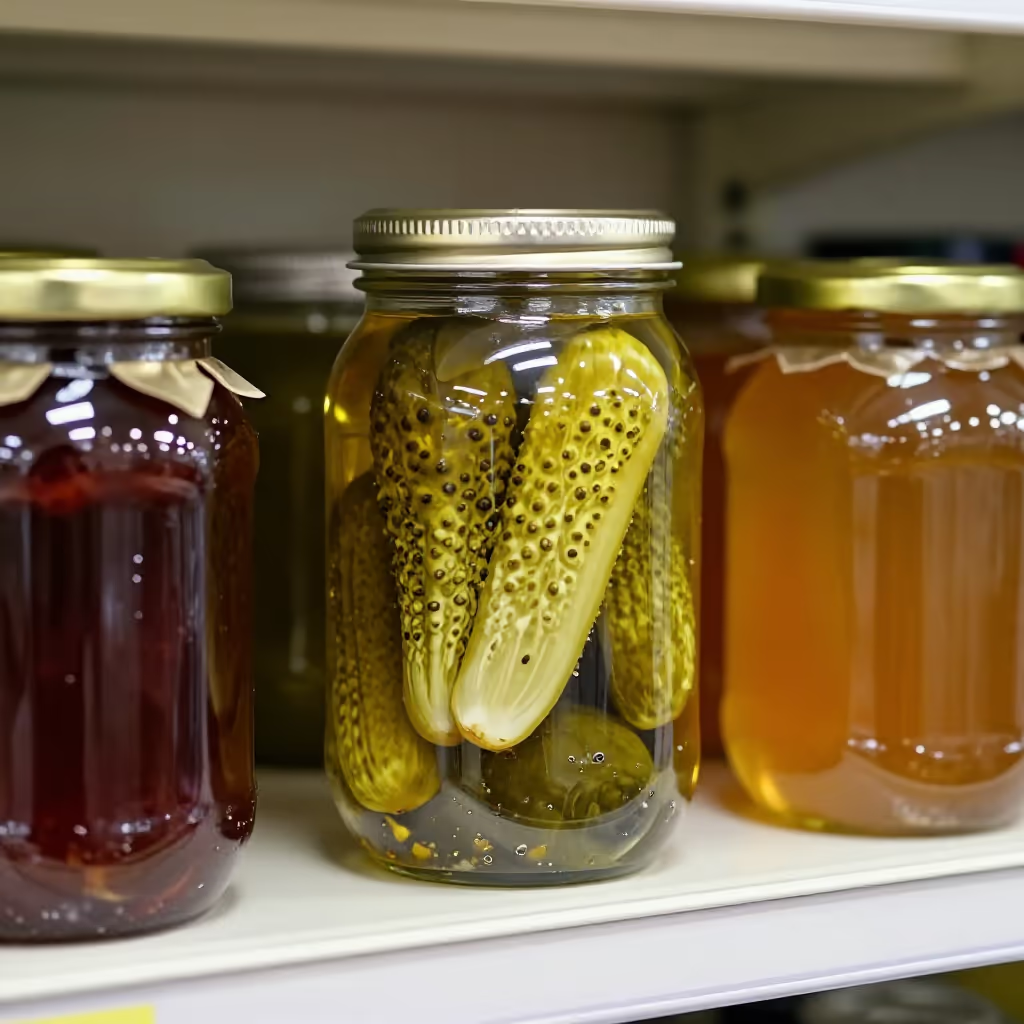
jar
A glass container with a lid for storing foods such as jam, honey, or pickles.
Kannst du mir bitte das Glas mit den sauren Gurken aus dem Kühlschrank holen?
Could you please get me the jar of pickles from the fridge?
The plural form 'die Gläser' almost always refers to drinking glasses (meaning m01). The material 'Glas' (glass) (m02) is uncountable and therefore has no plural.
Kannst du bitte noch zwei Gläser aus dem Schrank holen?
Could you please get two more glasses from the cupboard?
When 'Glas' (glass) refers to the material, it is uncountable and is often used without an article. It is also a common component of compound nouns such as 'Glastisch' (glass table), 'Glaswand' (glass wall), or 'Glasflasche' (glass bottle).
Die Tür hat einen Einsatz aus Glas.
The door has an insert made of glass.
As a quantity, 'ein Glas' (a glass) stands directly before the noun it describes, usually without an article. This structure is especially common with drinks and foods.
Zum Frühstück trinke ich immer ein Glas Orangensaft.
For breakfast, I always drink a glass of orange juice.
The contents reveal whether a drinking glass (m01) or a storage jar (m04) is meant. 'Ein Glas Wasser' (a glass of water) is a drinking glass, while 'ein Glas Marmelade' (a jar of jam) is a storage jar (a preserving jar).
Er bestellte ein Glas Bier.
He ordered a glass of beer.
cup
A handleless drinking vessel made of glass can be called both “Glas” and “Becher.” “Glas” emphasizes the material and the usual type of vessel, while “Becher” focuses more on the cup-like shape and is also commonly used for other materials. With a glass cup, both words are therefore possible.
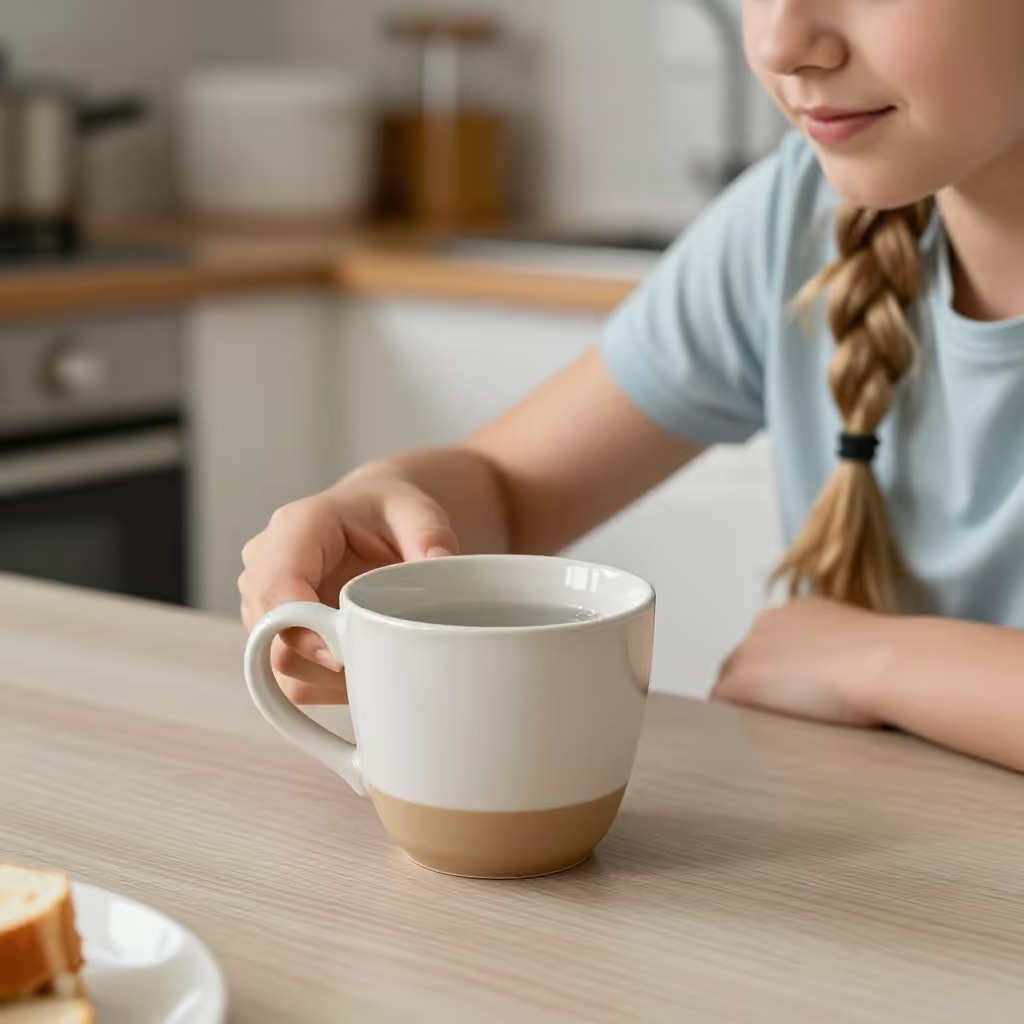
Sie trank das Wasser aus einem schlichten Glas ohne Henkel.
She drank the water from a simple glass without a handle.
Sie trank das Wasser aus einem hohen Becher aus Glas.
She drank the water from a tall glass cup.