

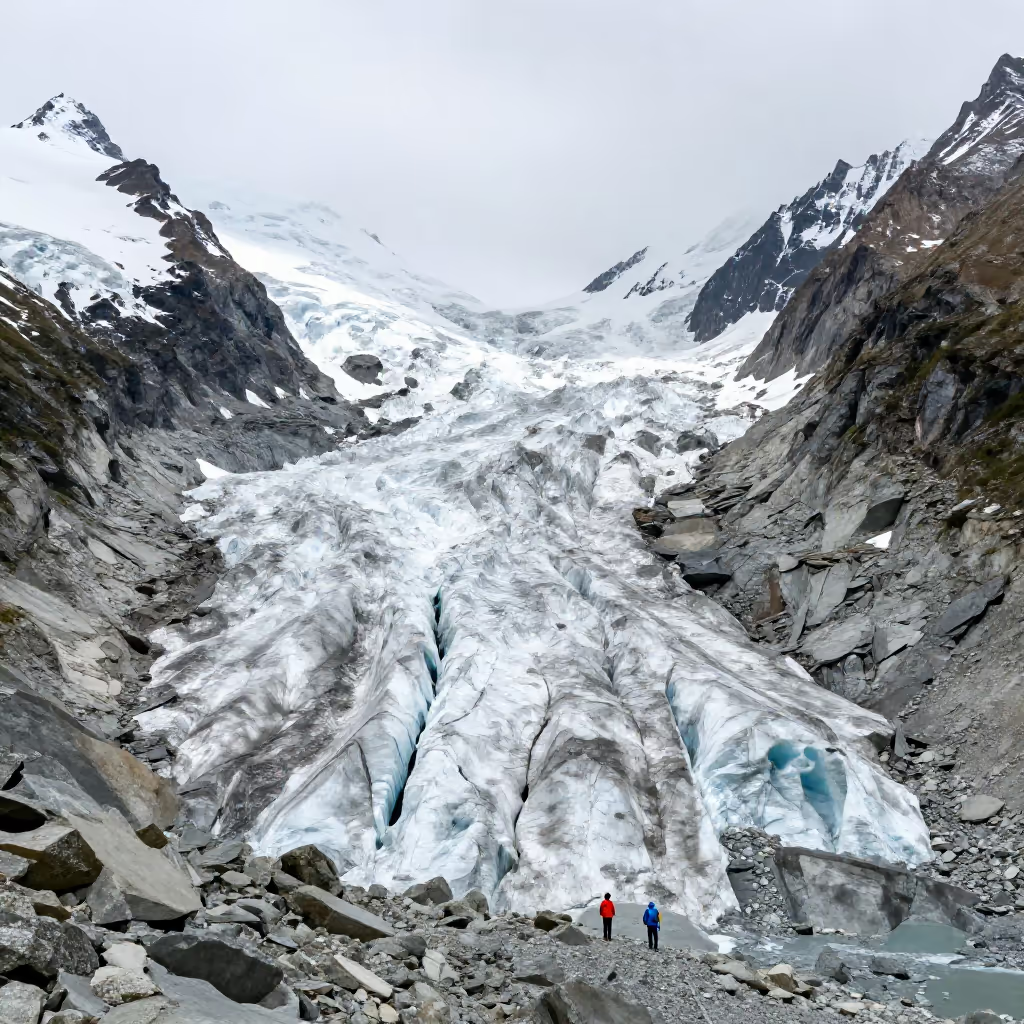
A large mass of ice that has formed from snow and slowly moves downhill under its own weight.
example
Durch den Klimawandel schmelzen die Gletscher in den Alpen besorgniserregend schnell.
Because of climate change, the glaciers in the Alps are melting at an alarmingly fast rate.
Usage tips
Word family
The word 'Gletscher' (glacier) is related to the adjective 'glatt' (smooth). It describes the smooth, shiny surface of large masses of ice.
EXAMPLE
Die Oberfläche des Gletschers reflektierte das Sonnenlicht.
The surface of the glacier reflected the sunlight.
Typical verbs
Glaciers are often connected with certain verbs that describe their movement or change: 'schmelzen' (to melt), 'sich zurückziehen' (to retreat), 'fließen' (to flow), or 'kalben' (to calve, when large pieces of ice break off).
EXAMPLE
Der größte Gletscher der Region zieht sich jedes Jahr um mehrere Meter zurück.
The largest glacier in the region retreats by several meters every year.
Thematic context
The word 'Gletscher' (glacier) is used mainly in the fields of geography, tourism, and especially in discussions about climate change.
EXAMPLE
Eine Wanderung zum Gletscher ist eine beliebte Touristenattraktion.
A hike to the glacier is a popular tourist attraction.
Compare with
confusable
Gletscher vs Eisberg
iceberg
'der Gletscher' and 'der Eisberg' both have to do with large masses of ice. A glacier lies on land, usually in the mountains, and slowly moves downhill. An iceberg floats in the sea and has broken off from a glacier or an ice shelf. Learners may confuse the words because both are made of ice and occur in nature. A simple guide is: glacier on a mountain or on land, iceberg in the sea.
Gletscher
Auf der Wanderung sahen wir einen Gletscher hoch oben zwischen den Bergen.
On the hike, we saw a glacier high up among the mountains.
Eisberg
Vor der Küste trieb ein großer Eisberg langsam durch das kalte Wasser.
Off the coast, a large iceberg drifted slowly through the cold water.