

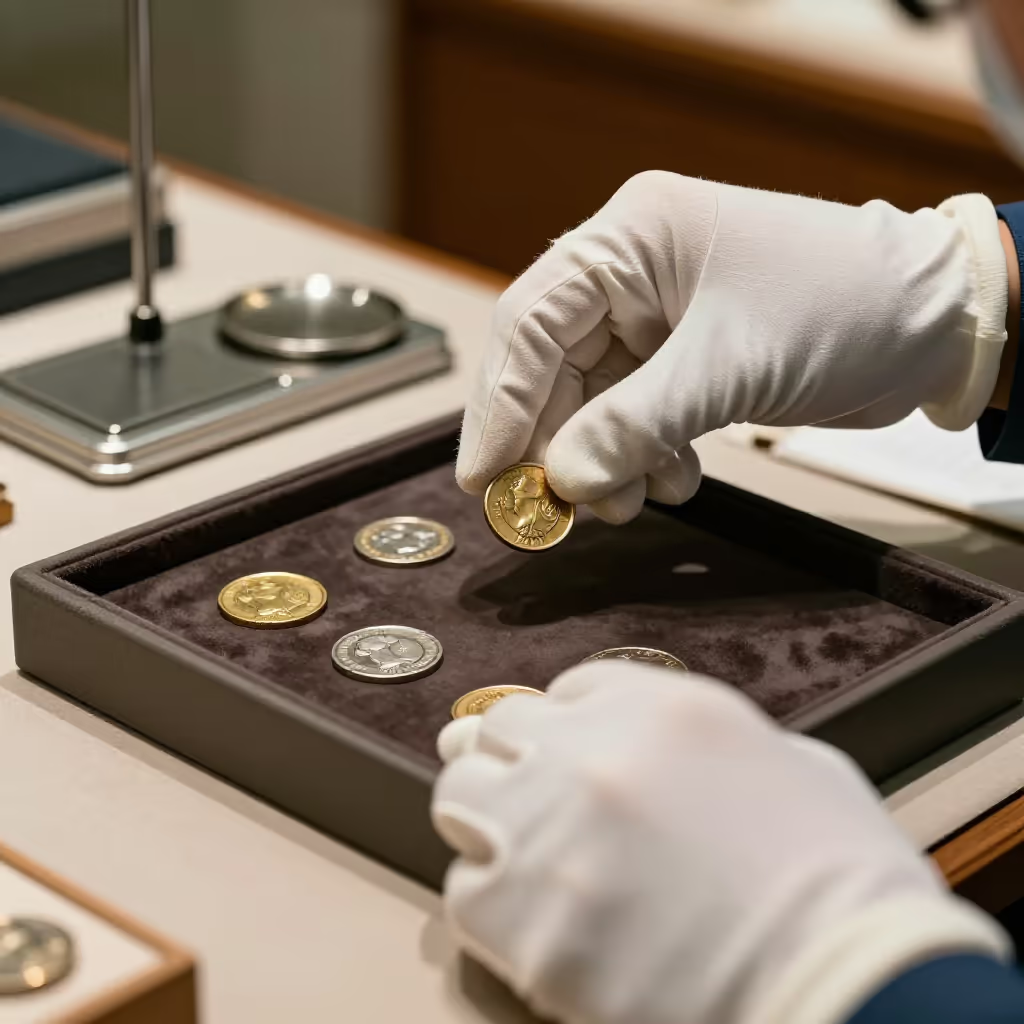
A coin that consists entirely or largely of gold. It can serve as a means of payment, an investment, or a collector's item.
example
Im Museum war eine antike römische Goldmünze ausgestellt.
An ancient Roman gold coin was on display in the museum.
Usage tips
Compound word
The word is a clear compound of 'Gold' (gold) and 'Münze' (coin). So it literally means a coin made of gold.
EXAMPLE
Der Piratenschatz enthielt viele alte Goldmünzen.
The pirate treasure contained many old gold coins.
Typical verbs
In connection with gold coins, the verbs 'sammeln' (to collect), 'prägen' (to mint/produce), 'finden' (to find), or 'vererben' (to pass on as an inheritance) are often used.
EXAMPLE
Mein Großvater sammelt seit Jahren seltene Goldmünzen.
My grandfather has been collecting rare gold coins for years.
Typical collocations
'Goldmünze' (gold coin) is often combined with adjectives that describe its value or origin, such as 'antike Goldmünze' (ancient gold coin), 'wertvolle Goldmünze' (valuable gold coin), or 'echte Goldmünze' (real gold coin).
EXAMPLE
Bei der Ausgrabung wurde eine wertvolle Goldmünze entdeckt.
A valuable gold coin was discovered during the excavation.
Compare with
near_synonym · confusable
Goldmünze vs Münze
coin / mint
'die Münze' and 'die Goldmünze' both refer to a minted piece of metal that can be used like money or collected. 'Münze' is the general term and does not say anything about the material. A 'Goldmünze' is a special coin that consists entirely or largely of gold. Learners may confuse the words because every gold coin is a coin. But not every coin is a gold coin. If the material is important, you use 'Goldmünze'.
Goldmünze
Die Kundin bewahrt die Goldmünze in einem kleinen Tresor auf.