

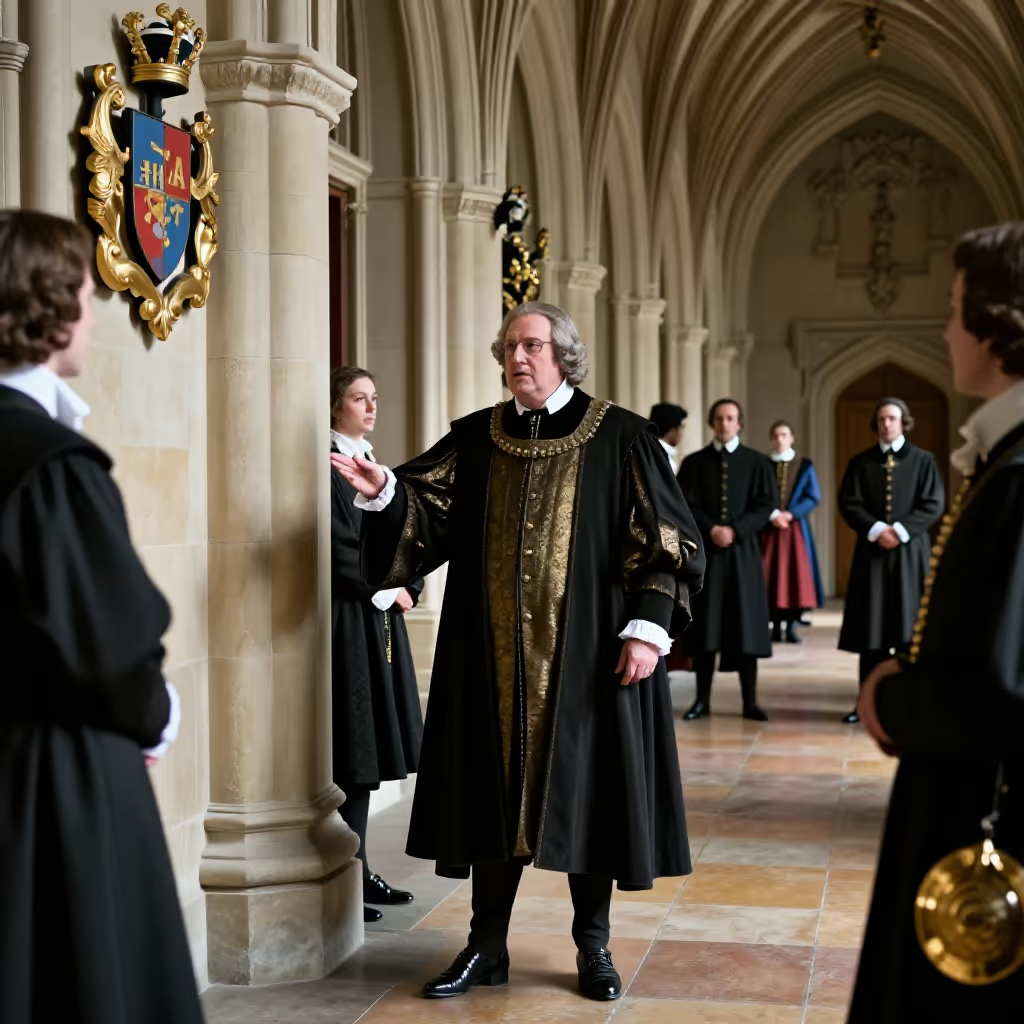
A noble title for a man who ranks above a baron and below a prince or duke in the hierarchy of nobility.
example
Der Graf lud die gesamte Gesellschaft zu einem Ball auf seinem Anwesen ein.
The count invited the entire company to a ball on his estate.
Usage tips
N-declension
'Der Graf' (the count) is a weak masculine noun (N-declension). This means that it takes the ending '-en' in all cases except the nominative singular.
EXAMPLE
Wir haben den Grafen auf seinem Schloss besucht.
We visited the count at his castle.
Cultural context
The title 'Graf' (count) is historically significant in Germany and Europe. You often find it in fairy tales, historical novels, and as part of place names or family names.
EXAMPLE
In vielen alten Märchen spielt ein edler Graf eine wichtige Rolle.
In many old fairy tales, a noble count plays an important role.
Use with names
The title is used either on its own or in the combination 'Graf von' (Count of) followed by a family name or place name.
EXAMPLE
Der berühmte Graf von Monte Christo ist eine Romanfigur.
The famous Count of Monte Cristo is a fictional character.
Compare with
confusable
Graf vs Herzog
duke
'der Graf' (the count) and 'der Herzog' (the duke) are both male noble titles. They can be confused because both appear in historical texts, fairy tales, or films about the nobility. The difference is in rank: a duke ranks higher than a count and could rule over a duchy. A count is also noble, but lower in rank. If you only know that someone is a nobleman, you need to pay attention to the exact title.
Graf
Im Roman lädt der Graf seine Gäste auf ein altes Schloss ein.
In the novel, the count invites his guests to an old castle.
Herzog
Der Herzog regierte viele Jahre über sein Herzogtum.