

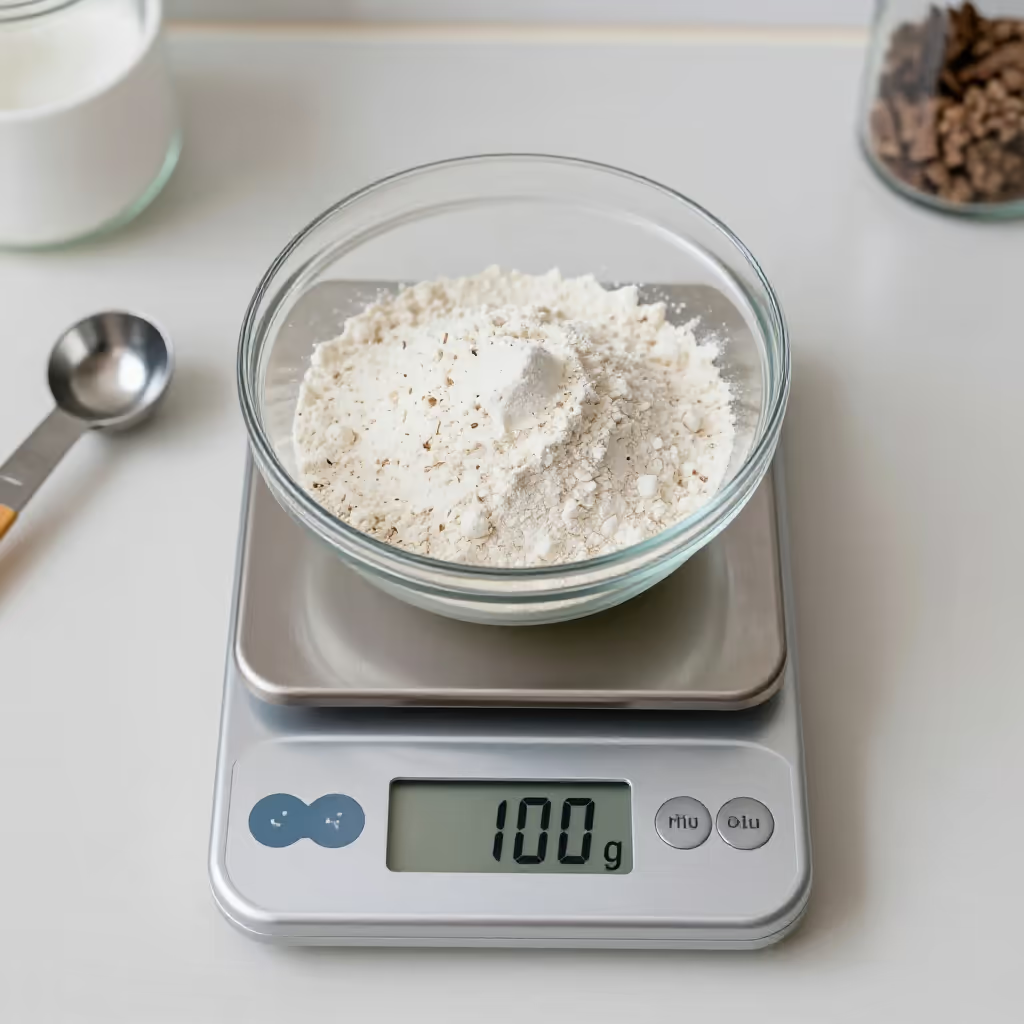
das Gramm
gram
A unit of measurement for weight that equals one thousandth of a kilogram. The unit symbol is 'g'.
EXAMPLE
Für dieses Rezept benötigen Sie genau 150 Gramm Mehl.
For this recipe, you need exactly 150 grams of flour.
gram
Loading your saved state.
gram
A unit of measurement for weight that equals one thousandth of a kilogram. The unit symbol is 'g'.
Für dieses Rezept benötigen Sie genau 150 Gramm Mehl.
For this recipe, you need exactly 150 grams of flour.
When a number greater than one comes before 'Gramm' (gram), the word remains unchanged in the singular. This rule applies to most units of measurement in German.
Ich hätte gern zweihundert Gramm von dem milden Käse.
I'd like two hundred grams of the mild cheese.
Normally, the weighed product follows directly after the quantity, without a preposition like 'von' (of/from). The phrasing '100 Gramm Schinken' (100 grams of ham) is more natural than '100 Gramm von Schinken'.
Für den Kuchen brauchen wir 250 Gramm Butter.
For the cake, we need 250 grams of butter.
In written texts, especially in recipes or on food packaging, the abbreviation 'g' is almost always used.
Bitte 5 g Salz und 10 g Zucker hinzufügen.
Please add 5 g of salt and 10 g of sugar.
grain
Gramm and Gran refer to small units of weight. Gramm is a modern, regular unit, whereas Gran is an old unit that is rarely used today. For present-day weights, use Gramm; Gran is appropriate in historical or specialist contexts.

Für das Rezept wiegt sie fünf Gramm Salz ab.
She weighs out five grams of salt for the recipe.
Nach dem alten Rezept wog der Apotheker fünf Gran des Pulvers ab.
According to the old recipe, the pharmacist weighed out five grains of the powder.