


die Grausamkeit
cruelty
The quality of deliberately causing pain or suffering to others without compassion.
EXAMPLE
Die Grausamkeit des Krieges ist unvorstellbar.
The cruelty of war is unimaginable.
cruelty
Loading your saved state.
cruelty
The quality of deliberately causing pain or suffering to others without compassion.
Die Grausamkeit des Krieges ist unvorstellbar.
The cruelty of war is unimaginable.

cruel act
A single, concrete act that is cruel.
Er hat im Laufe seines Lebens viele Grausamkeiten begangen.
He committed many cruel acts over the course of his life.
'Die Grausamkeit' (cruelty) is derived from the adjective 'grausam' (cruel). The ending '-keit' is often used to form abstract nouns from adjectives that describe a quality.
Sein Verhalten war grausam und unverzeihlich.
His behavior was cruel and unforgivable.
The meaning depends on whether the word is used countably or uncountably. In the plural ('Grausamkeiten', cruel acts) or with an indefinite article ('eine Grausamkeit', a cruel act), it always refers to concrete acts. Without an article and in the singular, it describes the abstract quality.
Die Grausamkeit mancher Menschen ist schockierend.
The cruelty of some people is shocking.
When 'Grausamkeit' (cruel act) refers to a concrete act, the verb 'begehen' (to commit) is often used.
Er wurde beschuldigt, unzählige Grausamkeiten begangen zu haben.
He was accused of having committed countless cruel acts.
brutality
Grausamkeit and Brutalität can both refer to inhuman behavior. Grausamkeit emphasizes deliberately and mercilessly inflicting suffering, while Brutalität focuses more on extreme violence and ruthlessness. The key question is therefore whether the suffering or the violent manner of acting is at the center.
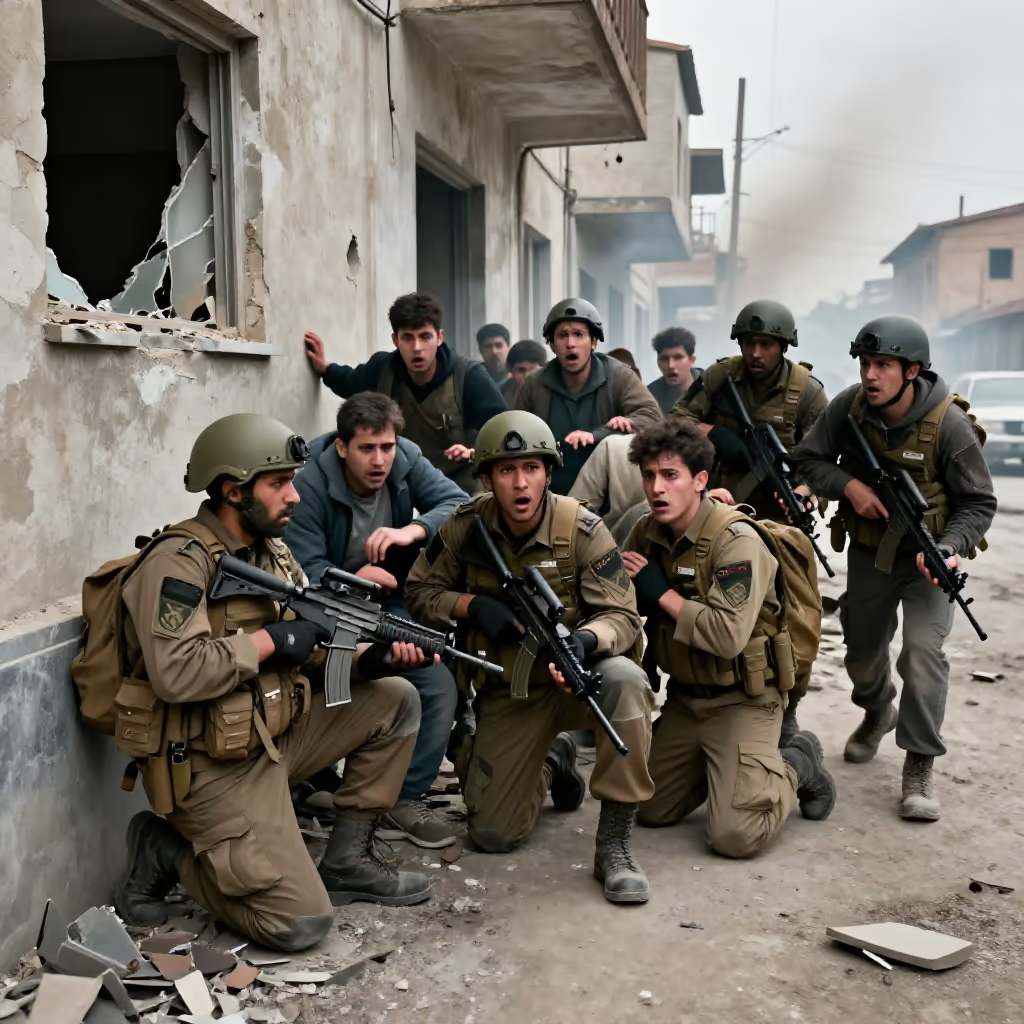
Die Grausamkeit des Täters zeigte sich darin, dass er sein Opfer absichtlich leiden ließ.
The perpetrator's cruelty was evident in the fact that he deliberately made his victim suffer.
Die Brutalität des Täters zeigte sich darin, dass er sein Opfer mit extremer Gewalt angriff.
The perpetrator's brutality was evident in the fact that he attacked his victim with extreme violence.