

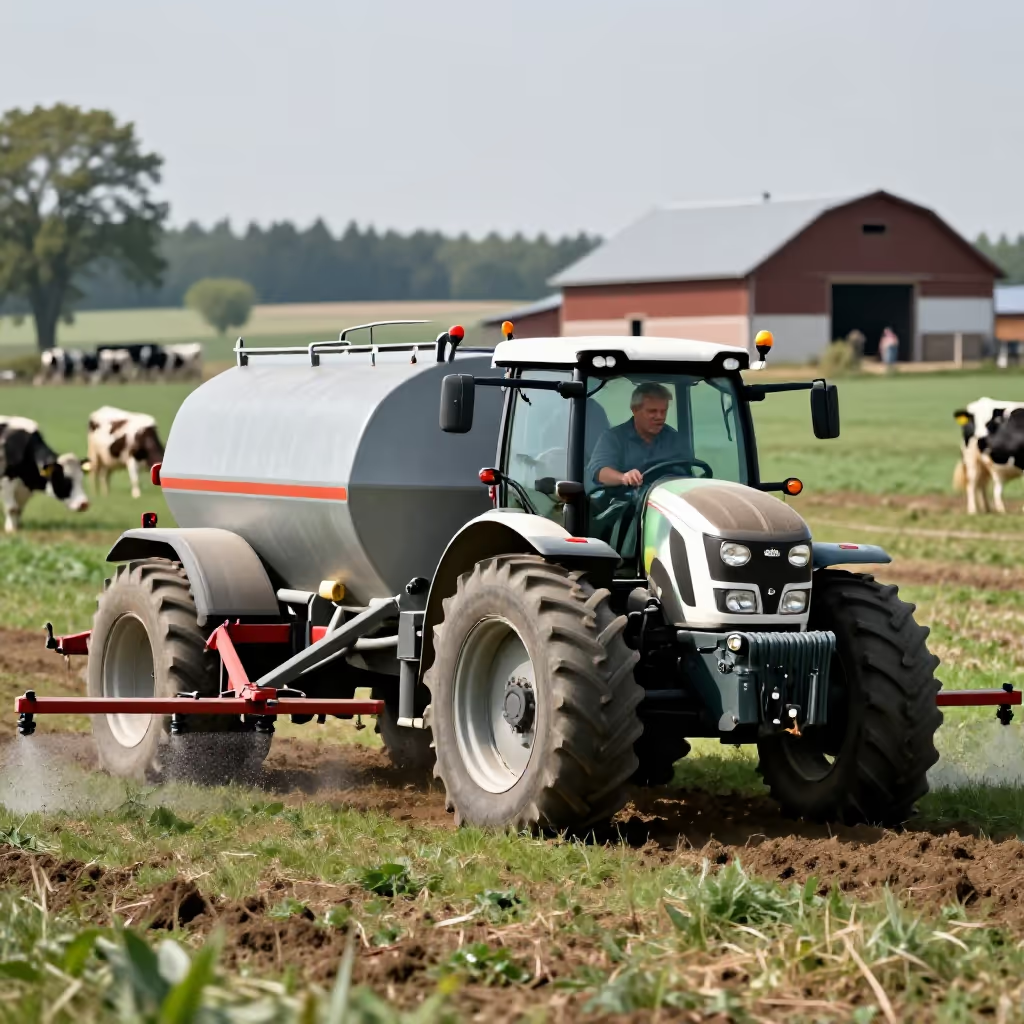
A liquid mixture of animal excrement (feces and urine) that is used in agriculture as fertilizer for fields and meadows.
example
Der Bauer fährt im Frühling die Gülle auf die Felder aus.
In spring, the farmer spreads the liquid manure on the fields.
Usage tips
Mostly singular
The word “Gülle” (liquid manure) is an uncountable noun (mass noun). It is almost always used in the singular and often without an article, since it describes an indefinite mass.
EXAMPLE
Überall auf dem Land riecht es nach Gülle.
Everywhere in the countryside it smells of liquid manure.
Typical verbs
In an agricultural context, “Gülle” (liquid manure) is often combined with the verbs “ausbringen” (to spread/apply) or “fahren” (to transport/spread). These describe the process of fertilizing.
EXAMPLE
Der Landwirt muss heute noch die Gülle ausbringen.
The farmer still has to spread the liquid manure today.
Context and association
Although “Gülle” (liquid manure) is a technical term from agriculture, most people know it. It is very often associated with a strong, unpleasant smell.
EXAMPLE
Wir mussten die Fenster schließen, weil der Bauer Gülle ausgebracht hat.
We had to close the windows because the farmer had spread liquid manure.
Compare with
near_synonym · confusable
Gülle vs Mist
crap / manure
'der Mist' and 'die Gülle' both belong to agriculture and can be used as fertilizer. Both come from farm animals. The important difference is the form: 'Mist' is more solid and often mixed with straw. 'Gülle' is liquid and consists of feces and urine. Learners may confuse the words because both are spread on fields and can smell strong. Remember: in the stable there is often 'Mist'; from the tank or barrel comes 'Gülle'.
Gülle
Im Frühling fährt der Traktor Gülle auf die Wiese.
In spring, the tractor spreads liquid manure on the meadow.
Mist
Vor dem Stall stapelt sich der Mist auf einem großen Haufen.
In front of the stable, the manure is piling up in a large heap.