

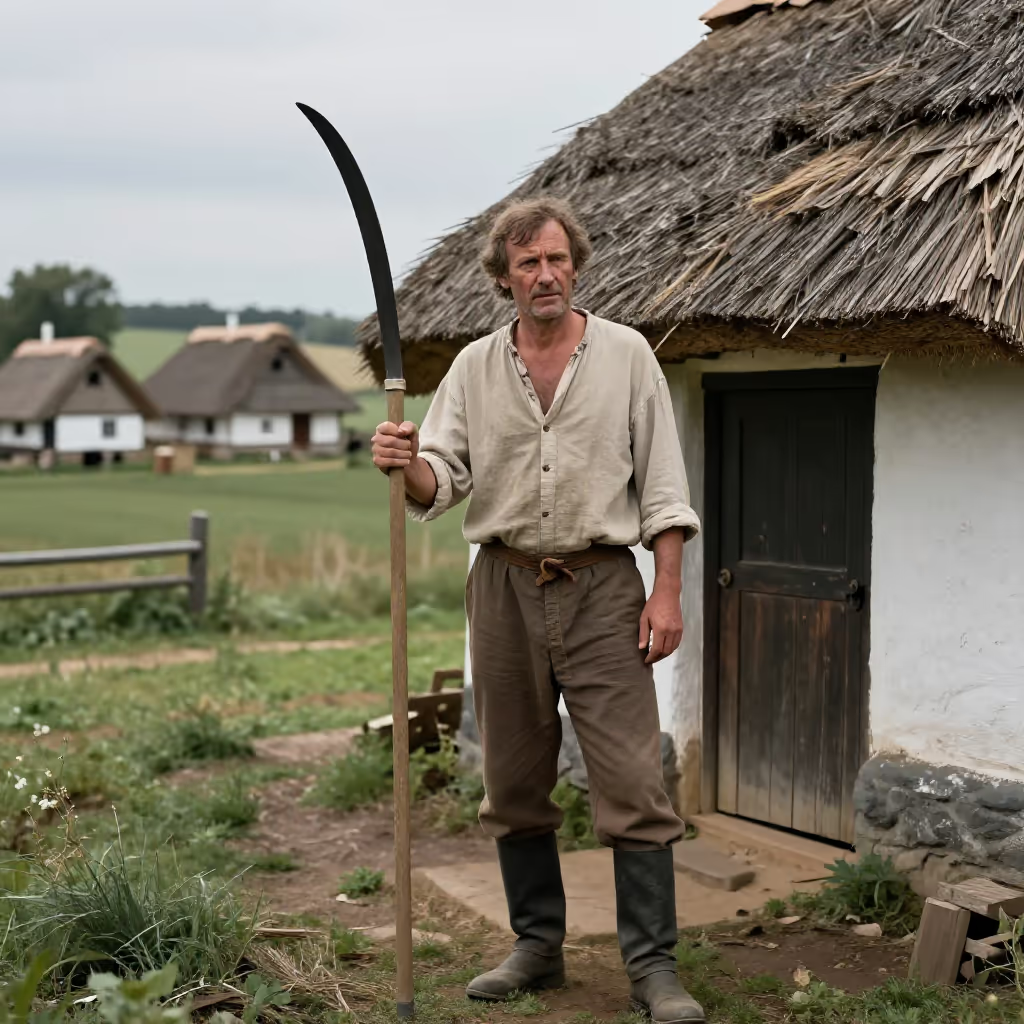
A historical term for a village resident who owned a small house but little or no land of their own and usually earned a living as a day laborer or craftsperson.
example
Im 18. Jahrhundert lebten viele Häusler am Rande der dörflichen Gesellschaft.
In the 18th century, many cottagers lived on the margins of village society.
Usage tips
Word structure
The word is derived from 'das Haus' (house), more precisely from the diminutive form 'das Häuslein' (little house). The ending '-ler' refers to a person connected with something — here, a person with a small house.
EXAMPLE
Ein Häusler besaß oft nur sein Haus und ein winziges Stück Garten.
A cottager often owned only his house and a tiny piece of garden.
Register: Historical
This is a historical term that is no longer used for people today. You mainly find the word in texts about the social history of the 18th and 19th centuries.
EXAMPLE
In alten Kirchenbüchern wird oft zwischen Bauern und Häuslern unterschieden.
In old church records, a distinction is often made between farmers and cottagers.
Cultural context
The term describes a specific social class in the village society of the past. Häusler (cottagers) ranked below farmers because they owned hardly any land and often had to work for farmers as craftspeople or day laborers.
EXAMPLE
Das Leben eines Häuslers war oft von harter Arbeit und Armut geprägt.
The life of a cottager was often marked by hard work and poverty.
Compare with
near_synonym · confusable
Häusler vs Kleinbauer
smallholder farmer
'Kleinbauer' and 'Häusler' can both refer to people in the countryside who have little property or little land. 'Kleinbauer' is a smallholder farmer; that means he farms land of his own or rented land. 'Häusler' is a historical term for a village resident with a small house but little or no land. He often lived from other work, for example as a day laborer or craftsperson. The words can be confused because both sound simple and rural. For farming today, 'Kleinbauer' usually fits; for earlier village societies, 'Häusler' is more likely.
Häusler
Im alten Kirchenbuch steht, dass sein Urgroßvater Häusler im Dorf war.
The old church register says that his great-grandfather was a cottager in the village.
Kleinbauer
Der Kleinbauer verkauft sein Gemüse jeden Samstag auf dem Markt.
The smallholder farmer sells his vegetables at the market every Saturday.