

hageln
to hail
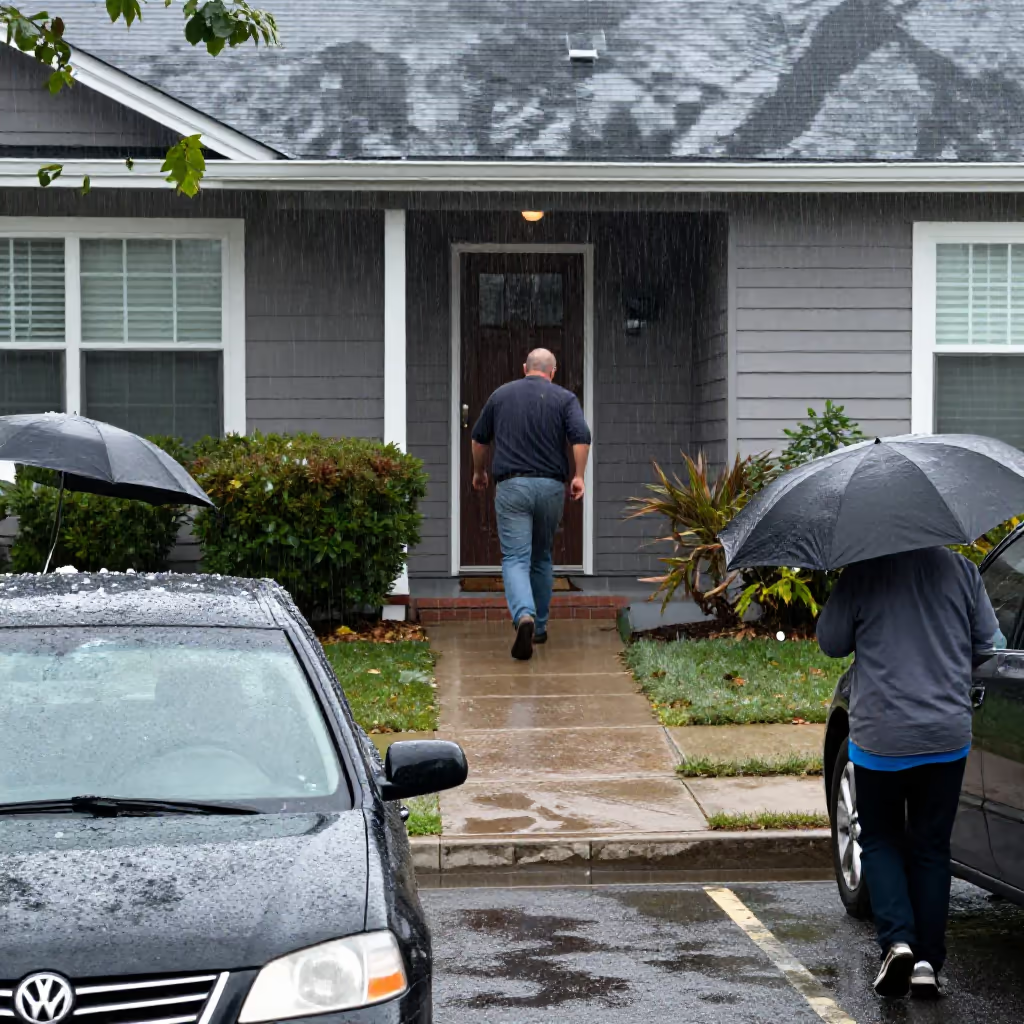
The meteorological phenomenon in which precipitation falls from the sky in the form of small grains of ice (hail).
Es hat so stark gehagelt, dass das Dachfenster gesprungen ist.
It hailed so hard that the roof window cracked.


to hail
Loading your saved state.
to hail
The meteorological phenomenon in which precipitation falls from the sky in the form of small grains of ice (hail).
Es hat so stark gehagelt, dass das Dachfenster gesprungen ist.
It hailed so hard that the roof window cracked.

'Hageln' (to hail) is an impersonal verb. This means it is always used with the subject 'es' (it), both in the literal meaning (weather) and in the figurative meaning.
Gestern hat es den ganzen Nachmittag gehagelt.
Yesterday it hailed all afternoon.
In the figurative meaning, 'es hagelt' is usually followed by a noun in the accusative that describes a large amount of something. This construction expresses that something comes down on someone quickly and in large numbers.
Nach der kontroversen Entscheidung hagelte es Kritik von allen Seiten.
After the controversial decision, criticism came from all sides.
The figurative meaning is often combined with negative or challenging things. Typical expressions are 'es hagelt Kritik' (criticism comes pouring in), 'es hagelt Vorwürfe' (accusations come pouring in), 'es hagelt Fragen' (questions come pouring in), or 'es hagelt Absagen' (rejections come pouring in).
Auf der Pressekonferenz hagelte es Fragen an den Minister.
At the press conference, the minister was pelted with questions.
to rain
'regnen' and 'hageln' can both describe precipitation and are often used with 'es' (it). In weather, the difference is clear: with 'regnen', water droplets fall; with 'hageln', small grains of ice fall. Both words can also be used figuratively when a lot of something comes at once. 'Es regnet Kritik' is possible, but 'es hagelt Kritik' sounds stronger and more forceful. Learners may confuse the words because both are about things coming from the sky, or figuratively about many things coming at once.

Nach dem Fehler hagelte es im Büro viele kritische Fragen.
After the mistake, critical questions came thick and fast in the office.
Zu Hause hat es den ganzen Vormittag geregnet.
At home, it rained all morning.