

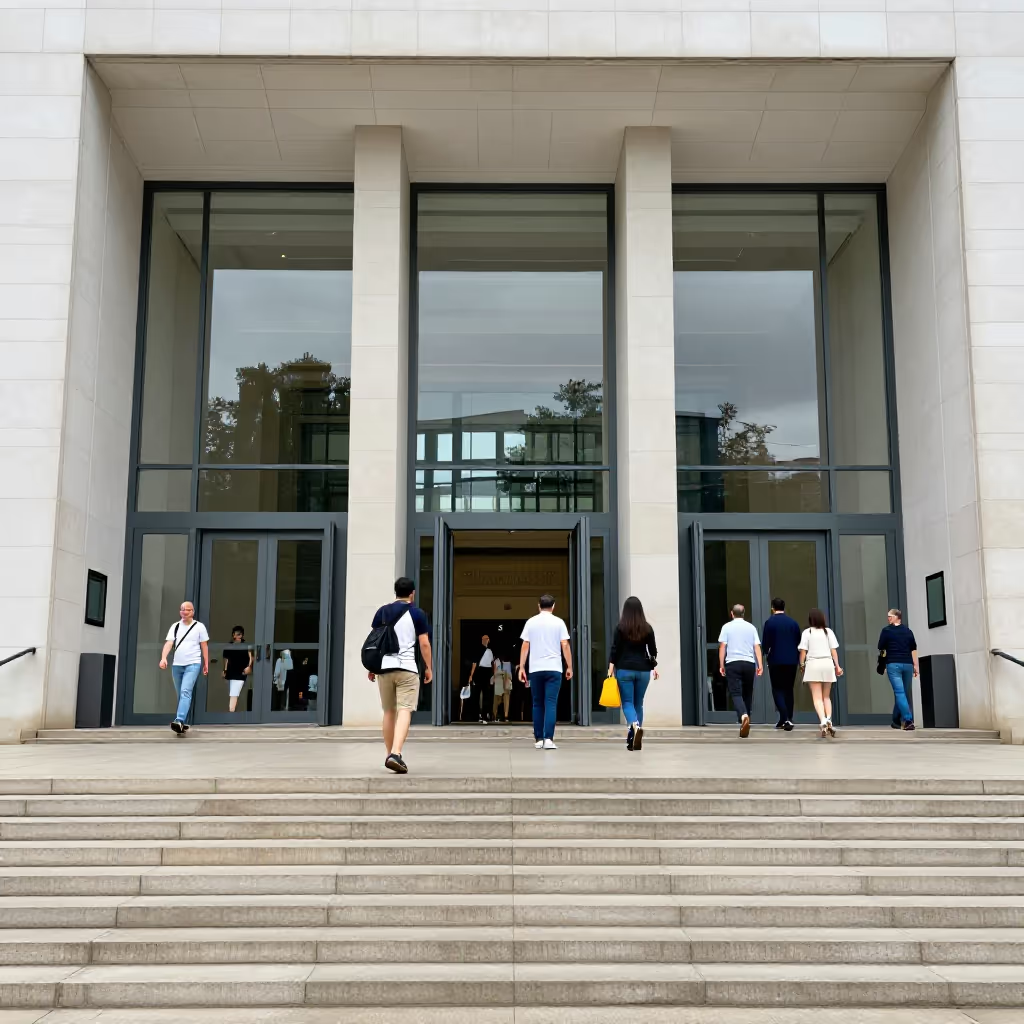
The largest, most important, or most frequently used entrance of a building, park, or site.
example
Wir treffen uns um 18 Uhr direkt vor dem Haupteingang des Kinos.
We'll meet at 6 p.m. right in front of the main entrance to the cinema.
Usage tips
Word composition
The word is composed of 'Haupt-' (main) and 'Eingang' (entrance). The prefix 'Haupt-' means 'most important' or 'central', as in 'Hauptstadt' (capital city) or 'Hauptgericht' (main course).
EXAMPLE
Der Haupteingang des Gebäudes ist wegen Bauarbeiten gesperrt.
The main entrance of the building is closed because of construction work.
Correct preposition
To indicate a position, you use 'am Haupteingang' (at the main entrance). To express movement toward it, you use 'zum Haupteingang' (to the main entrance).
EXAMPLE
Ich warte auf dich am Haupteingang.
I'll wait for you at the main entrance.
Typical context
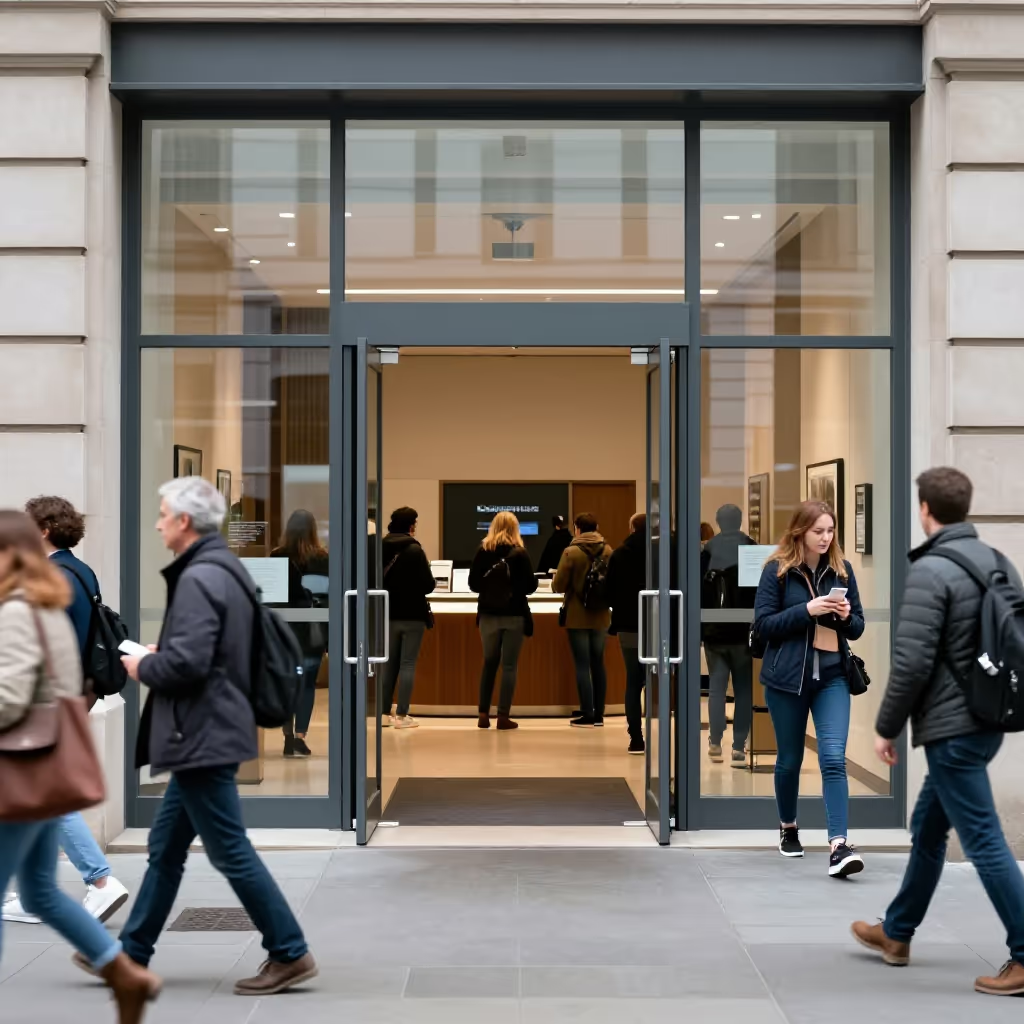
The word 'Haupteingang' is typically used for larger public buildings that often also have other entrances. Examples include museums, train stations, universities, or large company buildings.
EXAMPLE
Der Haupteingang des Museums ist nachts geschlossen.
The main entrance of the museum is closed at night.
Compare with
near_synonym · confusable
Haupteingang vs Zugang
access / entrance
'der Zugang' and 'der Haupteingang' can both mean a way through which you get to a place. But 'der Zugang' is more general: it can be an entrance, an access road, or simply the possibility of entering a place. 'der Haupteingang' is more specific and means the main or most-used entrance of a building or site. The words can be confused when talking about buildings. If you only want to say where people can get in, 'Zugang' fits. If you mean the main entrance, 'Haupteingang' is more natural.
Haupteingang
Hannah wartet nach dem Training am Haupteingang der Sporthalle.
Hannah is waiting after training at the main entrance to the sports hall.
Zugang
Wegen der Baustelle ist der Zugang zum Hof heute gesperrt.
Because of the construction work, access to the courtyard is closed today.