

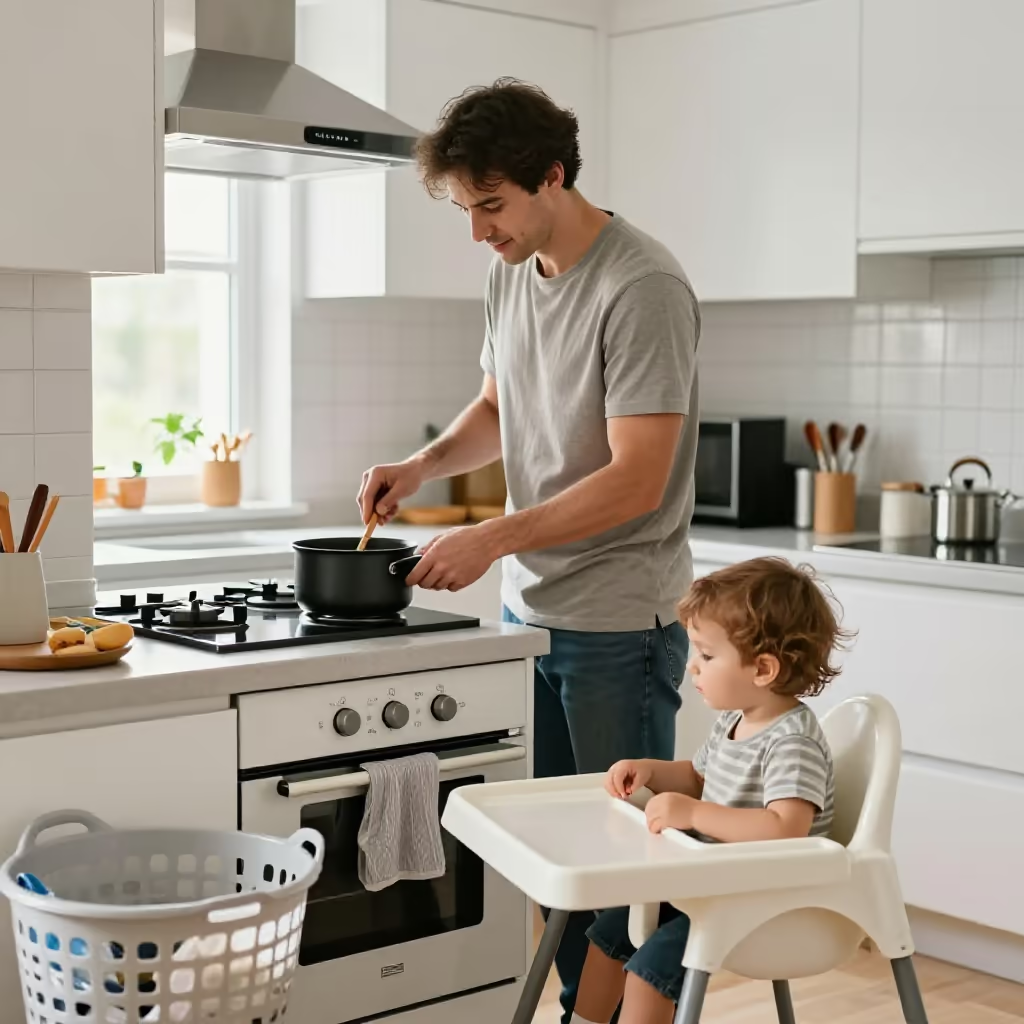
A man who does not work outside the home and instead manages the household and takes care of the children.
example
Seit der Geburt ihrer Tochter ist er Hausmann und seine Frau arbeitet Vollzeit.
Since the birth of their daughter, he has been a househusband and his wife works full-time.
Usage tips
Compound word
The word is made up of 'das Haus' (the house) and 'der Mann' (the man). It describes a man whose main task is work in the household.
EXAMPLE
Er ist ein sehr engagierter Hausmann und kümmert sich um alles.
He is a very dedicated househusband and takes care of everything.
Cultural context
The term 'Hausmann' (househusband) describes a modern family model in which the man takes on the traditional role of managing the household. It is the counterpart to the classic distribution of roles.
EXAMPLE
Immer mehr Männer entscheiden sich bewusst dafür, Hausmann zu sein.
More and more men are consciously choosing to be househusbands.
Use with 'sein'
Most of the time, 'Hausmann' (househusband) is used like a job title with the verb 'sein' (to be). For example, you say 'Er ist Hausmann' (He is a househusband).
EXAMPLE
Mein Bruder ist seit zwei Jahren Hausmann und genießt die Zeit mit seinen Kindern.
My brother has been a househusband for two years and enjoys the time with his children.
Compare with
near_synonym · confusable
Hausmann vs Hausfrau
housewife
'die Hausfrau' and 'der Hausmann' describe very similar tasks: a person manages the household and often also takes care of the children instead of doing paid work outside the home. The difference is mainly the person's gender. 'Hausfrau' is used for a woman, 'Hausmann' for a man. The words can be confused if you are only thinking about the activity. To choose the right word, it is important to know which person you are talking about.
Hausmann
Seit der Geburt des Kindes ist Paul Hausmann und organisiert den Alltag zu Hause.
Since the birth of the child, Paul has been a househusband and organizes everyday life at home.