

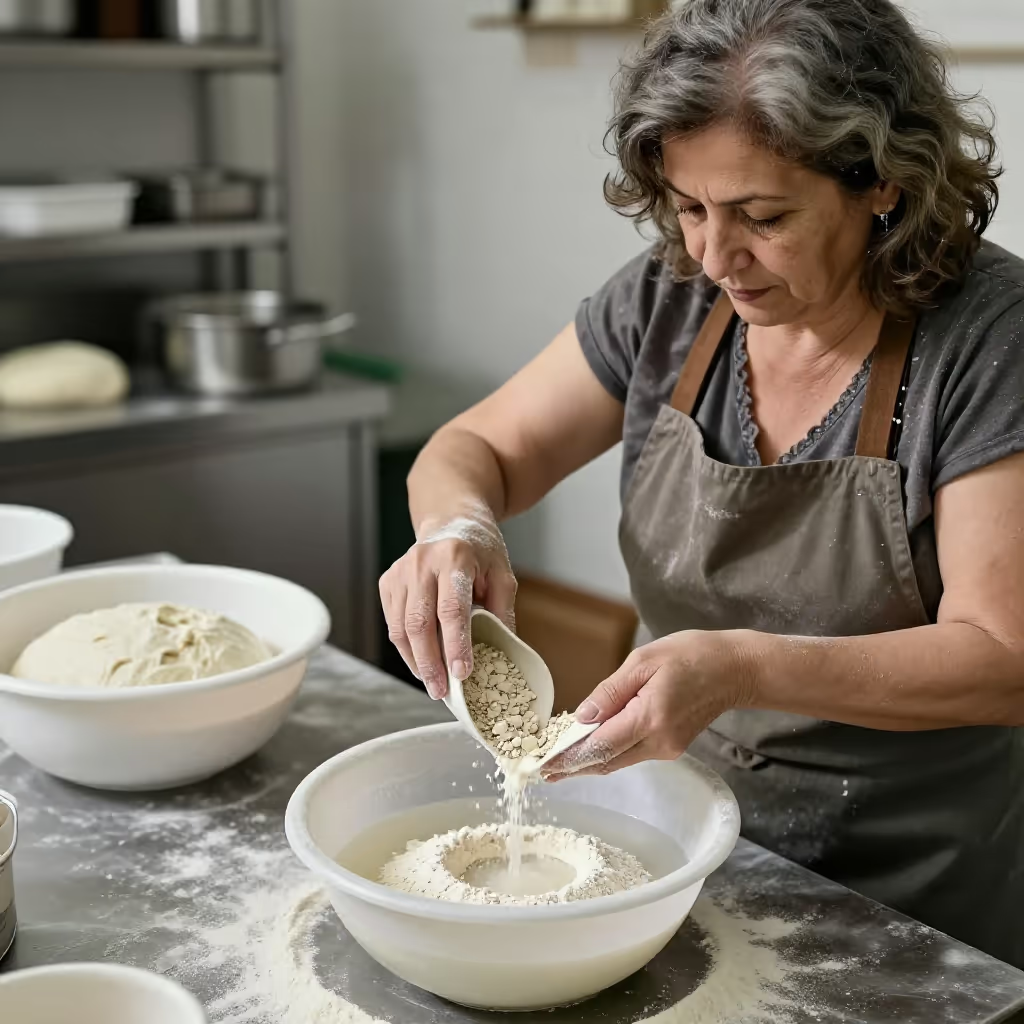
A fungus that is used as a leavening agent to make dough rise, or for fermentation in the production of alcohol such as beer and wine.
example
Für einen lockeren Brotteig braucht man frische Hefe.
For a light bread dough, you need fresh yeast.
Usage tips
Use as a mass noun
'Hefe' (yeast) is an uncountable noun (mass noun). When talking about an indefinite amount, it is often used without an article or with 'etwas' (some). The definite article is used when a specific yeast is meant.
EXAMPLE
Für dieses Rezept brauchst du frische Hefe.
For this recipe, you need fresh yeast.
Typical collocations
In the supermarket, you usually find 'Hefe' (yeast) as 'Frischhefe' (fresh yeast, in a small cube) or as 'Trockenhefe' (dry yeast, in a small packet).
EXAMPLE
Trockenhefe ist länger haltbar als Frischhefe.
Dry yeast keeps longer than fresh yeast.
Use in baking
In baking recipes, yeast is often first 'aufgelöst' (dissolved) in warm liquid. After that, you let the dough 'gehen' (rise), which means that it increases in volume because of the yeast.
EXAMPLE
Lassen Sie den Teig an einem warmen Ort eine Stunde gehen.
Let the dough rise in a warm place for one hour.
Compare with
confusable
Hefe vs Pilz
mushroom / fungus
'der Pilz' and 'die Hefe' can be confused because yeast is biologically also a fungus. In normal usage, however, 'der Pilz' often means a visible mushroom, for example one from the forest or an edible mushroom. 'die Hefe' is used mainly in baking or fermentation, for example for bread, beer, or wine. When talking about dough, 'Hefe' is the precise word. 'Pilz' here is only the more general biological classification.
Hefe
Für den Pizzateig löst meine Schwester die Hefe in warmem Wasser auf.
For the pizza dough, my sister dissolves the yeast in warm water.
Pilz
Dieser Pilz ist giftig, deshalb lassen wir ihn im Wald stehen.
This mushroom is poisonous, so we leave it in the forest.