

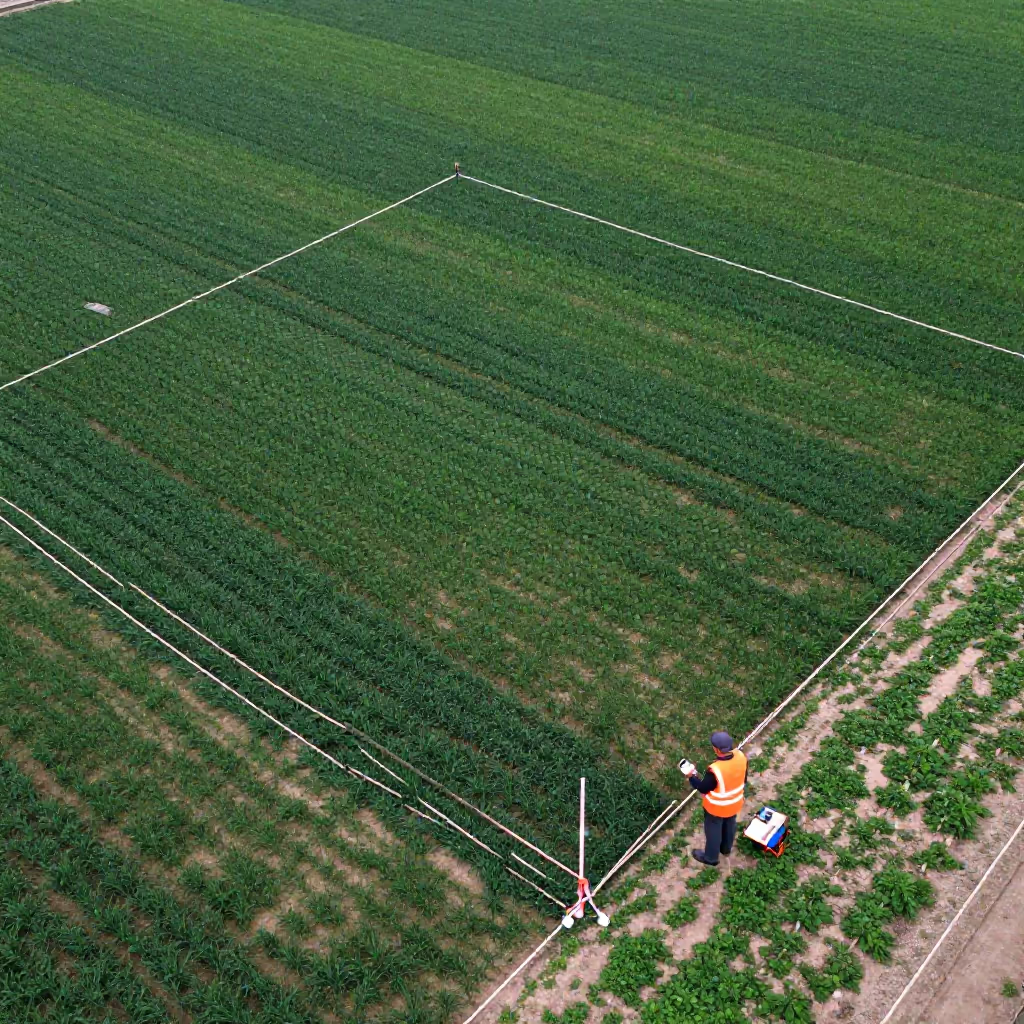
der Hektar
hectare
A unit of measurement for area that equals 10,000 square meters. The unit symbol is 'ha'.
EXAMPLE
Der landwirtschaftliche Betrieb bewirtschaftet eine Fläche von über 200 Hektar.
The farm cultivates an area of over 200 hectares.
hectare
Loading your saved state.
hectare
A unit of measurement for area that equals 10,000 square meters. The unit symbol is 'ha'.
Der landwirtschaftliche Betrieb bewirtschaftet eine Fläche von über 200 Hektar.
The farm cultivates an area of over 200 hectares.
The word 'Hektar' (hectare) is made up of 'Hekt-' (from the Greek word for hundred) and 'Ar' (are). An are is an older unit of area equal to 100 square meters, so one hectare is 100 ares or 10,000 square meters.
Ein Fußballfeld ist ungefähr einen halben Hektar groß.
A soccer field is about half a hectare in size.
When a number comes before 'Hektar' (hectare), the singular form is usually kept. So you say 'fünf Hektar' (five hectares) and not 'fünf Hektare'.
Der Bauer besitzt zehn Hektar Wald.
The farmer owns ten hectares of forest.
'Hektar' (hectare) is used mainly in agriculture and forestry, as well as in the planning of large construction projects, to specify large areas.
Auf diesem Feld werden auf drei Hektar Kartoffeln angebaut.
Potatoes are grown on three hectares in this field.