


In the present time; in our day. Often used to make a comparison with the past.
example
Heutzutage ist es normal, ein Smartphone zu besitzen, früher war das unvorstellbar.
Nowadays it is normal to own a smartphone; in the past, that was unimaginable.
Usage tips
Word structure
'Heutzutage' (nowadays) is an old contraction of the words 'heute zu Tage'. Literally, it means 'on today's day' or 'in the present time'.
EXAMPLE
Was man heutzutage nicht alles im Internet findet!
The things you can find on the internet nowadays!
Word order
As an adverb, 'heutzutage' can stand in position 1, which triggers inversion of the subject and verb. It can also stand after the verb and the subject in the middle of the sentence.
EXAMPLE
Heutzutage kommunizieren die Menschen viel über soziale Medien.
Nowadays, people communicate a lot through social media.
Use for contrasts
'Heutzutage' is very often used to create a contrast between the present and the past. The comparison is often mentioned directly in the sentence with 'früher' (in the past) or 'damals' (back then), or is clear from context.
EXAMPLE
Früher schrieben sich die Leute Briefe, heutzutage schickt man eine kurze Nachricht.
In the past, people wrote letters to each other; nowadays, you send a short message.
Compare with
near_synonym · confusable
heutzutage vs jetzt
now
'jetzt' and 'heutzutage' can both refer to the present, but not with the same level of precision. 'jetzt' can mean a single moment or the present day. 'heutzutage' means the present day in general and is often used when comparing it with the past. Learners may confuse the words because neither points to the past. For something that is happening right at this moment, use 'jetzt'. For general statements about the present day, 'heutzutage' fits better.
heutzutage
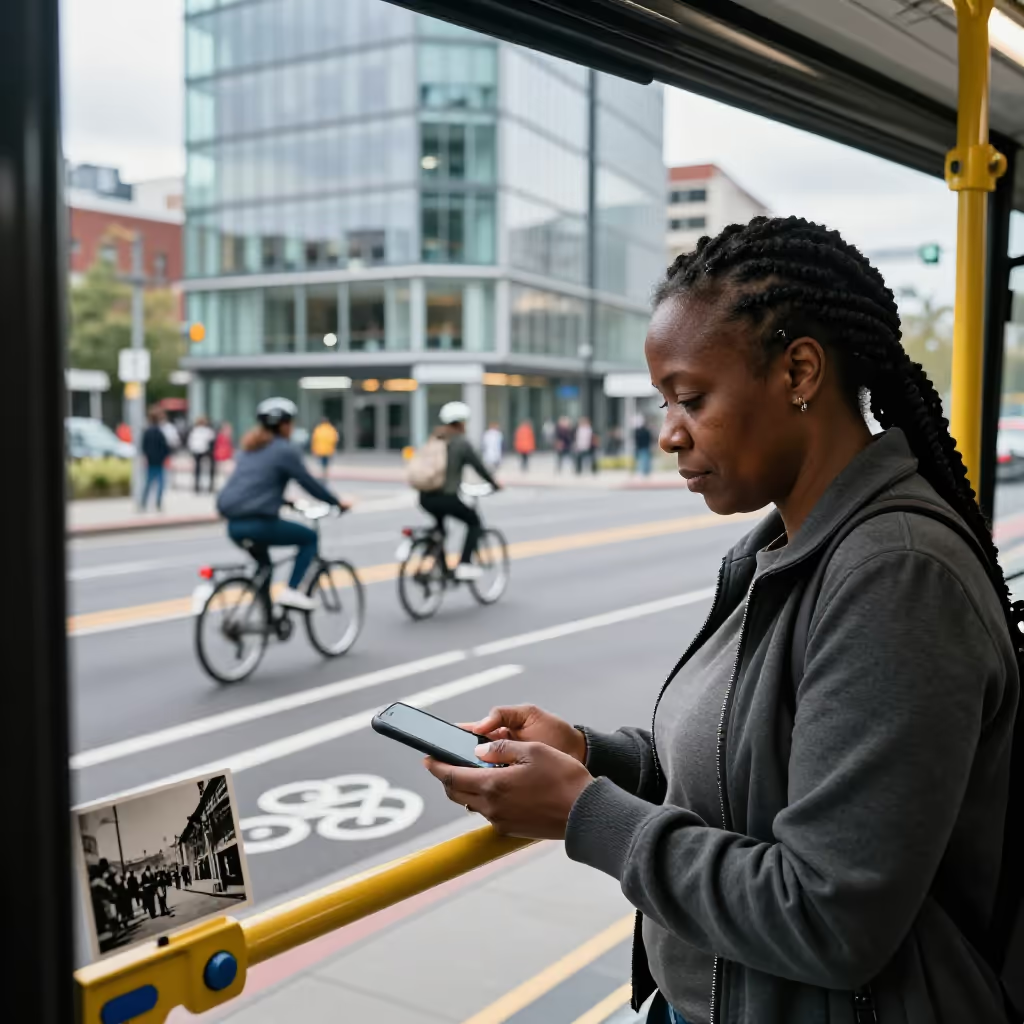
Heutzutage bezahlen viele Menschen im Bus mit dem Handy.
Nowadays, many people pay on the bus with their phone.
jetzt
Ihr frühstückt jetzt, und danach fahren wir los.
You're having breakfast now, and then we'll set off.