

Colloquial for the ability to successfully finish something, solve a problem, or repair something.
example
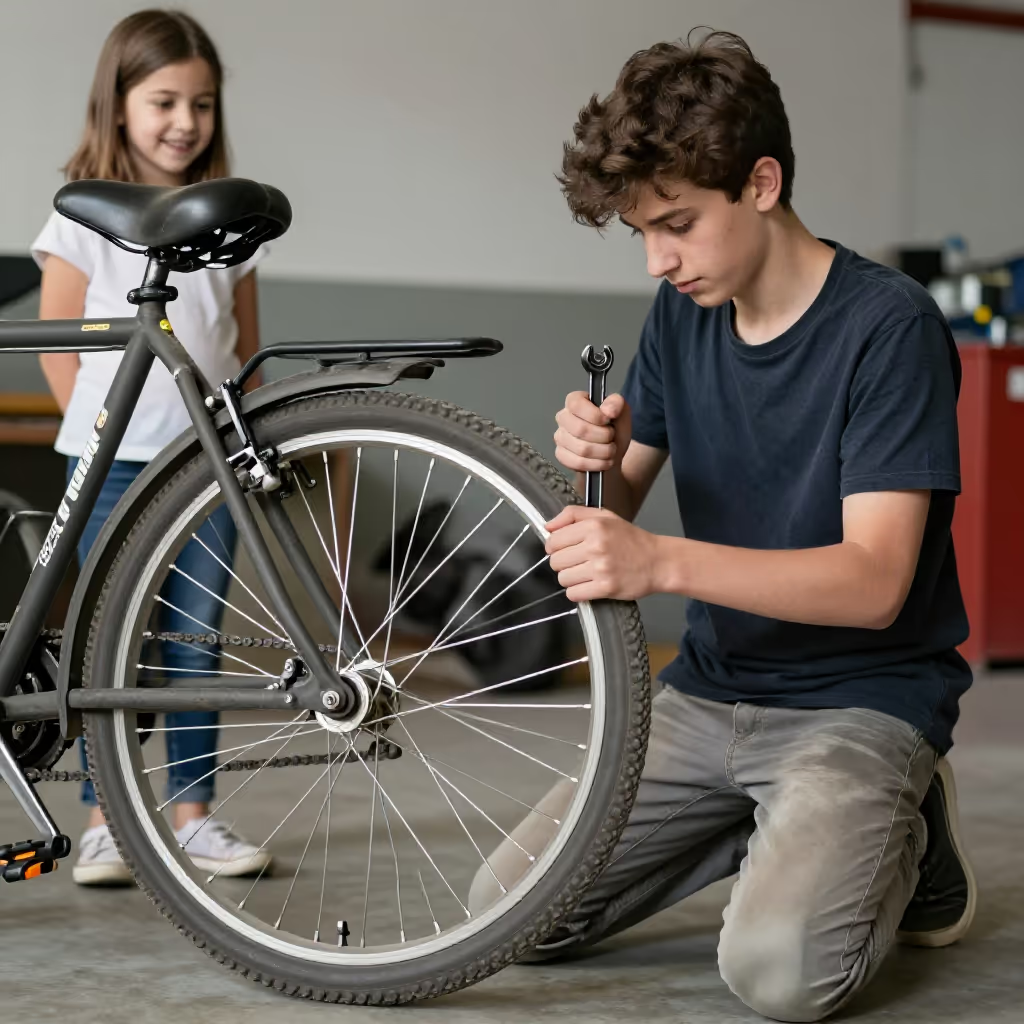
Ich weiß nicht, ob ich die Reparatur des Fahrrads alleine hinbekomme.
I don't know whether I can manage the bike repair on my own.

Usage tips
Separable verb
'Hinbekommen' is a separable verb. In a main clause, the prefix 'hin' goes at the end. In subordinate clauses and in the infinitive with 'zu', the verb stays together.
EXAMPLE
Ich bekomme das schon hin.
I'll manage it somehow.
Register and style
This word belongs to colloquial language. In formal or written contexts, you would often use 'schaffen' (to manage), 'bewältigen' (to cope with / to handle), or 'gelingen' (to succeed) instead.
EXAMPLE
Komm, das bekommen wir zusammen schon hin!
Come on, we'll manage it together!
Typical usage
You use 'hinbekommen' for a task, a problem, or something you make or put together. The object is often a pronoun like 'es' (it) or 'das' (that), referring to the task.
EXAMPLE
Das Abendessen hast du wirklich gut hinbekommen, es schmeckt super!
You really managed dinner well; it tastes great!
Compare with
near_synonym · confusable
hinbekommen vs schaffen
to manage / create
'schaffen' and 'hinbekommen' both mean that something succeeds or that you solve a problem. 'schaffen' is neutral and fits exams, tasks, goals, or difficult situations. 'hinbekommen' is more colloquial and often emphasizes the practical solution: repairing, organizing, or doing something so that it works in the end. Learners may confuse the words because both express success. As a simple guide: 'schaffen' fits generally; 'hinbekommen' sounds more natural when asking whether someone has practically sorted something out or solved it.
hinbekommen
Hast du das Problem mit dem Drucker allein hinbekommen?
Did you manage to fix the problem with the printer on your own?
schaffen
Wir haben es geschafft, pünktlich beim Arzt zu sein.