

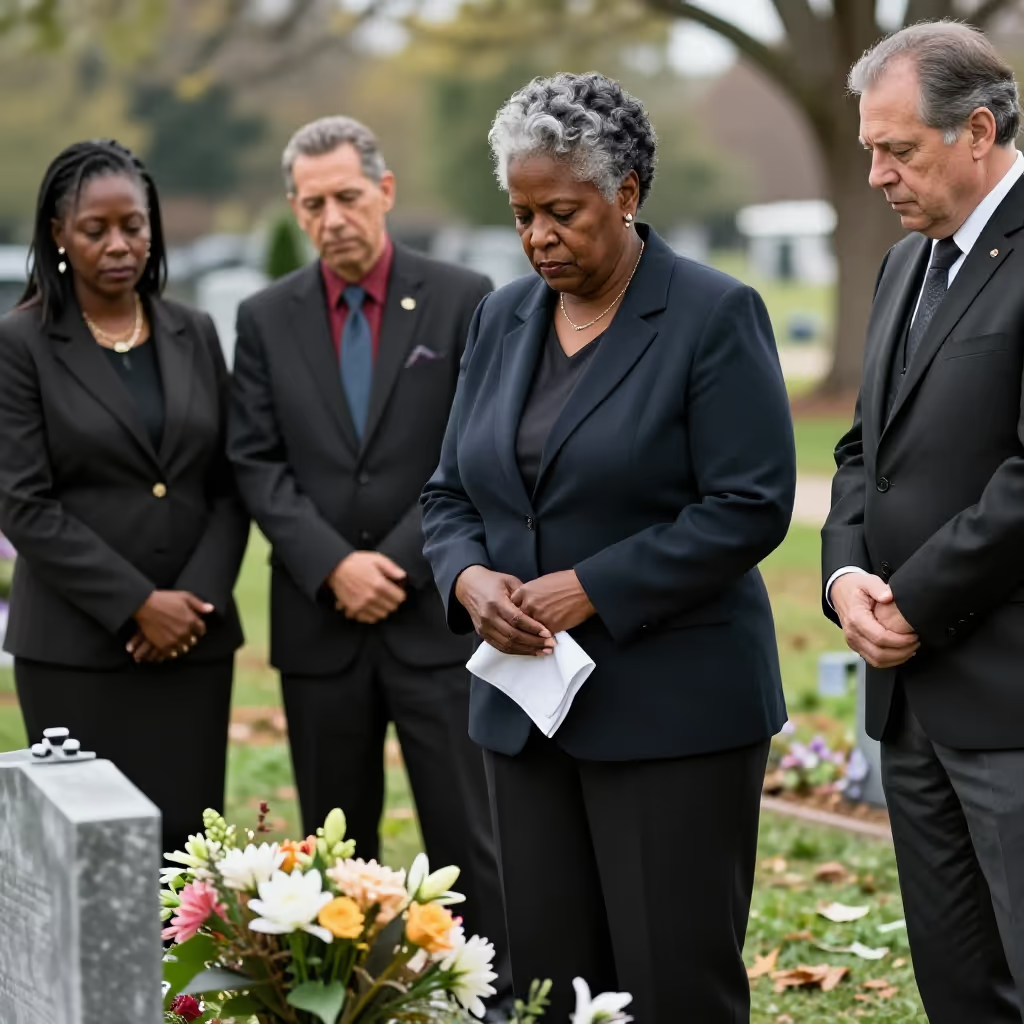
A person whose close relative or partner has died. Most often, the family members of a deceased person are collectively referred to as 'die Hinterbliebenen' (the bereaved).
example
Als einziger Hinterbliebener musste er die gesamte Beerdigung organisieren.
As the only bereaved person, he had to organize the entire funeral.

Usage tips
Word structure
The word comes from the verb 'hinterbleiben' (to remain behind). A 'Hinterbliebener' (bereaved person) is therefore literally a person who was 'left behind' after someone died.
EXAMPLE
Die Hinterbliebenen trafen sich nach der Beerdigung zu einem gemeinsamen Essen.
The bereaved met for a meal together after the funeral.
Grammatical form
'Hinterbliebener' (bereaved person) is a noun formed from an adjective. It is therefore declined like an adjective. Pay attention to the endings depending on the article: der Hinterbliebene, ein Hinterbliebener.
EXAMPLE
Ein Hinterbliebener erzählte von dem Verstorbenen.
A bereaved person spoke about the deceased.
Register and context
This word belongs to formal language and is mainly used in the context of death and grief. It is often found in death notices, official letters, or news reports.
EXAMPLE
Die Firma sprach den Hinterbliebenen ihr tiefes Mitgefühl aus.
The company expressed its deepest sympathy to the bereaved.
Often plural
The word is very often used in the plural to refer to the entire grieving family or the closest relatives as a group.
EXAMPLE
Die Spenden sind für die Hinterbliebenen des Opfers bestimmt.
The donations are intended for the victim's bereaved relatives.
Compare with
near_synonym · confusable
Hinterbliebener vs Angehörige
relative / member
'Angehöriger' and 'Hinterbliebener' can both refer to people from someone's close circle or family. The important difference is the situation. An 'Angehöriger' is generally a family member or relative, regardless of whether someone has died. A 'Hinterbliebener' is a person left behind after the death of someone close to them. The words can be confused because bereaved people are usually also relatives. But not every relative is a bereaved person. 'Hinterbliebene' fits especially in contexts of death, grief, funerals, or inheritance.
Hinterbliebener
Nach der Beerdigung bekamen die Hinterbliebenen Hilfe bei den Anträgen.
After the funeral, the bereaved received help with the applications.
Angehörige
Im Krankenhaus dürfen Angehörige die Patientin am Nachmittag besuchen.
At the hospital, relatives may visit the patient in the afternoon.