


hinterlassen
to leave
To leave something behind in a place when you go away. This can happen intentionally or unintentionally.
EXAMPLE
Bitte hinterlassen Sie eine Nachricht nach dem Piepton.
Please leave a message after the beep.
to leave / bequeath
Loading your saved state.
to leave
To leave something behind in a place when you go away. This can happen intentionally or unintentionally.
Bitte hinterlassen Sie eine Nachricht nach dem Piepton.
Please leave a message after the beep.
to bequeath
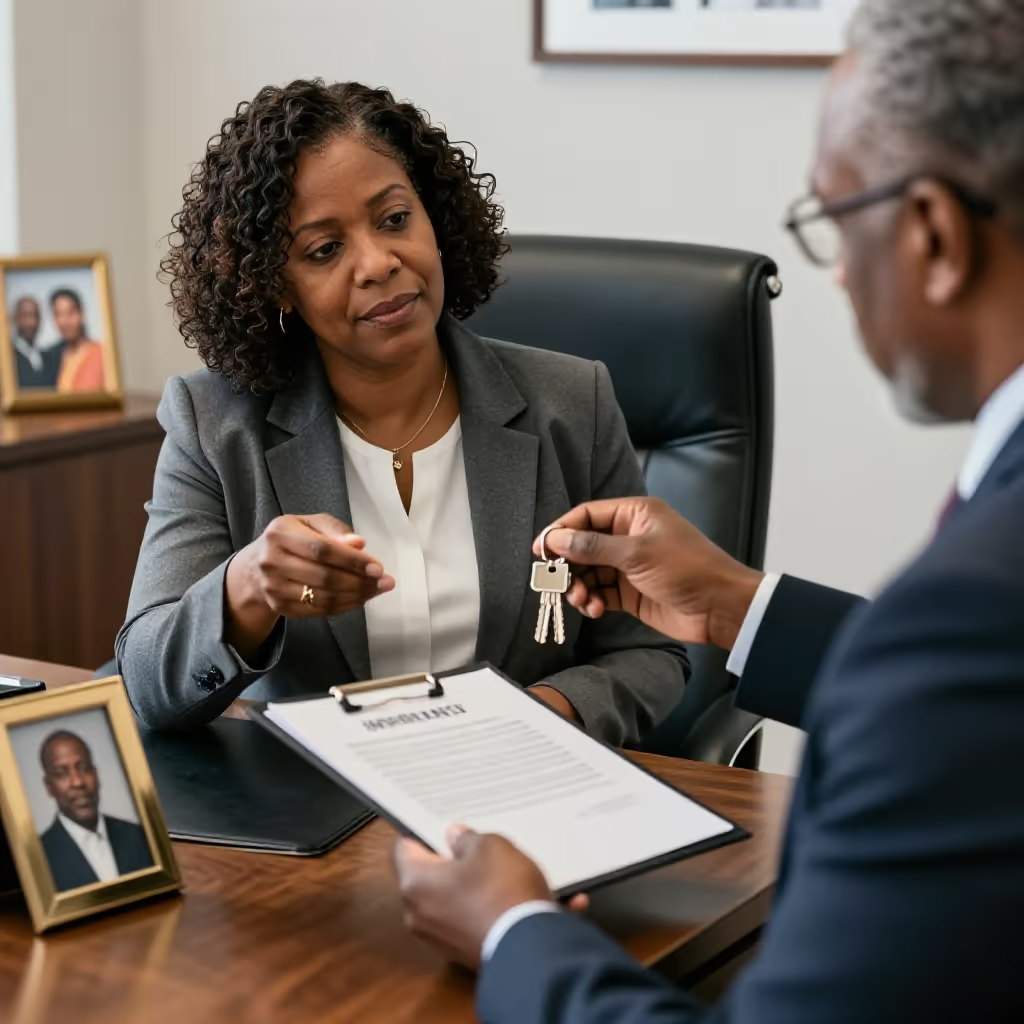
To leave something to someone as an inheritance after one's death.
Sein Großvater hat ihm eine wertvolle Uhrensammlung hinterlassen.
His grandfather bequeathed him a valuable watch collection.

to leave
To create a trace, impression, or effect that remains after an action or event.
Der Künstler wollte mit seinem Werk einen bleibenden Eindruck hinterlassen.
The artist wanted to leave a lasting impression with his work.
'Hinterlassen' (to leave / bequeath) is an inseparable verb. The prefix 'hinter-' remains firmly attached to the verb stem in all tenses and sentence constructions and is not placed at the end of the sentence.
Er hat bei seinem Auszug die Wohnung sehr sauber hinterlassen.
When he moved out, he left the apartment very clean.
When leaving something behind, 'hinterlassen' (to leave) is often combined with information or small objects. Typical phrases are: 'eine Nachricht hinterlassen' (to leave a message), 'seine Telefonnummer hinterlassen' (to leave one's phone number), or 'einen Schlüssel hinterlassen' (to leave a key).
Der Gast hat an der Rezeption einen Brief für Sie hinterlassen.
The guest left a letter for you at reception.
In the meaning 'vererben' (to bequeath), 'hinterlassen' is often used with a person in the dative and a thing in the accusative. The structure is: subject leaves [dative: to whom?] [accusative: what?].
Die Tante hat ihrer Nichte ein kleines Vermögen hinterlassen.
The aunt bequeathed her niece a small fortune.
When 'hinterlassen' (to leave) describes an effect, it is used with abstract nouns. Common combinations are 'einen Eindruck hinterlassen' (to leave an impression), 'Spuren hinterlassen' (to leave traces, figuratively), or 'ein Gefühl hinterlassen' (to leave a feeling).
Das Gespräch hat bei mir ein komisches Gefühl hinterlassen.
The conversation left me with a strange feeling.
to discuss / review
When referring to a message on an answering machine, both hinterlassen and besprechen can be appropriate. Hinterlassen presents the message as something left behind; besprechen emphasizes recording it on the answering machine or another medium. Choose hinterlassen for the message and besprechen for the device or medium.
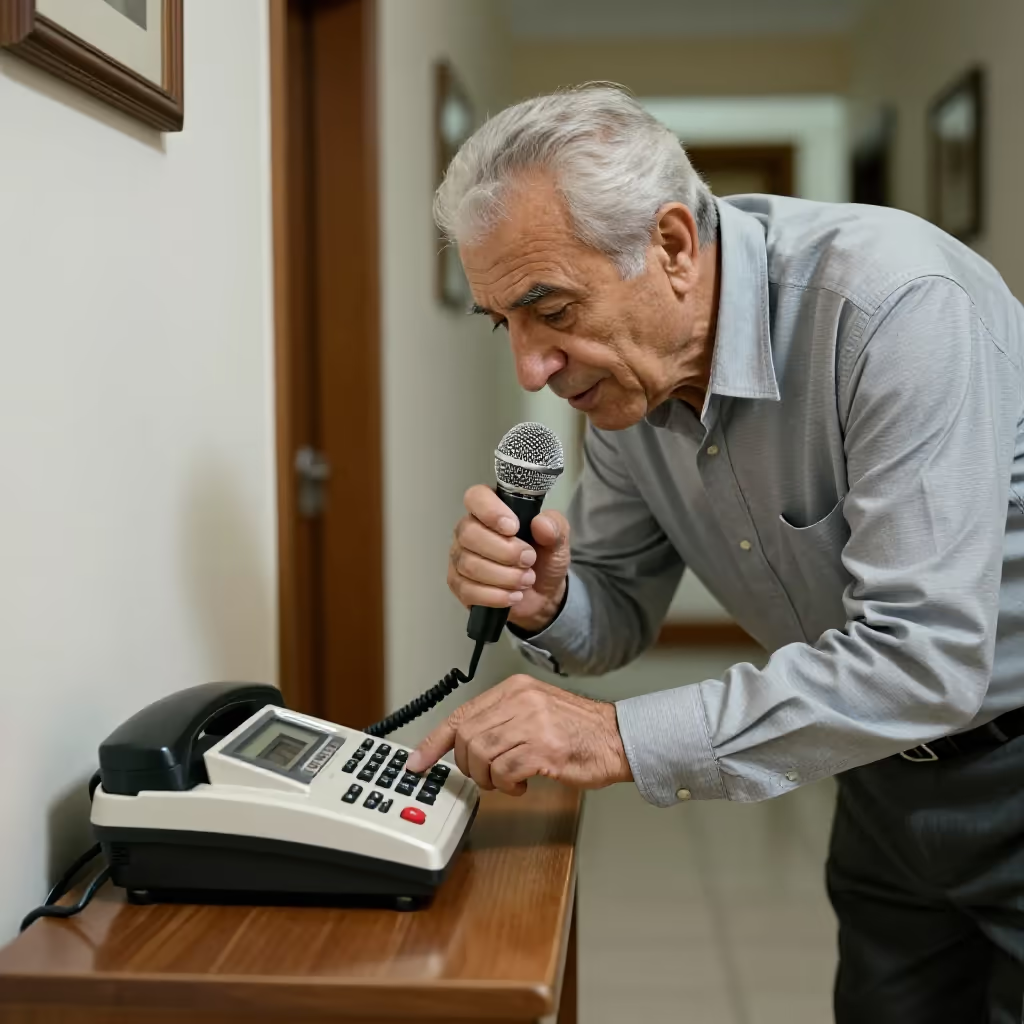
Ich hinterließ meiner Kollegin eine Nachricht auf dem Anrufbeantworter.
I left my colleague a message on the answering machine.
Ich besprach den Anrufbeantworter mit einer kurzen Nachricht für meine Kollegin.
I recorded a short message for my colleague on the answering machine.