


der Hort
after-school care
An institution for supervising schoolchildren after lessons.
EXAMPLE
Nach der vierten Stunde geht meine Tochter direkt in den Hort.
After the fourth lesson, my daughter goes straight to after-school care.
after-school care / refuge / treasure
Loading your saved state.
after-school care
An institution for supervising schoolchildren after lessons.
Nach der vierten Stunde geht meine Tochter direkt in den Hort.
After the fourth lesson, my daughter goes straight to after-school care.

refuge / haven
Elevated language for a place of safety, protection, and security.
In unsicheren Zeiten war die Familie für ihn ein Hort des Friedens.
In uncertain times, his family was a haven of peace for him.
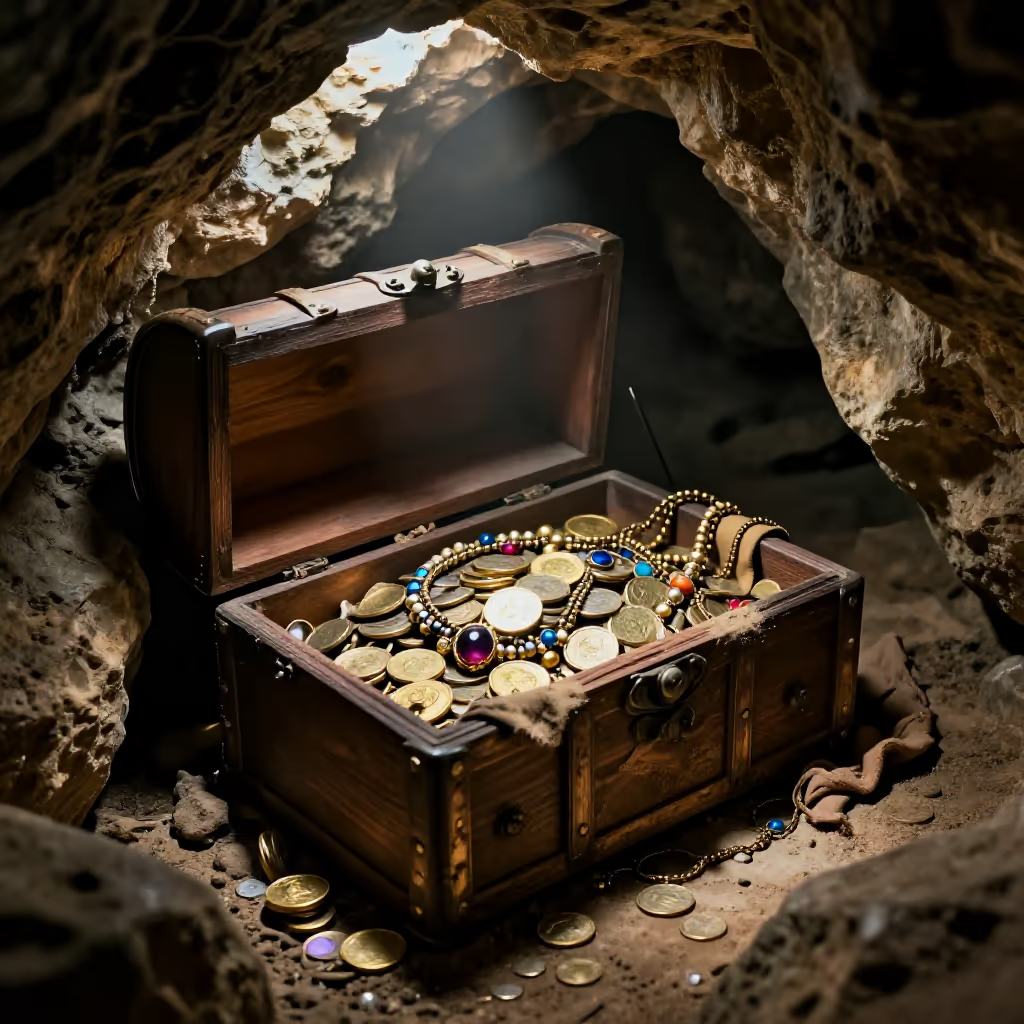
treasure / hoard
Literary and outdated term for a hidden treasure, especially one made of gold and jewels.
Der Drache bewachte den sagenumwobenen Hort der Nibelungen.
The dragon guarded the legendary hoard of the Nibelungs.
You can clearly recognize the meaning of 'Hort' from context. If it is about schoolchildren and care, it means after-school care. In poetic language, it refers to a place of protection. In fairy tales and legends, it means a treasure.
Mein Sohn ist nach der Schule im Hort.
My son is in after-school care after school.
In connection with childcare, fixed phrases are common: 'ein Kind in den Hort bringen' (to take a child to after-school care), 'das Kind vom Hort abholen' (to pick the child up from after-school care), or 'einen Platz im Hort bekommen' (to get a place in after-school care).
Wir suchen für unsere Tochter dringend einen Platz im Hort.
We urgently need a place in after-school care for our daughter.
In the meaning 'Ort des Schutzes' (place of protection), 'Hort' is used only in elevated or poetic language. It often sounds solemn or emotional.
Für viele Verfolgte wurde das Land zu einem Hort der Freiheit.
For many persecuted people, the country became a haven of freedom.
In the elevated meaning, 'Hort' is almost always combined with a genitive that describes what kind of place it is. Typical phrases are: 'ein Hort des Friedens' (a haven of peace), 'der Stabilität' (of stability), or 'der Geborgenheit' (of security).
Sein Zuhause war für ihn ein Hort der Geborgenheit.
His home was a place of security for him.
The meaning 'Schatz' (treasure) is outdated today and is found almost only in literature, myths, or legends, often in connection with dragons or dwarves.
Der Held machte sich auf die Suche nach dem verborgenen Hort.
The hero set out in search of the hidden treasure.
darling / treasure
Schatz and Hort can both refer to a hidden collection of valuable objects. In this meaning, Hort is literary and outdated and is particularly suited to stories about gold or jewels. Schatz is the more general term commonly used today for such a collection.

Im alten Märchen bewachte der Drache einen Hort aus Gold und Juwelen.
In the old fairy tale, the dragon guarded a hoard of gold and jewels.
Die Kinder fanden auf dem Dachboden einen Schatz aus alten Münzen.
The children found a treasure made up of old coins in the attic.