

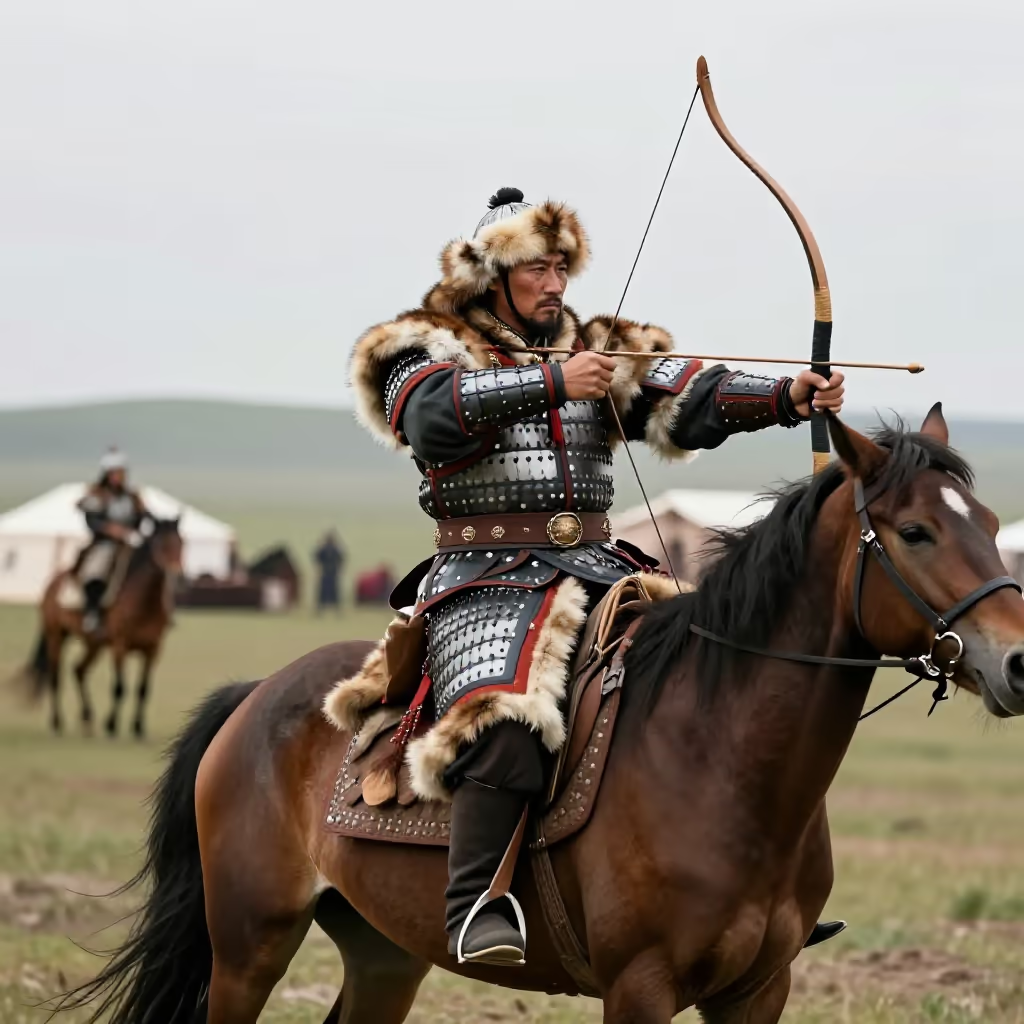
der Hunne
Hun
A member of the historical Eurasian horse-riding people known as the Huns, who advanced into Europe in Late Antiquity.
EXAMPLE
Attila war der bekannteste Anführer der Hunnen.
Attila was the best-known leader of the Huns.
Hun
Loading your saved state.
Hun
A member of the historical Eurasian horse-riding people known as the Huns, who advanced into Europe in Late Antiquity.
Attila war der bekannteste Anführer der Hunnen.
Attila was the best-known leader of the Huns.

barbarian
A person who is perceived as barbaric, ruthless, or destructive. This figurative use is strongly derogatory and often insulting.
Nach der Party sah die Wohnung aus, als wären die Hunnen dagewesen.
After the party, the apartment looked as if the Huns had been there.
'Der Hunne' (the Hun) is a weak masculine noun (N-declension). This means it takes the ending '-n' in all cases except the nominative singular.
Der Film handelt von einem Anführer der Hunnen.
The film is about a leader of the Huns.
You can recognize the meaning from the context. If it is about history, the Migration Period, or Attila, the historical people is meant. If it is about destruction or chaos in everyday life, the derogatory, figurative meaning is meant.
Die Hunnen waren ein Reitervolk aus Zentralasien.
The Huns were a horse-riding people from Central Asia.
In the figurative meaning, 'Hunne' (Hun) is a strongly derogatory, colloquial term for a person who behaves ruthlessly, destructively, or uncivilized.
Schau dir die Unordnung an! Hier waren wohl die Hunnen zu Besuch.
Look at the mess! The Huns must have been visiting here.
A very common expression is 'hausen wie die Hunnen' (to live like the Huns). It means to live in a very messy and chaotic way or to leave a big mess behind.
Nach der WG-Party sah die Küche aus, als hätten dort die Hunnen gehaust.
After the shared-flat party, the kitchen looked as if the Huns had been living there.
barbarian
Barbar and Hunne can be used to disparage a person for crude or cruel behavior. Barbar is the more general term. Hunne portrays the person as especially ruthless or destructive and therefore often sounds even more insulting.

Nach seinem rücksichtslosen Zerstören beschimpften ihn die anderen als Hunnen.
Because of his ruthless destruction, the others called him a barbarian.
Nach seinem rohen Verhalten bezeichneten ihn die anderen als Barbaren.
Because of his crude behavior, the others called him a barbarian.