

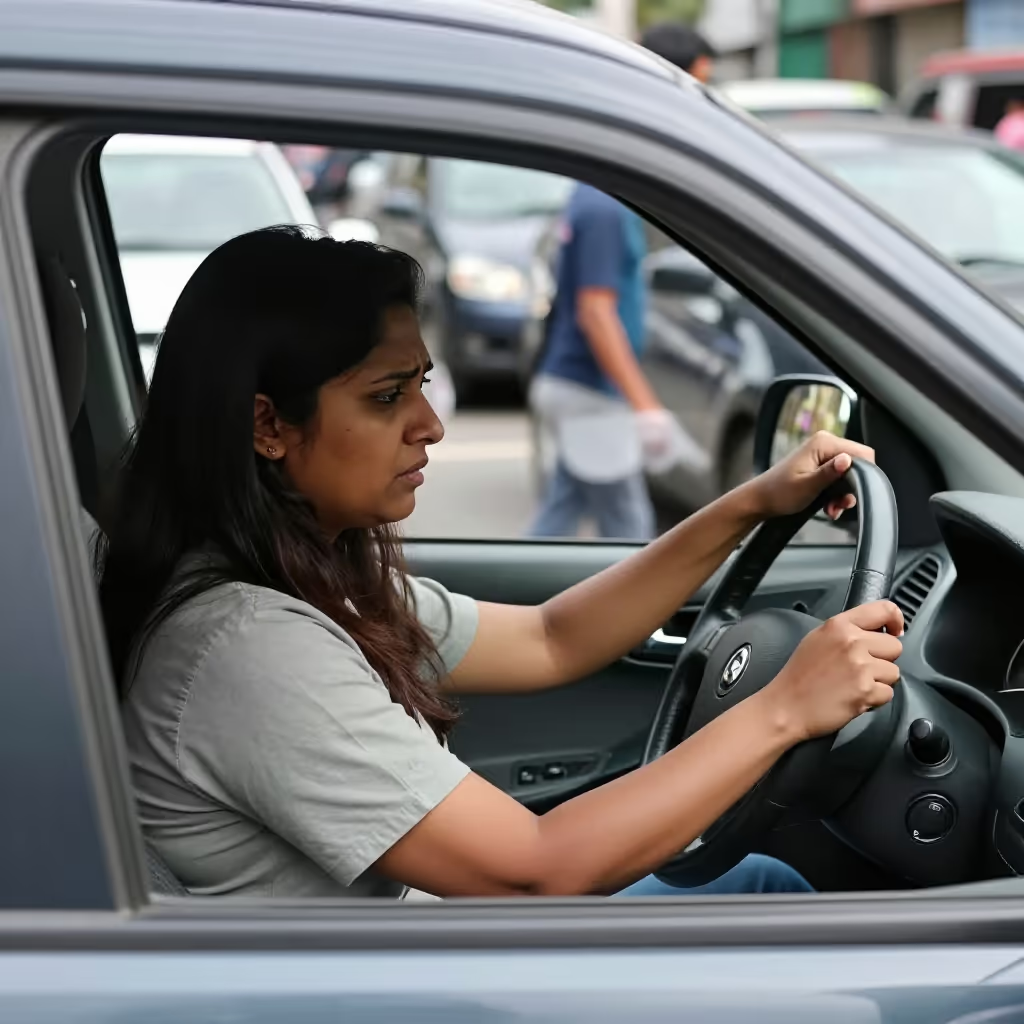
To produce a loud signal sound with a horn, usually that of a vehicle, in order to warn someone or draw attention to oneself.
example
Der Autofahrer hinter mir hupte, weil ich bei Grün nicht sofort losfuhr.
The driver behind me honked because I did not start driving immediately when the light turned green.
Usage tips
Word family
The verb 'hupen' (to honk) is derived directly from the noun 'die Hupe' (the horn). 'Die Hupe' is the device on a vehicle that produces the sound.
EXAMPLE
Die Hupe von diesem alten Auto funktioniert nicht mehr.
The horn on this old car no longer works.
Sentence structure
'Hupen' (to honk) is an intransitive verb, which means it is used without an accusative object. You cannot say 'jemanden hupen' (to honk someone); instead, you simply perform the action of honking.
EXAMPLE
Warum hupst du die ganze Zeit?
Why are you honking the whole time?
Cultural context
In Germany, according to traffic regulations, honking is only allowed to warn of danger or when overtaking outside built-up areas. Honking out of anger or as a greeting is officially not permitted.
EXAMPLE
Er hupte, weil ein Kind auf die Straße lief.
He honked because a child ran into the street.
Compare with
near_synonym · confusable
hupen vs klingeln
to ring
'klingeln' and 'hupen' both describe a signal sound used to get attention. 'klingeln' fits a doorbell, an alarm clock, a bell, or sometimes a telephone. The sound is usually clearer and higher-pitched. 'hupen' is almost always used with vehicles, for example cars, buses, or bicycles with a horn. The sound is louder and often serves as a warning. The words can be confused because both sounds are signals. More natural usage is: you use 'klingeln' at the door, and 'hupen' in traffic.
hupen
An der Kreuzung hupt ein Autofahrer, weil der Wagen vor ihm nicht losfährt.
At the intersection, a driver honks because the car in front of him does not start moving.
klingeln
Vor dem Besuch bei den Eltern klingelt Tom an der Haustür.
Before visiting his parents, Tom rings the front doorbell.