

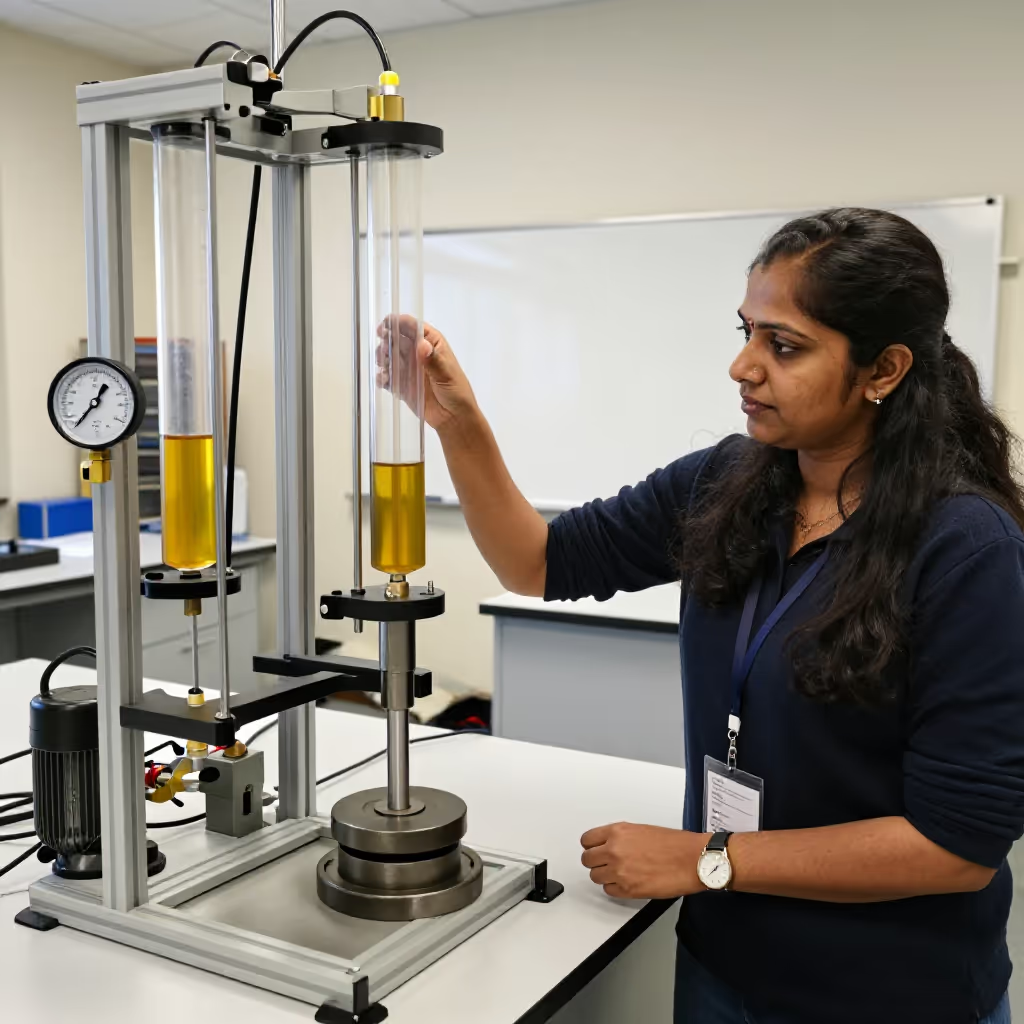
A branch of technology that deals with the use of liquids (usually oil) under pressure to transmit force and energy. It is the technology behind many machines such as excavators or brakes.
example
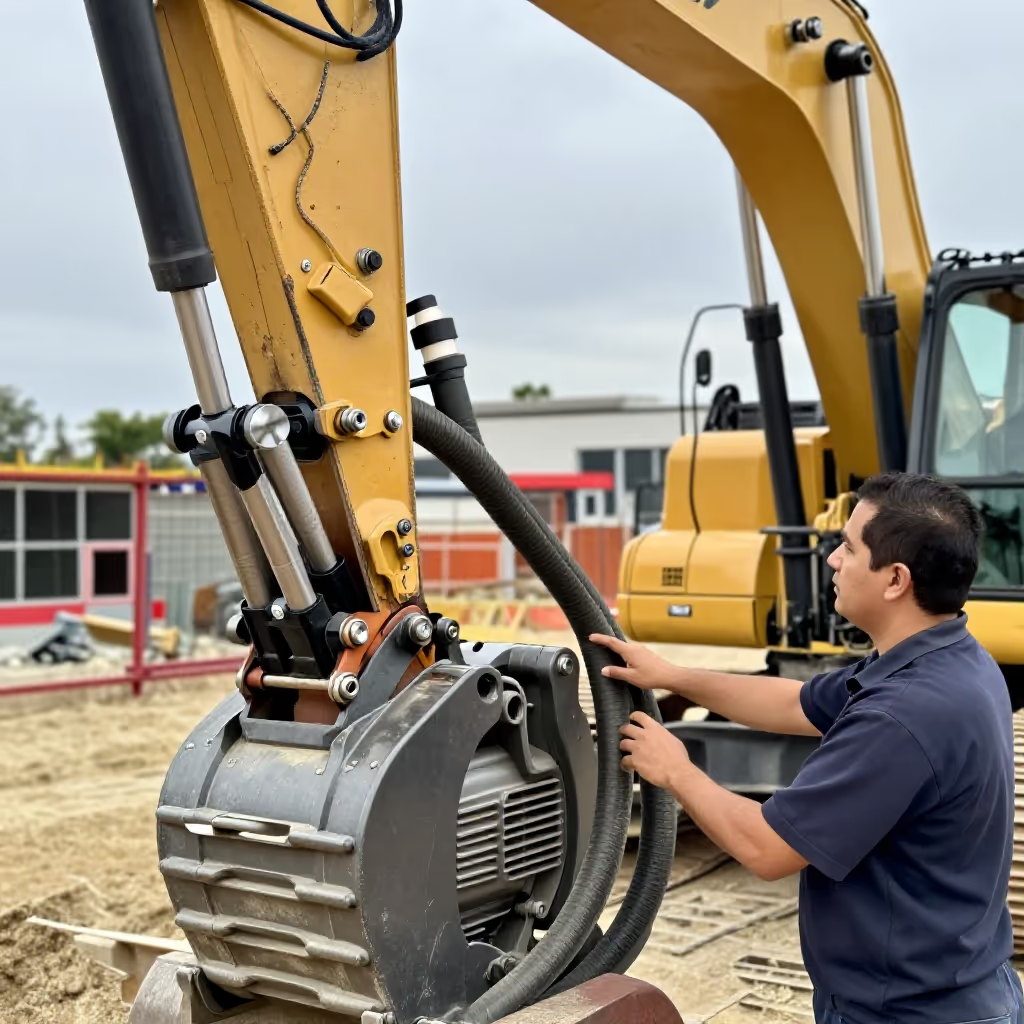
Der Baggerarm wird durch Hydraulik bewegt und kann schwere Lasten heben.
The excavator arm is moved by hydraulics and can lift heavy loads.
Usage tips
Word structure
The word comes from Greek: 'hýdor' means 'water' and 'aulós' means 'pipe'. The ending '-ik' often marks a field of study, as in 'Physik' (physics) or 'Technik' (technology/engineering).
EXAMPLE
Ohne Hydraulik würden viele moderne Baumaschinen nicht funktionieren.
Without hydraulics, many modern construction machines would not work.
Register: technical language
'Hydraulik' (hydraulics) is a technical term from engineering and physics. In everyday language, it is mainly used in connection with machines, vehicles, or repairs.
EXAMPLE
Für die Reparatur der Bremsanlage braucht man Kenntnisse in Hydraulik.
To repair the braking system, you need knowledge of hydraulics.
Context clue
The meaning can often be recognized from the article. If people speak generally of 'Hydraulik' (hydraulics) without an article, they usually mean the field. If they speak of 'der Hydraulik' (the hydraulic system) of a specific machine, they mean the concrete system.
EXAMPLE
Er studiert Maschinenbau mit Schwerpunkt Hydraulik.
He is studying mechanical engineering with a focus on hydraulics.
Typical collocations
When referring to the system in a machine, typical verbs are 'prüfen' (to check), 'warten' (to service/maintain), 'entlüften' (to bleed), or 'reparieren' (to repair). Common problems are that the hydraulics 'leckt' (leaks), 'undicht ist' (is not sealed/is leaking), or 'Druck verliert' (loses pressure).
EXAMPLE
An der Baumaschine ist ein Schlauch geplatzt und die Hydraulik ist ausgelaufen.
A hose burst on the construction machine, and the hydraulic fluid leaked out.