

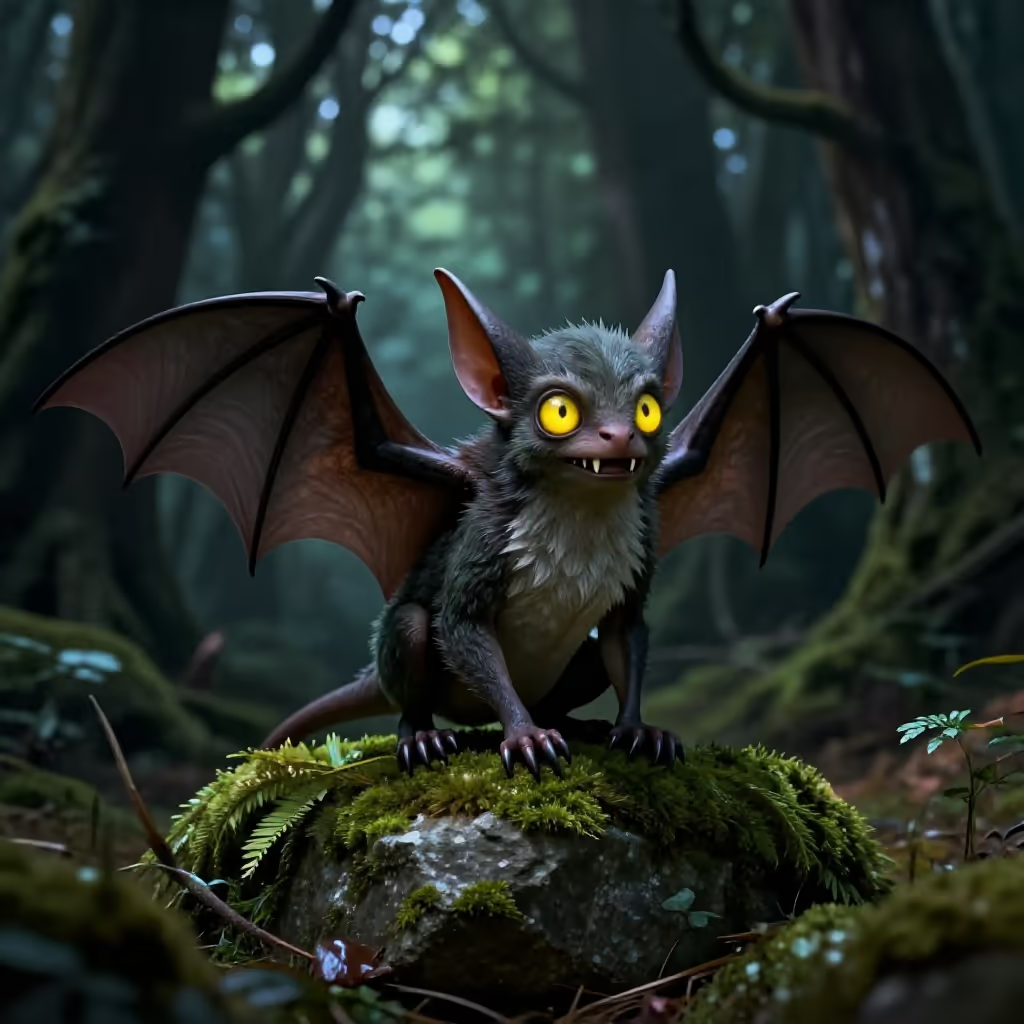
A small, goblin-like demon or malicious nature spirit that appears mainly in mythology, fantasy literature, and computer games.
example
In diesem Videospiel beschwört der Hexenmeister einen kleinen Imp als Diener.
In this video game, the warlock summons a small imp as a servant.

Usage tips
English loanword
'Imp' is a word borrowed directly from English that retains its original meaning. In German, it is a masculine noun and is used with the article 'der'.
EXAMPLE
Der kleine Imp verursachte eine Menge Chaos.
The little imp caused a lot of chaos.
Typical context
This word is found almost exclusively in the world of fantasy. It is typical of video games, fantasy novels, and mythological stories.
EXAMPLE
In der Geschichte stiehlt ein frecher Imp den magischen Kristall.
In the story, a cheeky imp steals the magic crystal.
Typical collocations
Imps are often described with adjectives such as 'klein' (small), 'boshaft' (malicious), or 'hinterhältig' (sneaky). A typical verb in this context is 'beschwören' (to summon), since they are often called forth by magicians.
EXAMPLE
Der Zauberer konnte einen Imp beschwören, der ihm bei kleinen Aufgaben half.
The wizard was able to summon an imp that helped him with small tasks.
Compare with
near_synonym · confusable
Imp vs Teufel
devil
'der Teufel' and 'der Imp' can both refer to evil or demonic beings in religion, mythology, or fantasy. However, 'der Teufel' is usually the great figure of evil and often the adversary of God. 'der Imp' is more like a small, goblin-like demon that appears mainly in fantasy stories and computer games. Learners may confuse the words because both are eerie beings. For the central religious figure, 'Teufel' fits; for a small fantasy creature, 'Imp' fits.
Imp
Im Computerspiel springt ein kleiner Imp aus der Höhle und greift den Helden an.
In the computer game, a small imp jumps out of the cave and attacks the hero.
Teufel
In der alten Geschichte versucht der Teufel die Menschen zu verführen.
In the old story, the devil tries to tempt people.