

A collective term, now often considered outdated or problematic, for members of the Indigenous peoples of the Americas. The term goes back to a historical mistake by Christopher Columbus, who believed he had landed in India.
example
In vielen alten Abenteuerromanen wird eine klischeehafte Vorstellung vom Leben der Indianer vermittelt.
In many old adventure novels, a stereotypical idea of the life of Native Americans is presented.

Usage tips
Register and style
This word is often perceived today as outdated and problematic because it generalizes many different Indigenous peoples. In modern and respectful contexts, it is usually avoided.
EXAMPLE
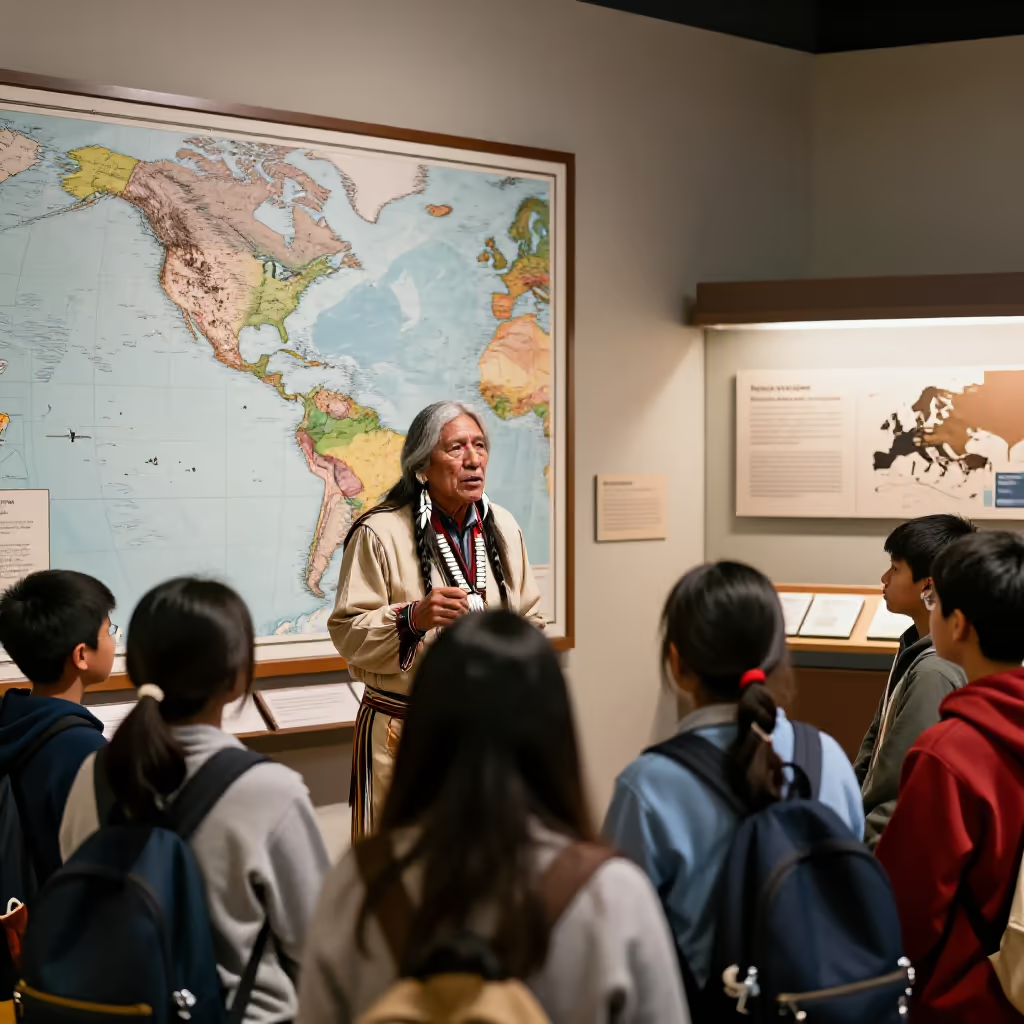
Die Ausstellung vermeidet bewusst den Begriff „Indianer“ und spricht stattdessen von indigenen Völkern Nordamerikas.
The exhibition deliberately avoids the term 'Indianer' (Indian) and instead speaks of Indigenous peoples of North America.
Historical context
The term arose from a mistake by Christopher Columbus, who thought he had landed in India. For this reason, he called the native inhabitants 'Indianer' (Indians). So the word is based on a geographical error.
EXAMPLE
Schulbücher erklären heute den historischen Irrtum hinter dem Wort „Indianer“.
Today, schoolbooks explain the historical mistake behind the word 'Indianer' (Indian).
Typical usage
The word is found mainly in older books, films, or in connection with children's games. These contexts often convey a stereotypical and inauthentic image.
EXAMPLE
Als Kinder haben wir oft „Cowboy und Indianer“ gespielt.
As children, we often played 'Cowboys and Indians'.
Compare with
confusable
Indianer vs Inder
Indian
'der Indianer' and 'der Inder' look similar and also sound similar, but they refer to completely different people. 'der Inder' means a man from India or someone with Indian citizenship. 'der Indianer' was formerly used as a collective term for the Indigenous peoples of the Americas, but today it is often considered outdated or problematic. That is why the risk of confusion is high: a small difference in the word changes the meaning completely. For people from India, you say 'Inder' or 'Inderin', not 'Indianer'.
Indianer
Im alten Schulbuch steht noch das Wort „Indianer“, aber die Lehrerin erklärt, warum es heute problematisch sein kann.
The old schoolbook still uses the word "Indianer", but the teacher explains why it can be problematic today.
Inder
Herr Sharma ist Inder und lebt seit fünf Jahren in Berlin.
Mr. Sharma is Indian and has lived in Berlin for five years.