

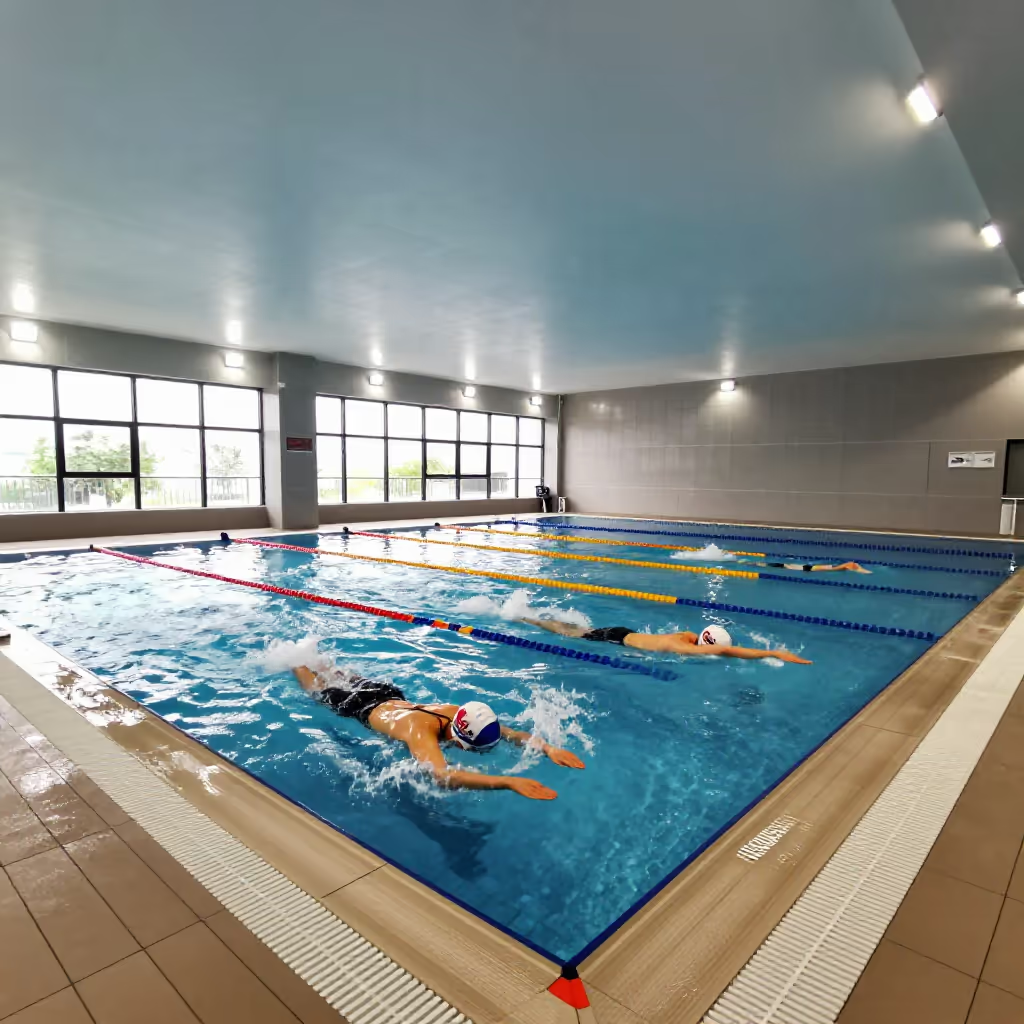
Describes something that is located in an enclosed space or inside a building, or that takes place there.
example
Wegen des schlechten Wetters wurde das Tennismatch in die Indoor-Halle verlegt.
Because of the bad weather, the tennis match was moved to the indoor hall.
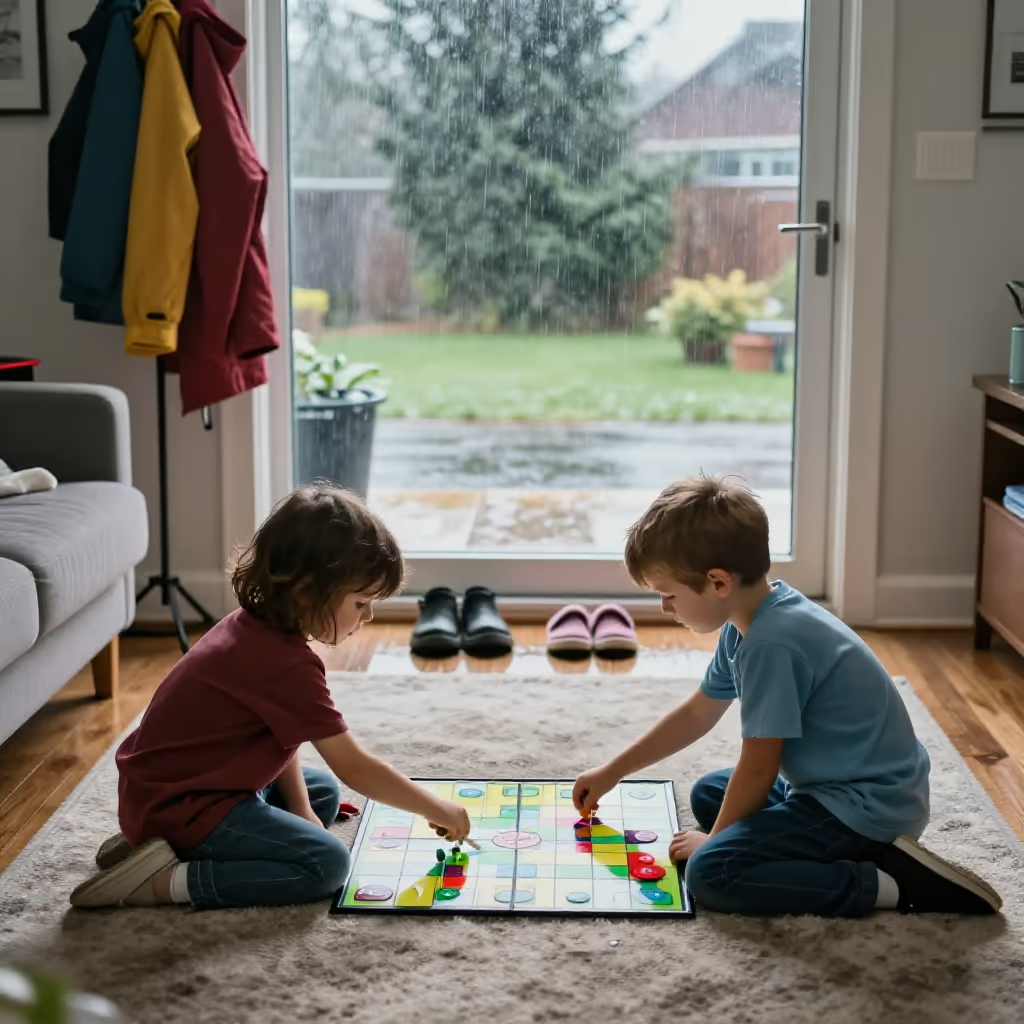
Usage tips
Grammatical usage
The adjective 'indoor' is almost never declined in German. It either stands on its own after a noun or appears as part of a compound word with a hyphen.
EXAMPLE
Wir suchen eine Aktivität, die man indoor machen kann.
We're looking for an activity you can do indoors.
Typical collocations
'Indoor' is often used in connection with sports and leisure activities. Typical compounds are 'Indoor-Klettern' (indoor climbing), 'Indoor-Minigolf' (indoor mini golf), or 'Indoor-Halle' (indoor hall).
EXAMPLE
Im Winter gehe ich oft in die Indoor-Kletterhalle.
In winter, I often go to the indoor climbing gym.
Origin
'Indoor' is a direct loanword from English and has become established in German usage. It is pronounced as in English.
EXAMPLE
Das Festival findet dieses Jahr indoor statt.
The festival is taking place indoors this year.
Compare with
antonym · confusable
indoor vs draußen
outside / outdoors
'draußen' and 'indoor' are opposites because they are about where something is. 'draußen' is used as an adverb when something is not inside a building or room, but outside or outdoors. 'indoor' is used as an adjective for things or activities that take place in an enclosed space. They can be confused because both often appear in contexts like sports, leisure, or events. The grammar is also important: you say 'wir spielen draußen' (we are playing outside), but 'ein Indoor-Spielplatz' (an indoor playground) or 'ein Indoor-Kurs' (an indoor course).
indoor
Der Chef hat für das Team ein Indoor-Training gebucht, weil es den ganzen Tag regnet.
The boss booked an indoor training session for the team because it is raining all day.
draußen
Wenn die Sonne scheint, lernen wir draußen im Park.
When the sun is shining, we study outside in the park.