

irisch
Irish
Refers to Ireland, its people, its culture, or its language.
EXAMPLE
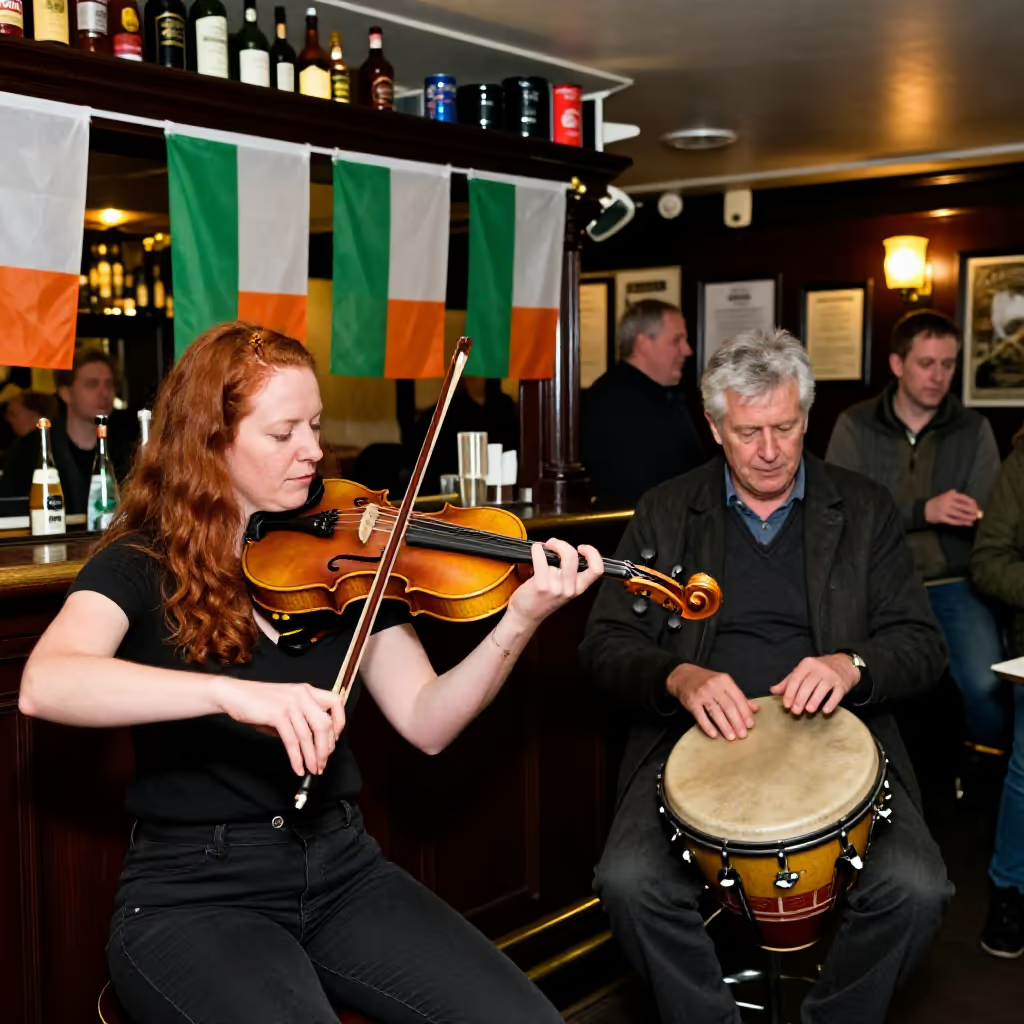
Am St. Patrick's Day wird in vielen irischen Pubs gefeiert.
On St. Patrick’s Day, people celebrate in many Irish pubs.
Irish
Loading your saved state.
Irish
Refers to Ireland, its people, its culture, or its language.
Am St. Patrick's Day wird in vielen irischen Pubs gefeiert.
On St. Patrick’s Day, people celebrate in many Irish pubs.
The adjective 'irisch' (Irish) is derived directly from the country 'Irland' (Ireland). The ending '-isch' is often used to form adjectives from geographical names.
Die irische Wirtschaft hat sich in den letzten Jahren stark entwickelt.
The Irish economy has developed strongly in recent years.
Adjectives derived from geographical names with the ending '-isch' are written in lowercase in German. Only when they are part of a fixed proper name are they capitalized.
Wir hörten den ganzen Abend irische Volksmusik.
We listened to Irish folk music all evening.
'Irisch' (Irish) is often used to describe typical products, cultural aspects, or geographical features. Common combinations are 'irische Musik' (Irish music), 'irisches Bier' (Irish beer), 'irischer Whiskey' (Irish whiskey), and 'die irische Küste' (the Irish coast).
Viele Touristen bewundern die grüne irische Landschaft.
Many tourists admire the green Irish landscape.