

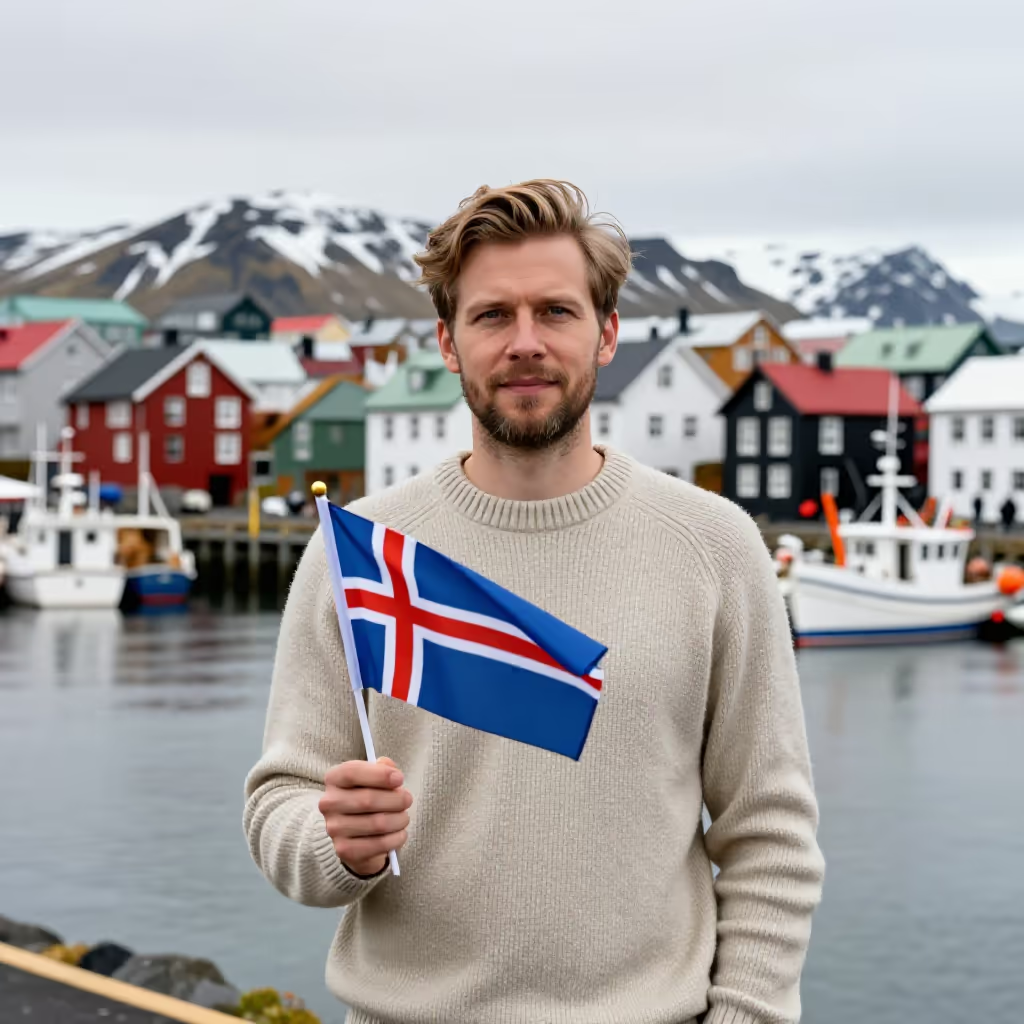
der Isländer
Icelander
A male inhabitant or citizen of Iceland. The female form is 'die Isländerin' (Icelandic woman).
Der neue Musiker in der Band ist ein Isländer aus Reykjavík.
The new musician in the band is an Icelander from Reykjavík.
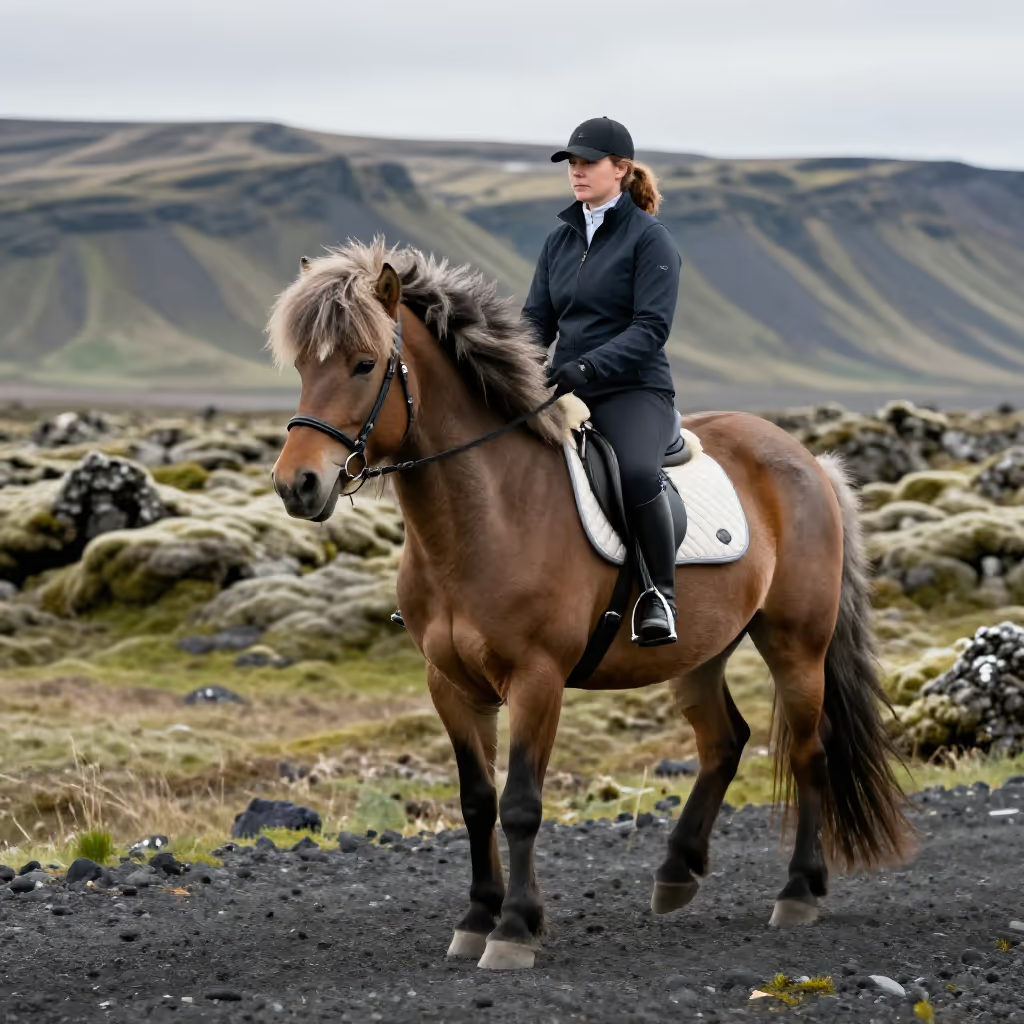
Icelander / Icelandic horse
Loading your saved state.
Icelander
A male inhabitant or citizen of Iceland. The female form is 'die Isländerin' (Icelandic woman).
Der neue Musiker in der Band ist ein Isländer aus Reykjavík.
The new musician in the band is an Icelander from Reykjavík.

The word is formed from the country name 'Island' (Iceland) with the ending '-er'. This pattern is often used in German to refer to inhabitants or things with a geographical origin.
Ein Einwohner von Berlin ist ein Berliner, ein Einwohner von Island ist ein Isländer.
An inhabitant of Berlin is a Berliner; an inhabitant of Iceland is an Icelander.
You can always tell from the context whether a person or a horse is meant. Verbs like 'reiten' (to ride), 'striegeln' (to groom), or nouns like 'Sattel' (saddle) and 'Stall' (stable) point to the horse.
Meine Nichte wünscht sich zum Geburtstag einen Isländer, weil sie die robusten Pferde liebt.
My niece wants an Icelandic horse for her birthday because she loves the robust horses.
The related adjective is 'isländisch' (Icelandic). It is used to describe things that come from Iceland or are typical of Iceland.
Ich liebe isländische Krimis, weil die Landschaft darin eine große Rolle spielt.
I love Icelandic crime novels because the landscape plays a major role in them.
When 'Isländer' (Icelandic horse) is used to refer to a horse, the special gaits 'Tölt' and 'Pass' are often mentioned. These are a unique feature of this horse breed.
Auf dem Reiterhof habe ich gelernt, wie man einen Isländer im Tölt reitet.
At the riding stable, I learned how to ride an Icelandic horse in the tölt.