

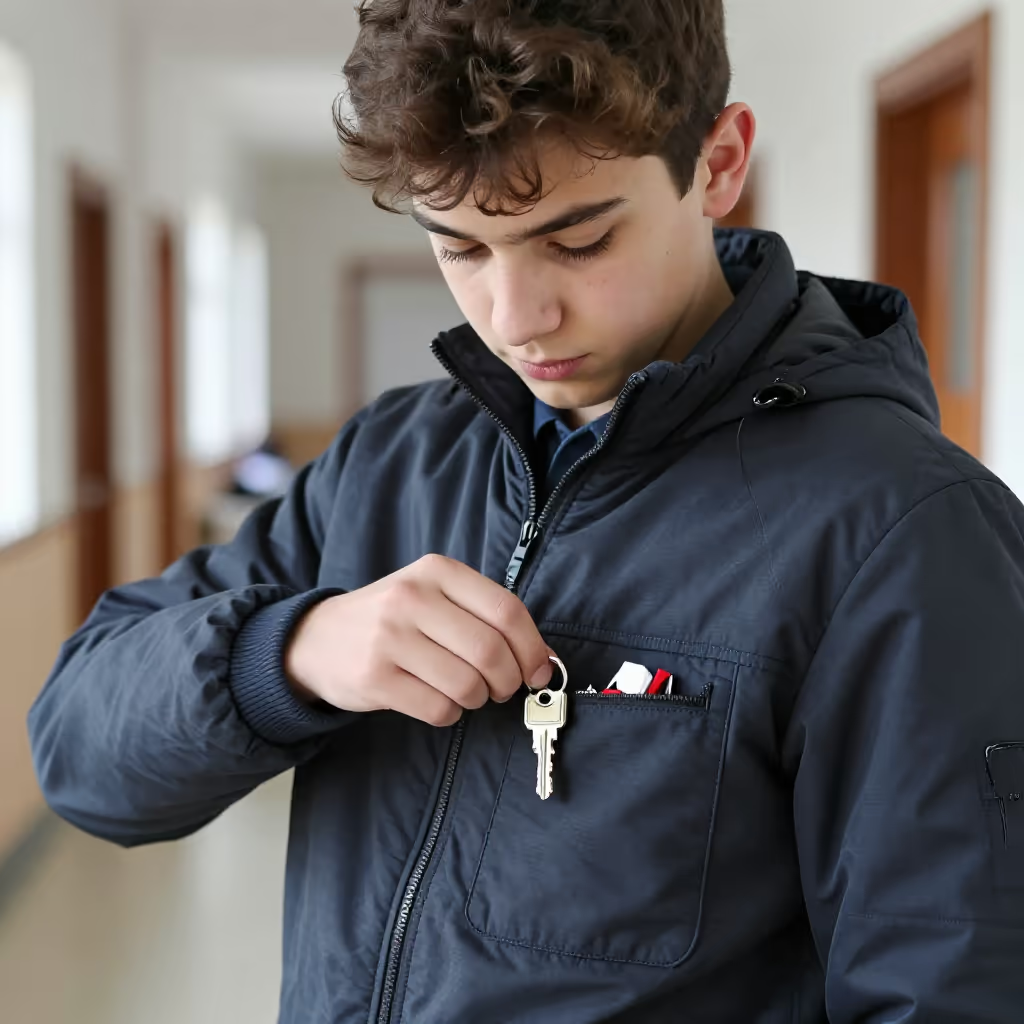
die Jackentasche
jacket pocket
A pocket sewn into or attached to a jacket, used for storing small objects.
EXAMPLE
Er steckte seine Hände tief in die Jackentaschen, um sie zu wärmen.
He put his hands deep into his jacket pockets to warm them.
jacket pocket
Loading your saved state.
jacket pocket
A pocket sewn into or attached to a jacket, used for storing small objects.
Er steckte seine Hände tief in die Jackentaschen, um sie zu wärmen.
He put his hands deep into his jacket pockets to warm them.
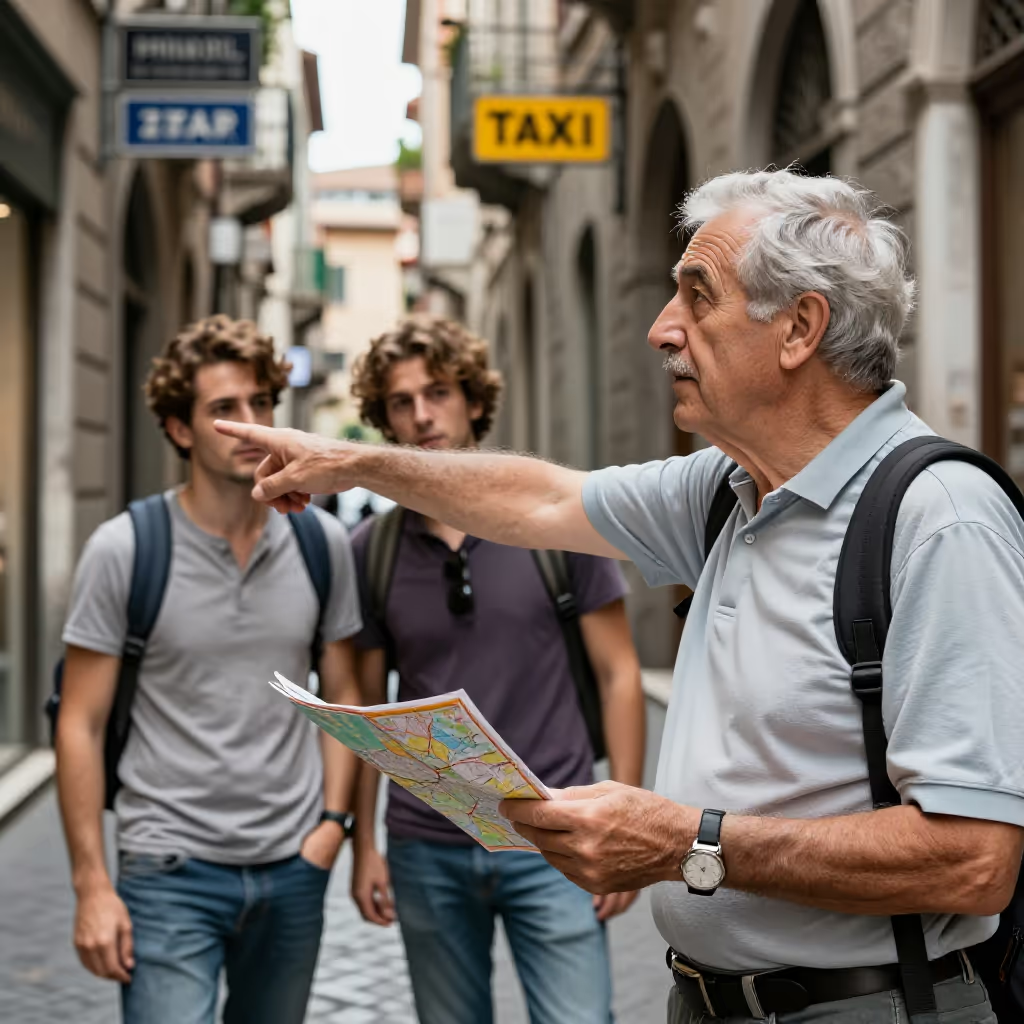
to know like the back of one's hand
An idiom meaning that someone knows a place or area very well. A more common variant is 'wie seine Westentasche kennen' (to know like one’s vest pocket).
Nach zwanzig Jahren in dieser Stadt kenne ich hier jede Straße wie meine Jackentasche.
After twenty years in this city, I know every street here like the back of my hand.
The word is simply composed of 'die Jacke' (the jacket) and 'die Tasche' (the pocket/bag). So it literally means a pocket that is in or on a jacket.
Meine neue Winterjacke hat vier große Jackentaschen.
My new winter jacket has four large jacket pockets.
To express movement, you use 'in die Jackentasche' (into the jacket pocket) with the accusative. To describe a location, you use 'in der Jackentasche' (in the jacket pocket) with the dative.
Er hat sein Handy schnell in die Jackentasche gesteckt.
He quickly put his phone into his jacket pocket.
Common verbs used with 'Jackentasche' (jacket pocket) describe putting objects in and taking them out. Typical phrases are 'etwas in die Jackentasche stecken' (to put something into one's jacket pocket), 'etwas aus der Jackentasche nehmen' (to take something out of one's jacket pocket), or 'in den Jackentaschen kramen' (to rummage in one's jacket pockets).
Er kramte in seinen Jackentaschen, fand aber kein Feuerzeug.
He rummaged in his jacket pockets but didn't find a lighter.
In the idiom 'etwas wie seine Jackentasche kennen' (to know something like one’s jacket pocket), the possessive pronoun must be adapted to the subject of the sentence. The structure is used with the verbs 'kennen' (to know) or 'sich auskennen' (to know one's way around/be familiar with).
Ich kenne dieses Viertel wie meine Jackentasche.
I know this neighborhood like the back of my hand.