

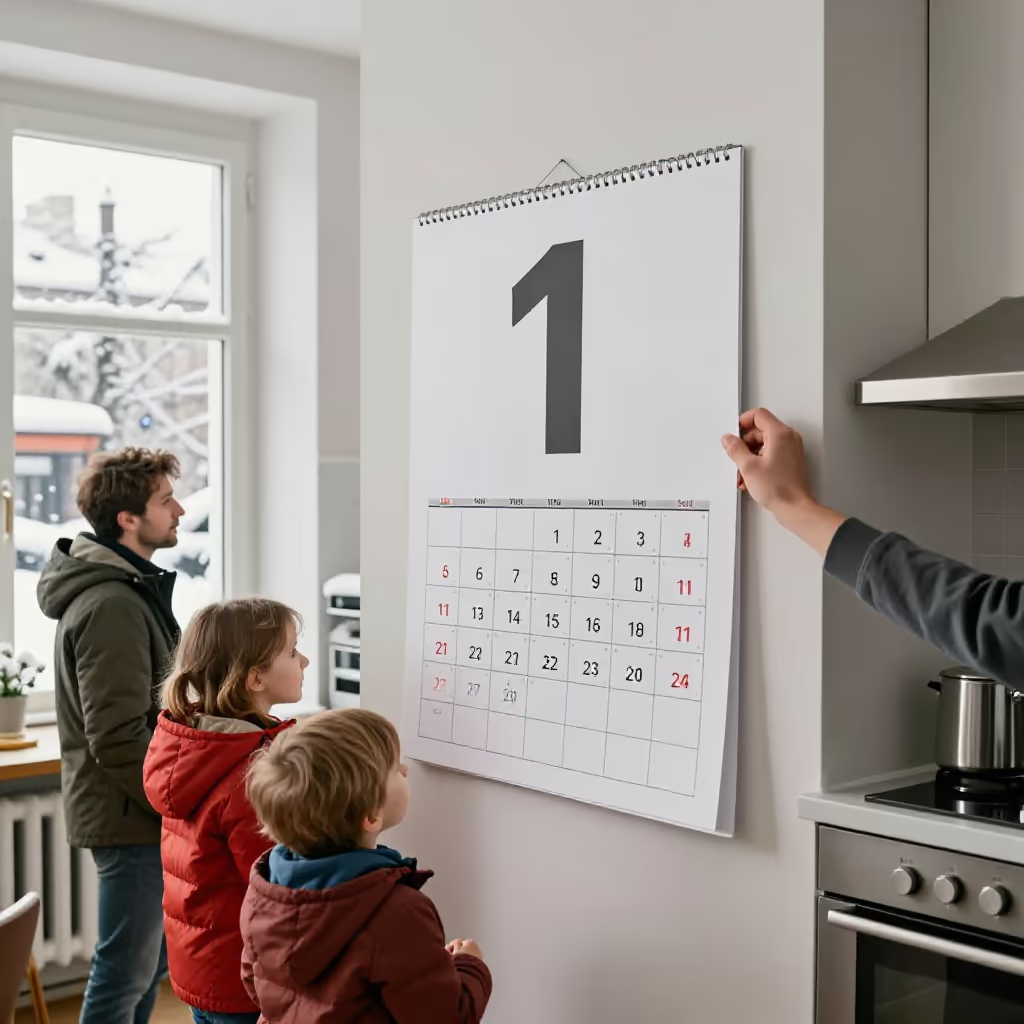
The first month of the year. This term for January is used mainly in Austria and South Tyrol.
example
Im Jänner ist es in den Alpen oft sehr kalt und es liegt viel Schnee.
In January, it is often very cold in the Alps and there is a lot of snow.

Usage tips
Regional variant
'Jänner' (January) is the usual term for the first month of the year in Austria and South Tyrol. In Germany, 'Januar' is used almost exclusively.
EXAMPLE
In Österreich beginnen die Semesterferien oft Ende Jänner.
In Austria, the semester break often begins at the end of January.
Sentence structure and use
'Jänner' (January) is used like any other month name. Typical time expressions are 'im Jänner' (in January), 'Anfang Jänner' (at the beginning of January), or 'Mitte Jänner' (in mid-January).
EXAMPLE
Wir fahren im Jänner immer in den Skiurlaub.
We always go on a ski vacation in January.
Use in compounds
The word 'Jänner' (January) can be the first part of a compound noun, like other month names, for example 'die Jännerrallye' (the January rally) or 'das Jännerwetter' (January weather).
EXAMPLE
Die Jännertemperaturen waren dieses Jahr ungewöhnlich mild.
The January temperatures were unusually mild this year.
Compare with
synonym · confusable
Jänner vs Januar
January
'der Januar' and 'der Jänner' mean the same month, namely the first month of the year. The difference is mainly in regional usage. In Germany, people almost always say 'Januar'. 'Jänner' is common mainly in Austria and South Tyrol. Learners may confuse the words because they really do refer to the same time of year. If you are speaking generally or in Germany, 'Januar' is the more natural form; in Austria, 'Jänner' sounds completely normal.
Jänner
Mein Bruder aus Wien kommt im Jänner zu Besuch.
My brother from Vienna is coming to visit in January.