

kämmen
to comb
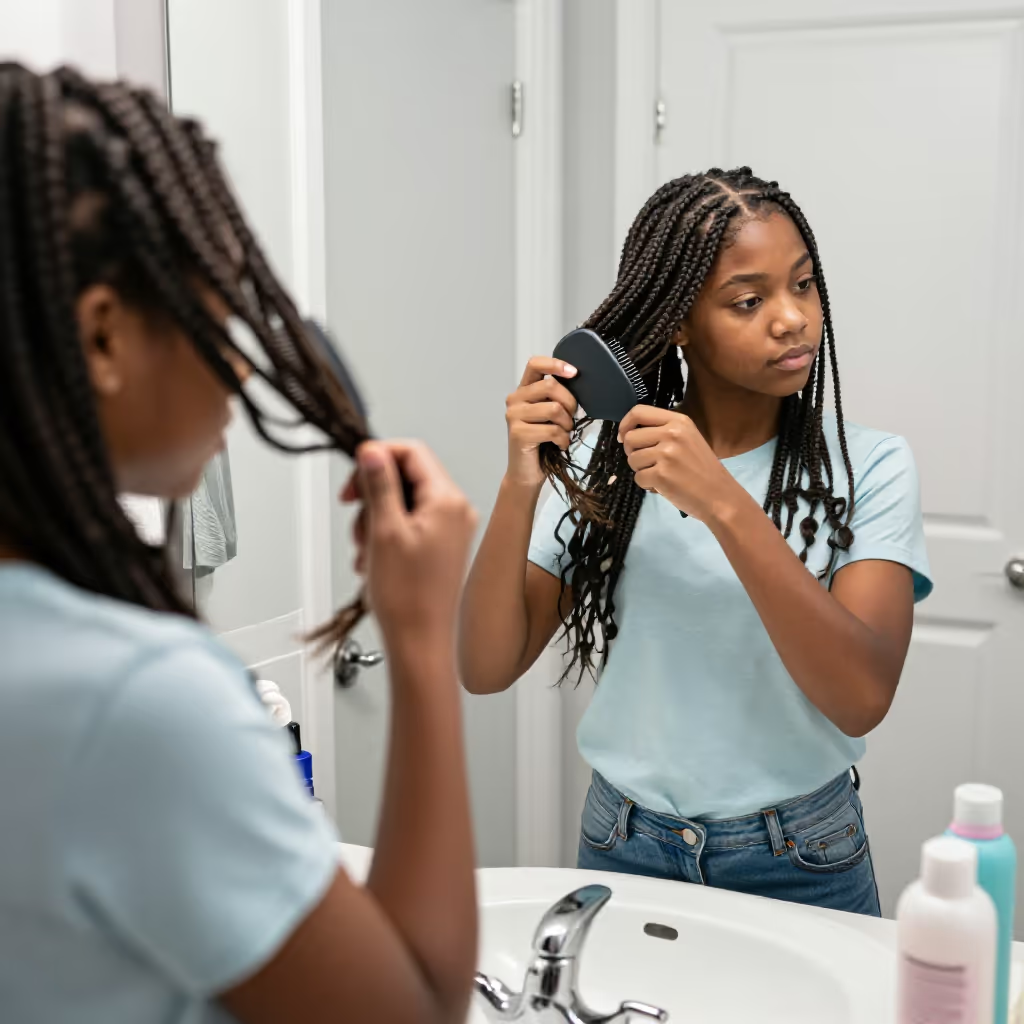
To arrange and smooth hair with a comb. Often used reflexively ('sich kämmen') when arranging one's own hair.
EXAMPLE
Bevor wir gehen, muss ich mir noch schnell die Haare kämmen.
Before we go, I still need to quickly comb my hair.
to comb / search
Loading your saved state.
to comb
To arrange and smooth hair with a comb. Often used reflexively ('sich kämmen') when arranging one's own hair.
Bevor wir gehen, muss ich mir noch schnell die Haare kämmen.
Before we go, I still need to quickly comb my hair.
to search
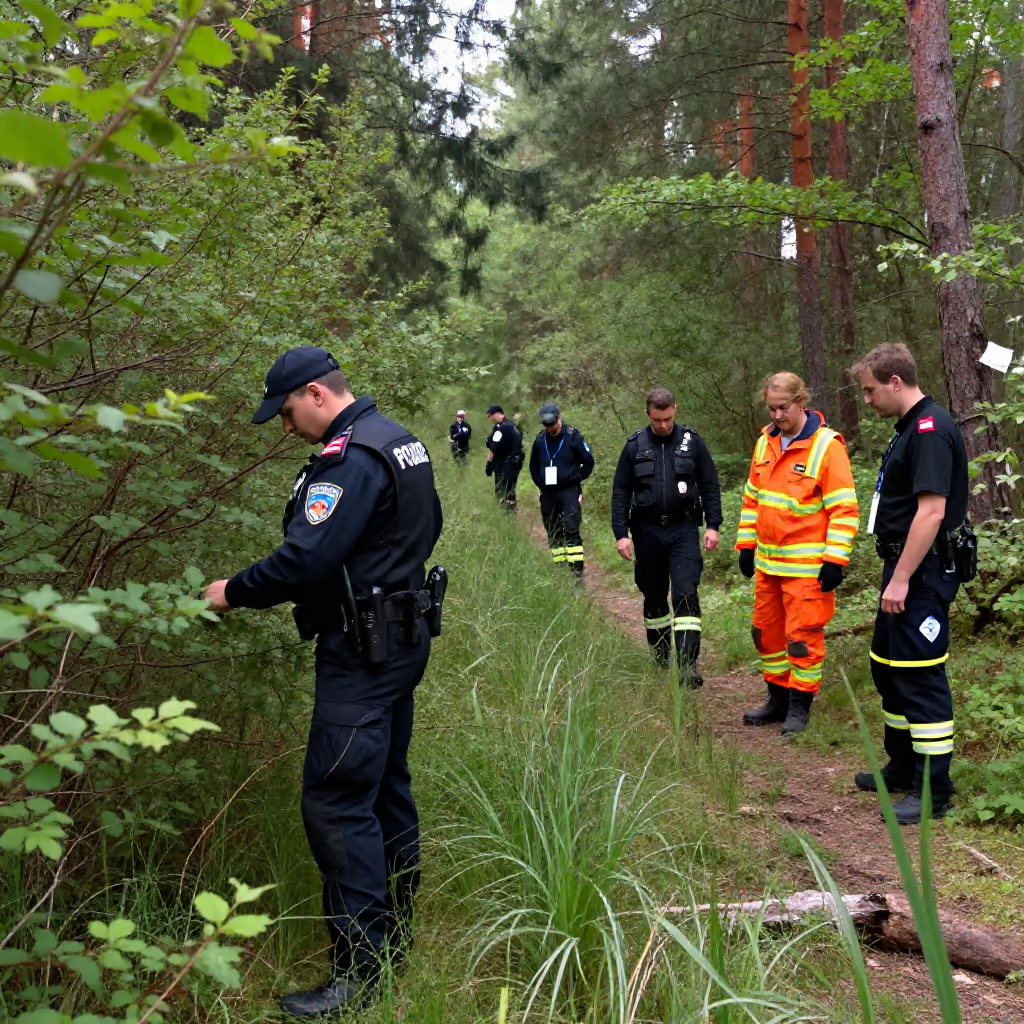
To search an area or place systematically and thoroughly.
Die Polizei kämmte den gesamten Wald auf der Suche nach dem Vermissten.
The police searched the entire forest in the hunt for the missing person.
to comb fibers
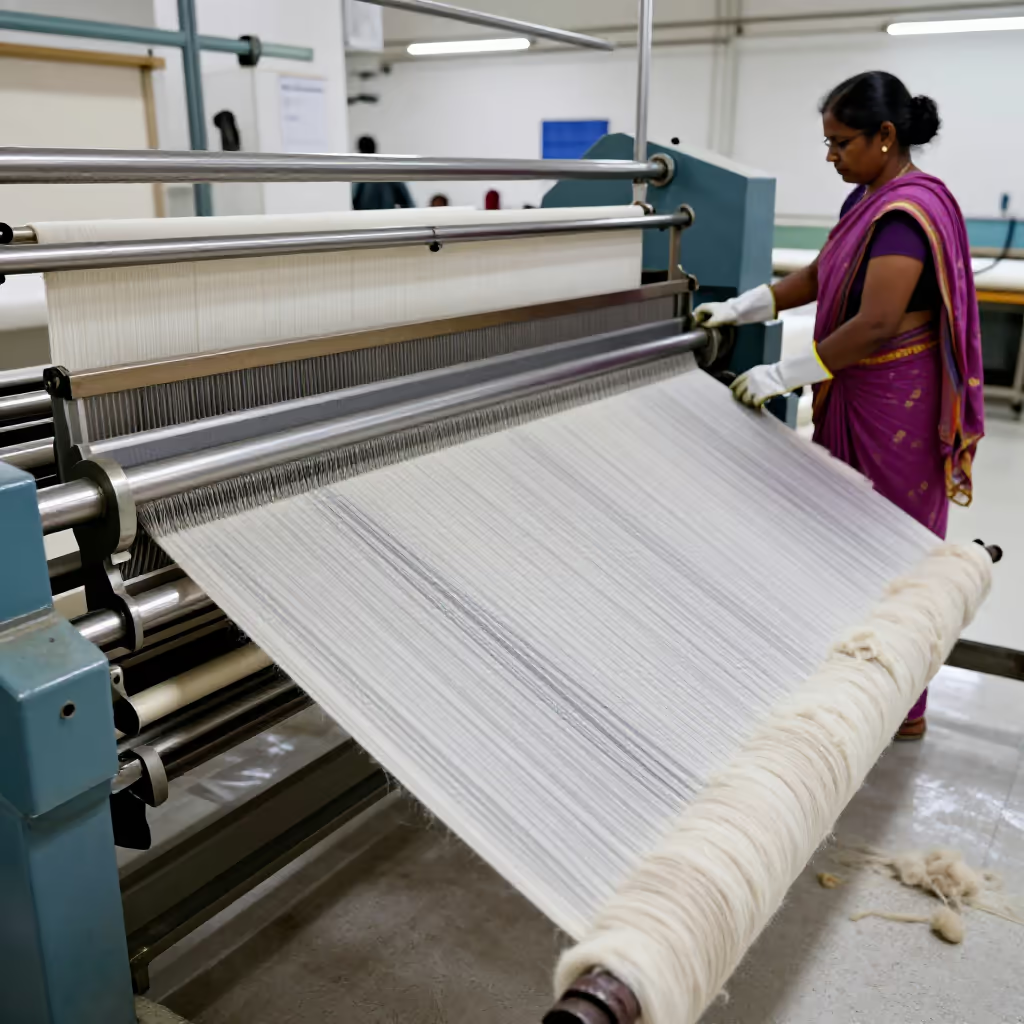
In the textile industry, to align and clean fibers such as wool or cotton by machine in order to prepare them for spinning.
Nach dem Kardieren wird die hochwertige Wolle gekämmt, um kurze Fasern zu entfernen.
After carding, the high-quality wool is combed to remove short fibers.
The verb 'kämmen' (to comb) derives directly from the noun 'der Kamm' (the comb). The action therefore describes the use of a comb.
Ich habe meinen Kamm verloren und kann mich nicht kämmen.
I lost my comb and can't comb my hair.
When arranging one's own hair, 'kämmen' (to comb) is often used reflexively with a dative pronoun. The structure is: 'sich (dative) die Haare (accusative) kämmen' — literally, 'to comb oneself the hair'.
Kannst du mir bitte die Haare kämmen?
Can you please comb my hair?
In the meaning 'durchsuchen' (to search), the word is used figuratively. You imagine an area being searched as systematically and completely as a comb moves through hair.
Die Rettungskräfte kämmen das gesamte Gebiet nach Überlebenden.
The rescue workers are searching the entire area for survivors.
When 'kämmen' (to comb/search) is used in the context of police, searches, or investigations, it almost always means 'systematisch durchsuchen' (to search systematically). The object is then a place such as a forest, a house, or a site.
Die Polizei hat das verlassene Gebäude komplett gekämmt.
The police searched the abandoned building completely.
The meaning related to textile fibers is purely technical language. You only find it in texts about the production of yarns and fabrics.
In der Fabrik wird die Baumwolle maschinell gekämmt.
In the factory, the cotton is combed by machine.
to search
Both words refer to a systematic search in an area or region. „Durchsuchen“ is the neutral term for searching thoroughly, while „kämmen“ is figurative and often suggests searching an entire area especially comprehensively. „Durchsuchen“ is usually suitable for factual reports, while „kämmen“ can also be used for a large-scale search.
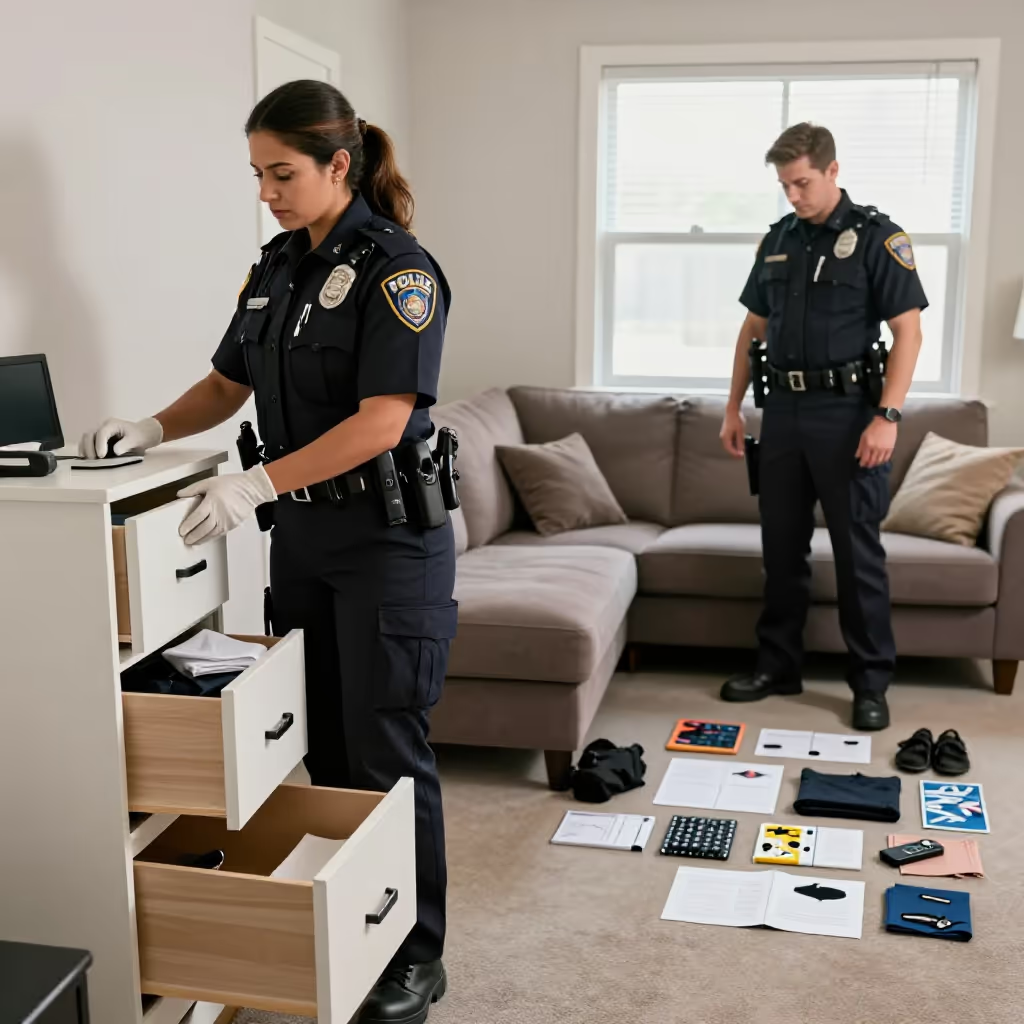
Die Helfer kämmten den ganzen Park gründlich nach dem vermissten Kind.
The helpers combed the entire park thoroughly for the missing child.
Die Helfer durchsuchten den kleinen Park gründlich nach dem vermissten Kind.
The helpers searched the small park thoroughly for the missing child.