

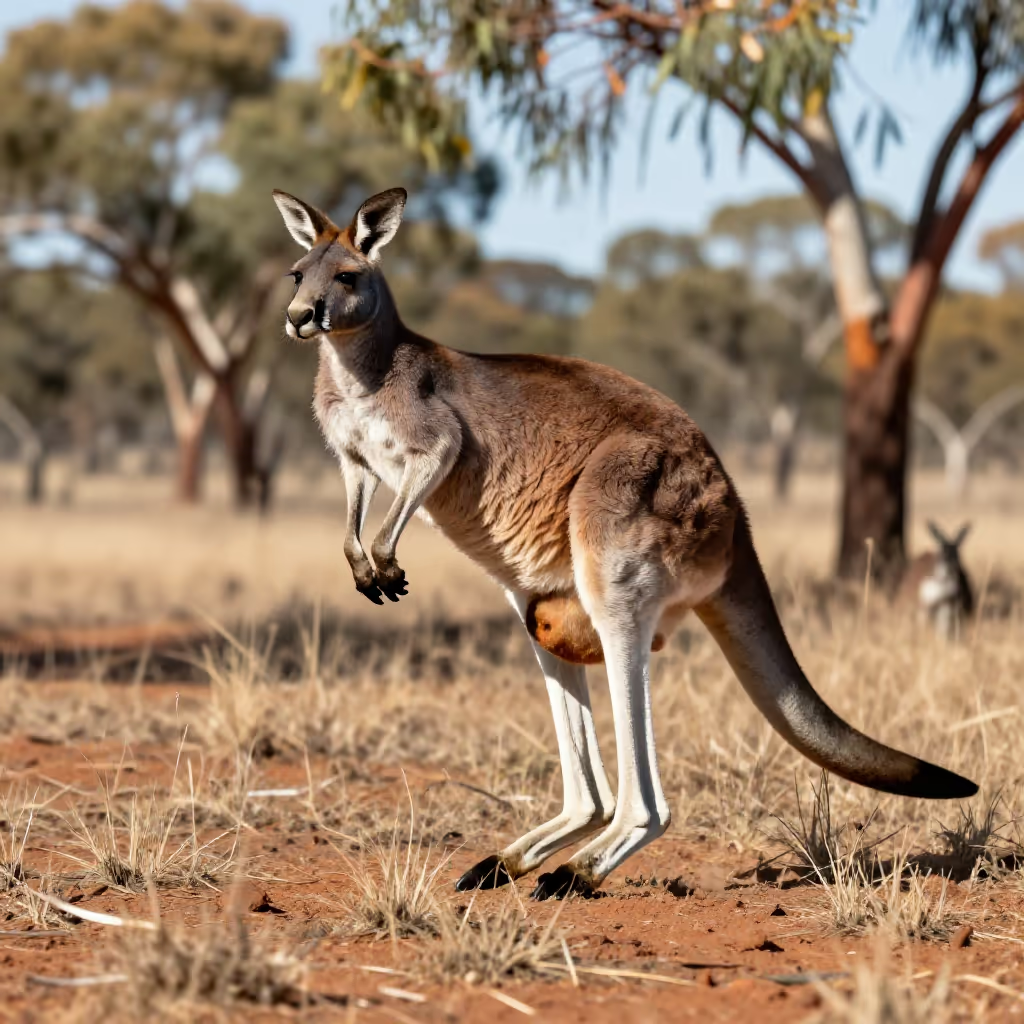
A marsupial native to Australia, known for its powerful hind legs, which allow it to make long jumps. Female animals carry their young in a pouch on their belly.
example
Im Zoo sahen wir ein Känguru, das ein Junges in seinem Beutel trug.
At the zoo, we saw a kangaroo carrying a baby in its pouch.
Usage tips
Cultural context
'Känguru' (kangaroo) is a loanword from one of the languages of Australia's Indigenous peoples. The animal is a national symbol of Australia and is immediately associated with this continent worldwide.
EXAMPLE
Viele Touristen hoffen, in Australien ein Känguru in freier Wildbahn zu sehen.
Many tourists hope to see a kangaroo in the wild in Australia.
Typical verbs
To describe the characteristic way kangaroos move, the verbs 'springen' (to jump) or 'hüpfen' (to hop) are used almost exclusively.
EXAMPLE
Das Känguru hüpfte mit hoher Geschwindigkeit durch das Gras.
The kangaroo hopped through the grass at high speed.
Compound formation
The word 'Känguru' (kangaroo) is often used as the first part of compound nouns to describe something related to kangaroos. Examples include 'Kängurufleisch' (kangaroo meat) or 'Känguruschwanz' (kangaroo tail).
EXAMPLE
Die Känguru-Chroniken sind eine bekannte Buchreihe.
The Kangaroo Chronicles is a well-known book series.