

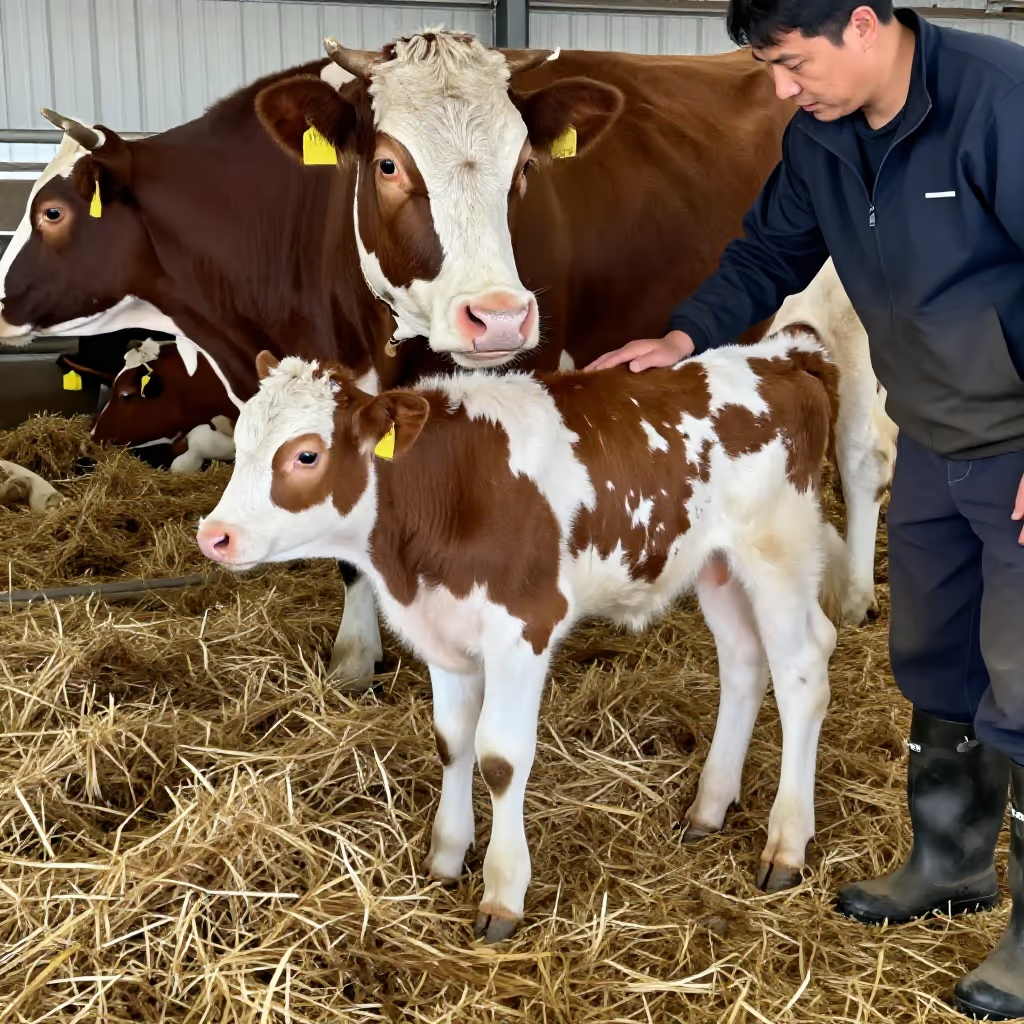
das Kalb
calf
The young animal of a cow.
EXAMPLE
Auf der Weide stand eine Kuh mit ihrem neugeborenen Kalb.
In the pasture stood a cow with her newborn calf.
calf
Loading your saved state.
calf
The young animal of a cow.
Auf der Weide stand eine Kuh mit ihrem neugeborenen Kalb.
In the pasture stood a cow with her newborn calf.
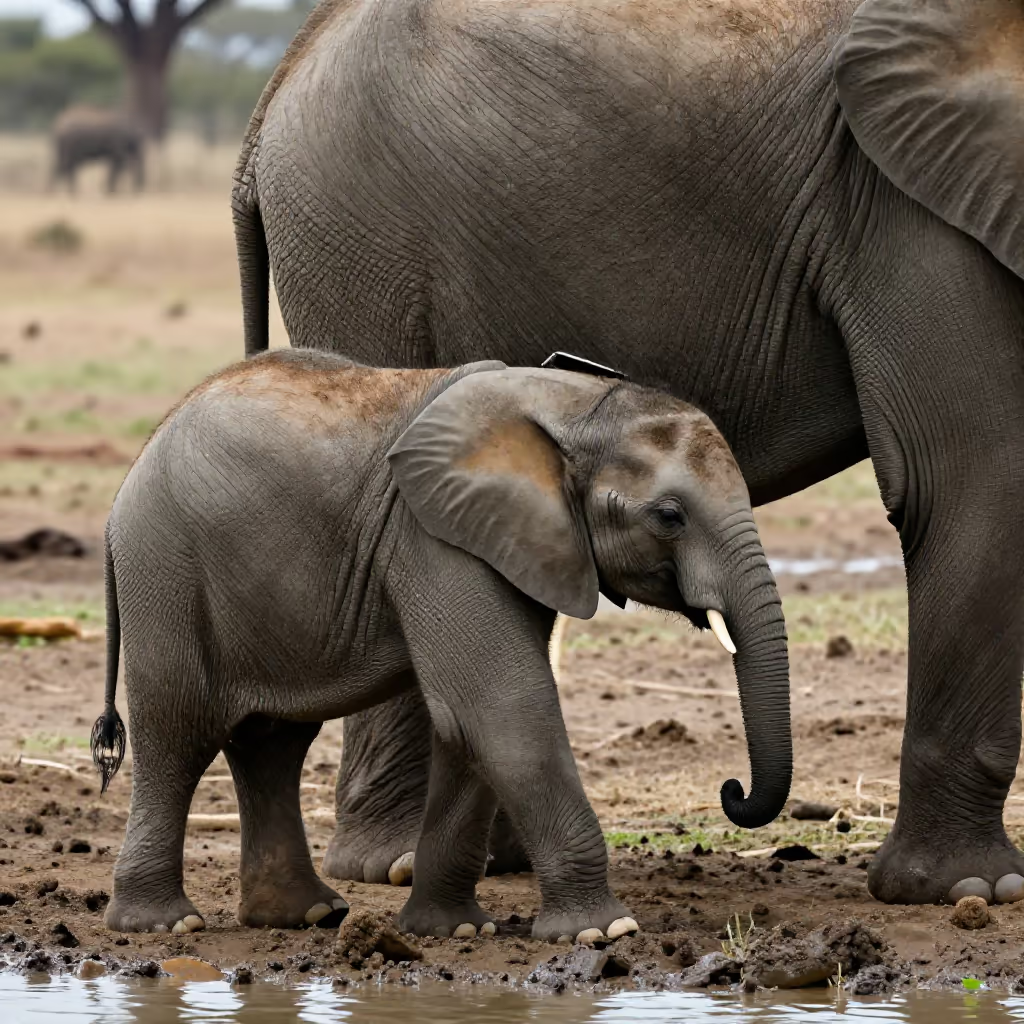
calf
The young animal of other large mammals, especially whales, elephants, or seals.
Die Forscher beobachteten, wie das Wal-Kalb an der Seite seiner Mutter schwamm.
The researchers observed the whale calf swimming at its mother's side.

fool / clumsy person
A colloquial, derogatory term for a stupid or clumsy person.
Du Kalb, jetzt hast du schon wieder den Schlüssel vergessen!
You fool, you've forgotten the key again!
'Das Kalb' (the calf) is an animal. Don't confuse it with the English word 'calf', which can also refer to the body part on the leg. This body part is called 'die Wade' in German.
Nach dem langen Lauf tut mir die Wade weh.
After the long run, my calf hurts.
The word 'Kalb' (calf) is the basis for 'das Kalbfleisch' (veal), meaning the meat of a young cow. This compound is very common in supermarkets or restaurants.
Im Restaurant habe ich ein Wiener Schnitzel aus Kalbfleisch bestellt.
At the restaurant, I ordered a Wiener schnitzel made from veal.
'Kalb' (calf) does not only refer to the young of a cow. In biology, the term is also used for the young animals of other large mammals, for example elephants, whales, or giraffes.
Im Zoo wurde ein kleines Elefantenkalb geboren.
A small elephant calf was born at the zoo.
As an insult, 'Kalb' (fool) is colloquial and is often used as an exclamation to call someone stupid or clumsy. It is then often used with 'du' (you).
Du Kalb! Du hast den falschen Knopf gedrückt.
You fool! You pressed the wrong button.