


der Kanadier
Canadian
A male citizen or resident of Canada.
EXAMPLE
Mein neuer Kollege ist Kanadier und kommt aus Toronto.
My new colleague is Canadian and comes from Toronto.
Canadian / canoe
Loading your saved state.
Canadian
A male citizen or resident of Canada.
Mein neuer Kollege ist Kanadier und kommt aus Toronto.
My new colleague is Canadian and comes from Toronto.
canoe
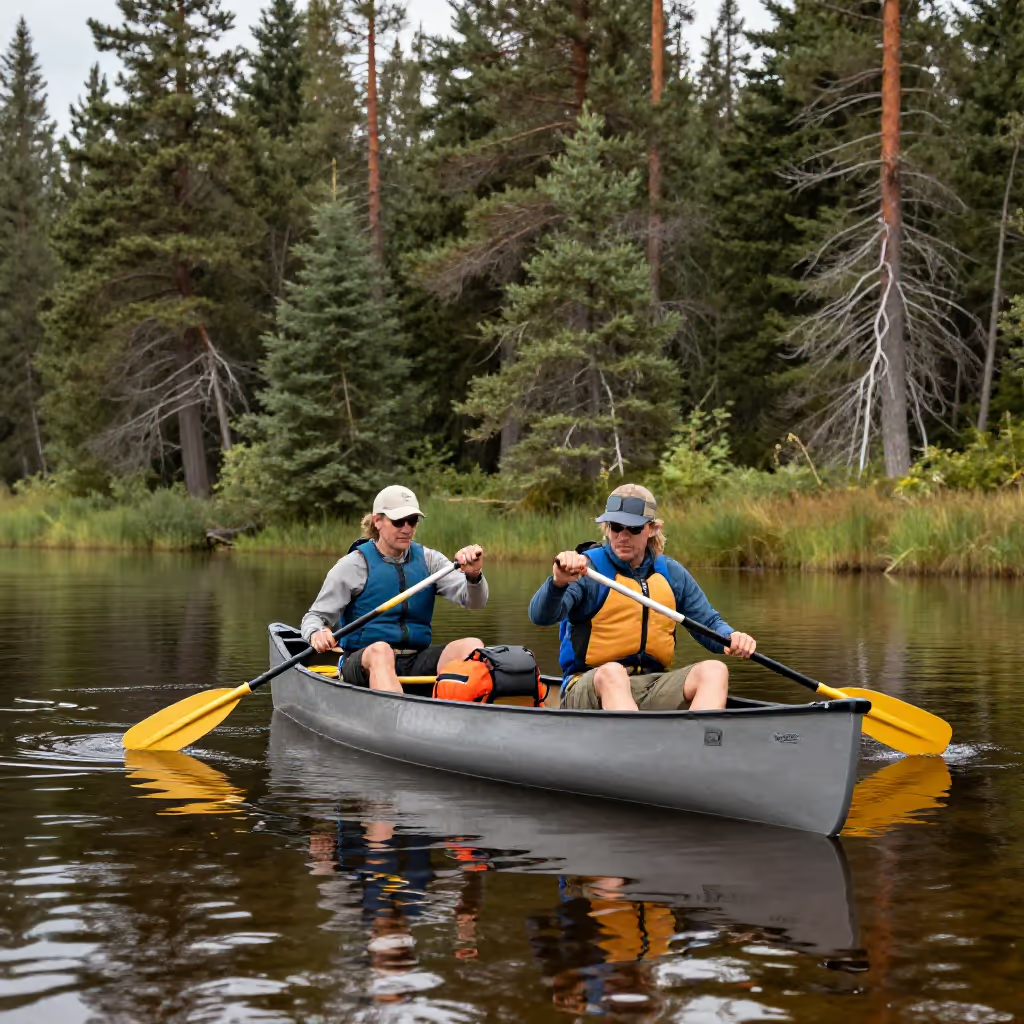
A specific type of canoe that is typically open at the top and is moved with single-bladed paddles while kneeling or sitting.
Für die Tour auf dem See haben wir uns einen Kanadier für drei Personen gemietet.
For the trip on the lake, we rented a canoe for three people.
To distinguish the two meanings, pay attention to the context. If it is about geography, nationalities, or people, it means the person from Canada. If it is about sports, water, a lake, or renting equipment, it means the boat.
Der neue Botschafter ist Kanadier.
The new ambassador is Canadian.
The word belongs to a family derived from the country name 'Kanada' (Canada). This also includes the adjective 'kanadisch' (Canadian).
Die kanadische Flagge hat ein Ahornblatt in der Mitte.
The Canadian flag has a maple leaf in the middle.
When the boat is meant, typical verbs are 'einen Kanadier mieten' (to rent a canoe), 'im Kanadier fahren' (to ride/travel in a canoe), or 'mit dem Kanadier paddeln' (to paddle with the canoe).
Am See kann man sich für 20 Euro pro Stunde einen Kanadier mieten.
At the lake, you can rent a canoe for 20 euros per hour.
canoe
Der Kanadier and das Kanu can both refer to the same open paddle boat. Kanadier refers more specifically to a particular design, while Kanu is often the general term for such paddle boats. When the design matters, Kanadier is the better choice; for a general statement, Kanu is more appropriate.
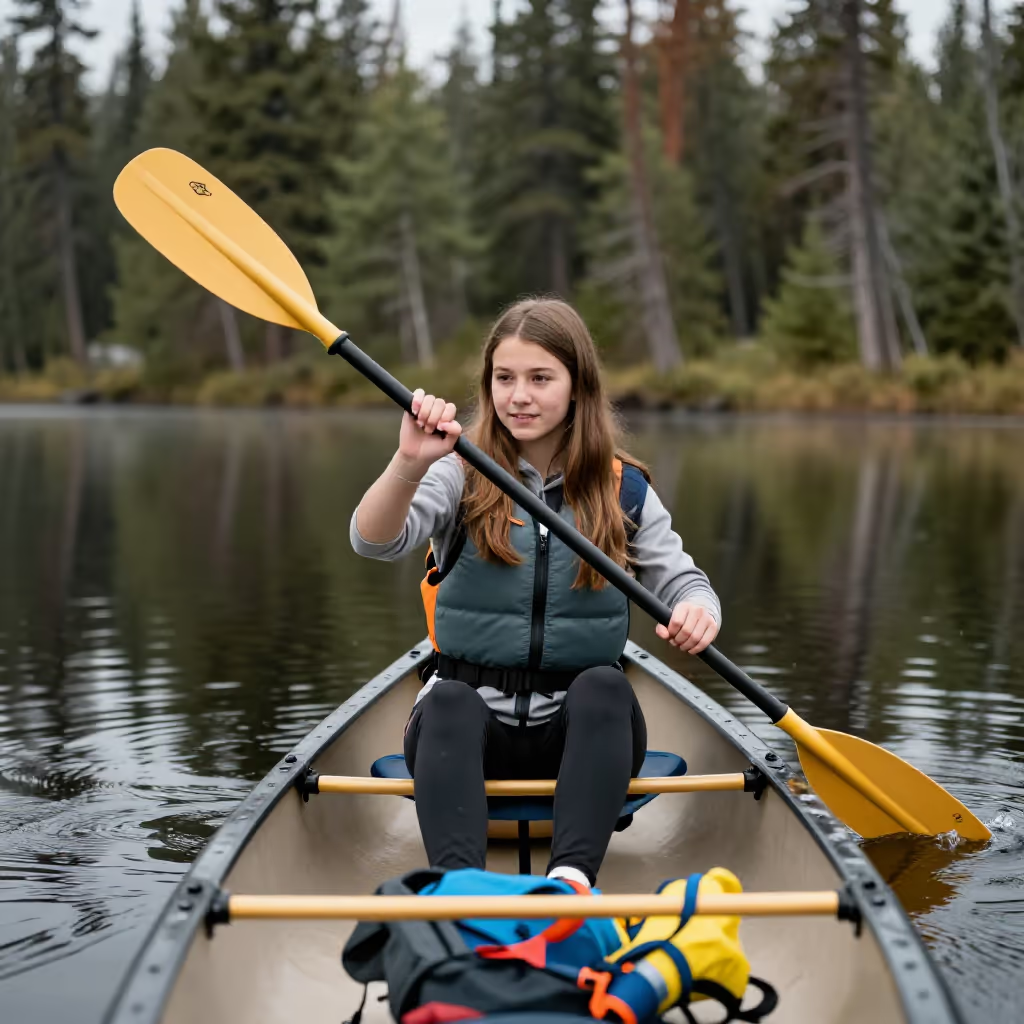
Für die lange Tour nahm die Gruppe einen offenen Kanadier mit.
The group took an open canoe for the long tour.
Für die lange Tour nahm die Gruppe ein Kanu mit.
The group took a canoe for the long tour.