

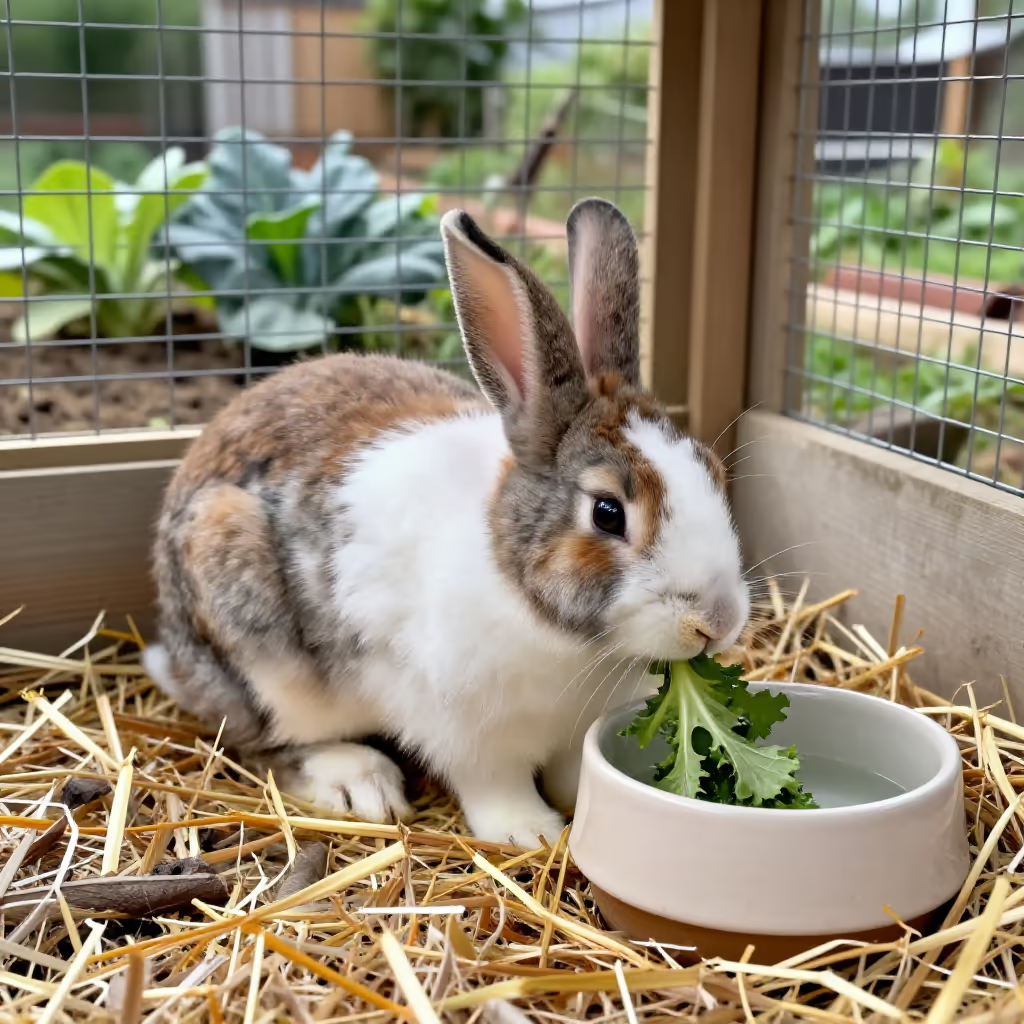
das Kaninchen
rabbit
A small herbivorous mammal with long ears that is often kept as a pet or lives in the wild. It belongs to the hare family.
Die Kinder haben zu Ostern ein Kaninchen geschenkt bekommen.
The children were given a rabbit for Easter.

rabbit
Loading your saved state.
rabbit
A small herbivorous mammal with long ears that is often kept as a pet or lives in the wild. It belongs to the hare family.
Die Kinder haben zu Ostern ein Kaninchen geschenkt bekommen.
The children were given a rabbit for Easter.

Another fixed expression is 'wie das Kaninchen vor der Schlange dastehen' (to stand there like a rabbit in front of a snake). This describes a person who is completely paralyzed and unable to act because of fear or shock.
Als der Lehrer ihn aufrief, saß er da wie das Kaninchen vor der Schlange und sagte kein Wort.
When the teacher called on him, he sat there like a rabbit in front of a snake and didn't say a word.
The idiom 'das Kaninchen aus dem Hut zaubern' (to pull/conjure a rabbit out of a hat) is used as a whole. It describes how someone finds a surprising solution to a difficult problem, often when no one expects it anymore.
Wir dachten, das Projekt sei gescheitert, aber dann hat die Chefin ein Kaninchen aus dem Hut gezaubert.
We thought the project had failed, but then the boss pulled a rabbit out of a hat.
In the literal sense, 'Kaninchen' (rabbit) is often used with verbs that describe keeping one as a pet. Typical phrases are 'ein Kaninchen halten' (to keep a rabbit), 'ein Kaninchen füttern' (to feed a rabbit), or 'ein Kaninchen streicheln' (to pet a rabbit).
Meine kleine Schwester möchte unbedingt ein Kaninchen als Haustier halten.
My little sister really wants to keep a rabbit as a pet.
hare / bunny
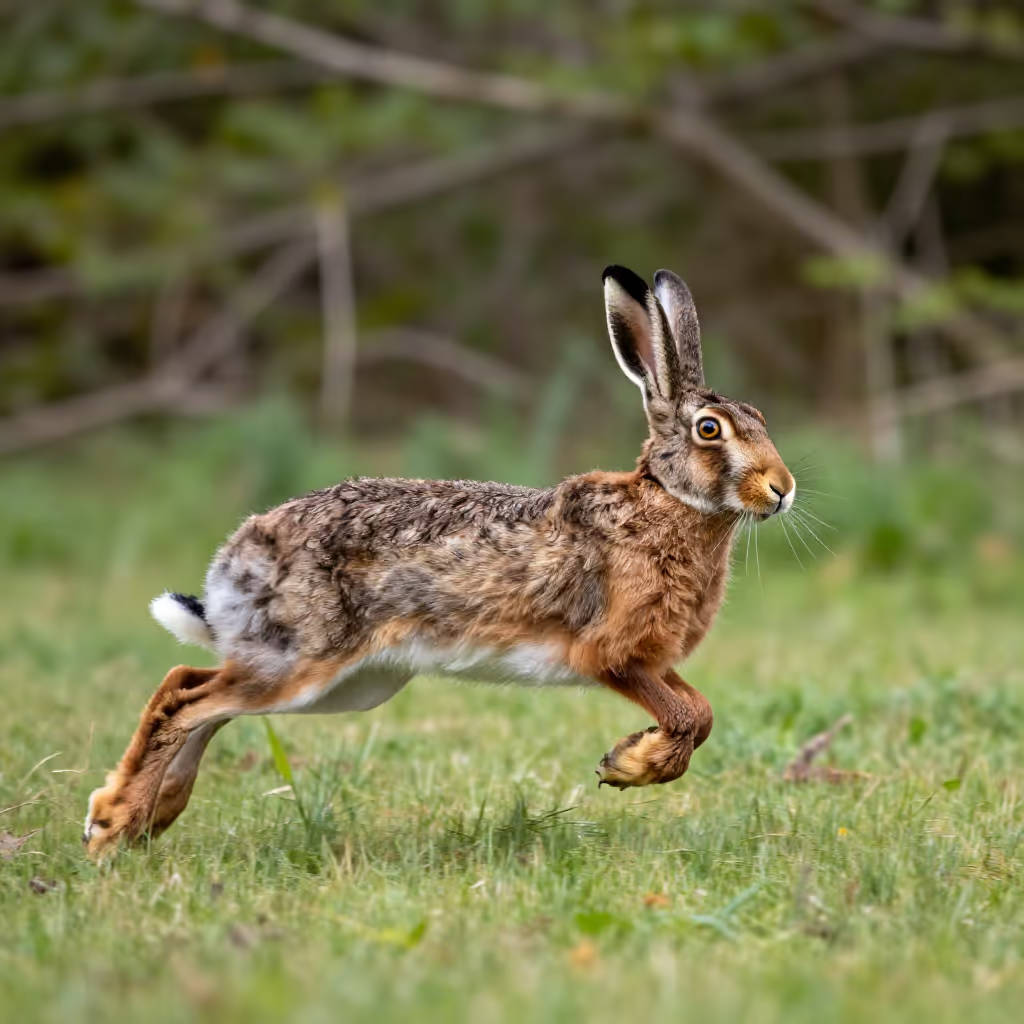
'Kaninchen' and 'Hase' refer to related animals with long ears, so they are often confused in everyday speech. A 'Kaninchen' is usually smaller and is often kept as a pet. A 'Hase' is usually a wild animal with longer legs that can run very fast. In normal conversation, some people still say 'Hase' when they mean a rabbit, especially with children or pets. But to be precise: the pet in the cage or hutch is usually a 'Kaninchen', while the fast runner in the field is a 'Hase'.

Das Kaninchen meiner Schwester frisst gern Karotten und frisches Gras.
My sister's rabbit likes eating carrots and fresh grass.
Auf dem Feld lief ein Hase schnell über den Weg.
A hare ran quickly across the path in the field.