

das Karate
karate
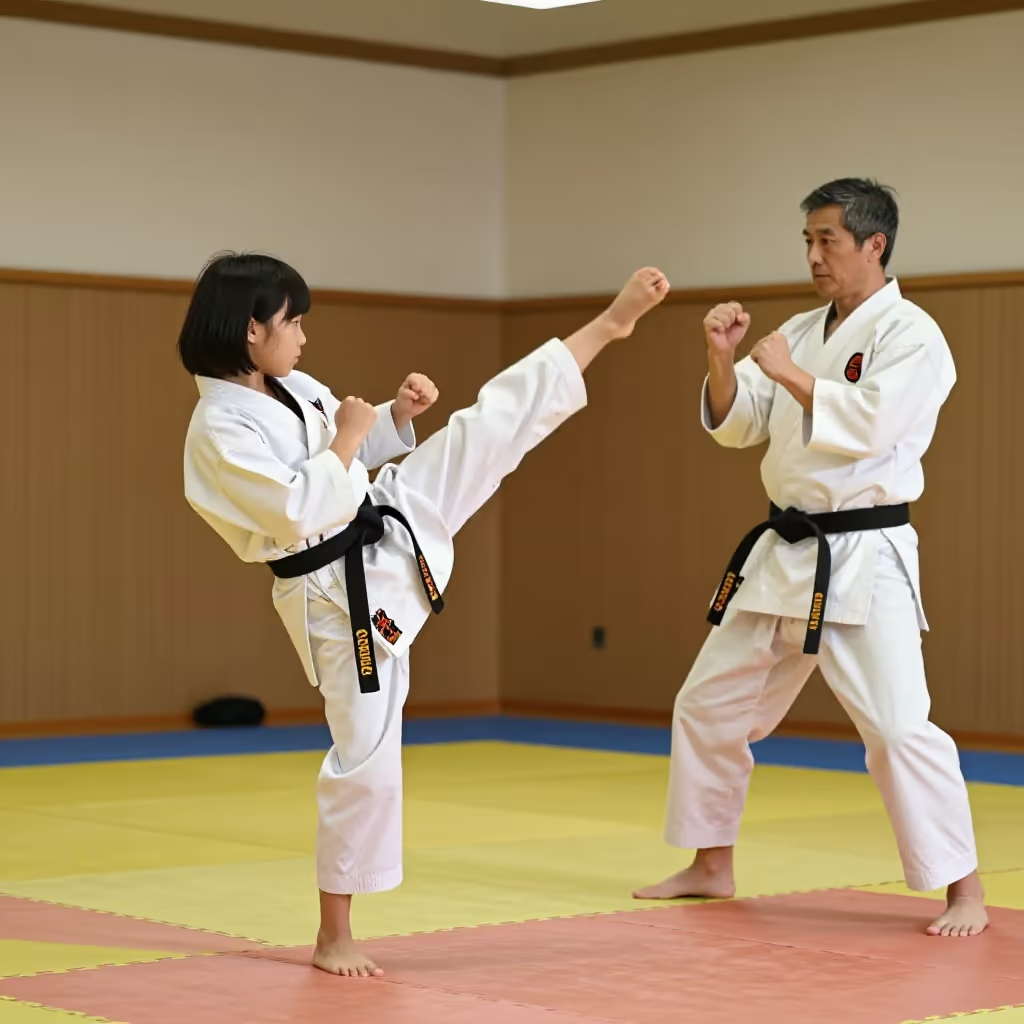
An unarmed martial art originating in Japan, in which striking, thrusting, kicking, and blocking techniques are used above all.
EXAMPLE
Mein Sohn geht zweimal pro Woche zum Karate.
My son goes to karate twice a week.
karate
Loading your saved state.
karate
An unarmed martial art originating in Japan, in which striking, thrusting, kicking, and blocking techniques are used above all.
Mein Sohn geht zweimal pro Woche zum Karate.
My son goes to karate twice a week.
When talking about karate as an activity or sport, the word is often used without an article. This is typical after verbs like 'machen' (to do), 'trainieren' (to train/practice), or 'lernen' (to learn).
Sie macht seit drei Jahren Karate.
She has been doing karate for three years.
Common verbs used with 'Karate' (karate) are 'machen' (to do), 'trainieren' (to train/practice), and 'üben' (to practice). To express that you go to training, you say 'zum Karate gehen' (to go to karate).
Er trainiert Karate, um sich selbst verteidigen zu können.
He trains in karate so he can defend himself.
A well-known expression is 'den schwarzen Gürtel in Karate haben' (to have a black belt in karate). It means that someone has reached the highest level in this martial art.
Sein Trainer hat den schwarzen Gürtel in Karate.
His trainer has a black belt in karate.