

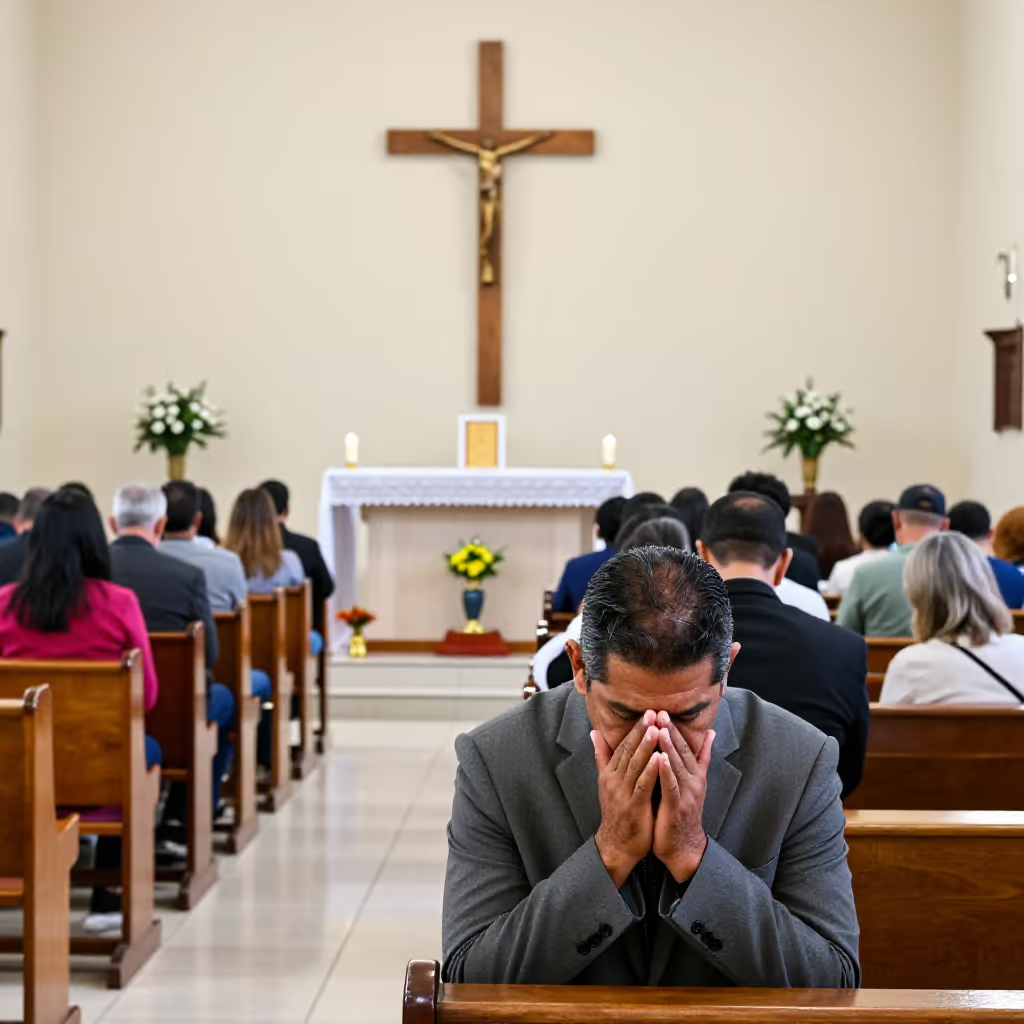
The Friday before Easter, on which Christians commemorate the crucifixion of Jesus Christ. In Germany and many other countries, it is a public holiday.
example
Am Karfreitag bleiben die meisten Geschäfte geschlossen.
On Good Friday, most shops remain closed.
Usage tips
Word structure
The first part of the word, 'Kar-', comes from the Old High German word 'kara', which means 'lament', 'sorrow', or 'mourning'. So 'Karfreitag' (Good Friday) is literally 'mourning Friday'.
EXAMPLE
Die Vorsilbe „Kar-“ in Karfreitag deutet auf die Trauer über den Tod Jesu hin.
The prefix 'Kar-' in 'Karfreitag' points to the mourning over the death of Jesus.
Cultural context
In Germany, Good Friday is a 'stiller Feiertag' (quiet holiday). This means that in many federal states, public dance and sports events are legally prohibited in order to preserve the solemn character of the day.
EXAMPLE
Wegen des Tanzverbots haben die Clubs an Karfreitag geschlossen.
Because of the dancing ban, the clubs are closed on Good Friday.
Correct preposition
As with all weekdays and dates, the preposition 'an' is also used with 'Karfreitag' (Good Friday) to indicate a point in time.
EXAMPLE
An Karfreitag essen viele Christen traditionell Fisch.
On Good Friday, many Christians traditionally eat fish.
Compare with
confusable
Karfreitag vs Ostersonntag
Easter Sunday
'der Karfreitag' and 'der Ostersonntag' both belong to the Easter season and are important Christian days. But they do not mean the same thing. 'Karfreitag' is the Friday before Easter; on this day, Christians remember Jesus' death on the cross. 'Ostersonntag' is the Sunday after that; on this day, Christians celebrate Jesus' resurrection. Learners may confuse the words because the two days are close together and both are connected with Easter. A way to remember it is: Karfreitag comes before Easter, and Ostersonntag is the actual Easter holiday.
Karfreitag
Am Karfreitag bleiben in vielen Bundesländern die Geschäfte geschlossen.
On Good Friday, shops remain closed in many German states.
Ostersonntag
Am Ostersonntag besucht meine Familie die Großeltern zum Frühstück.
On Easter Sunday, my family visits my grandparents for breakfast.