

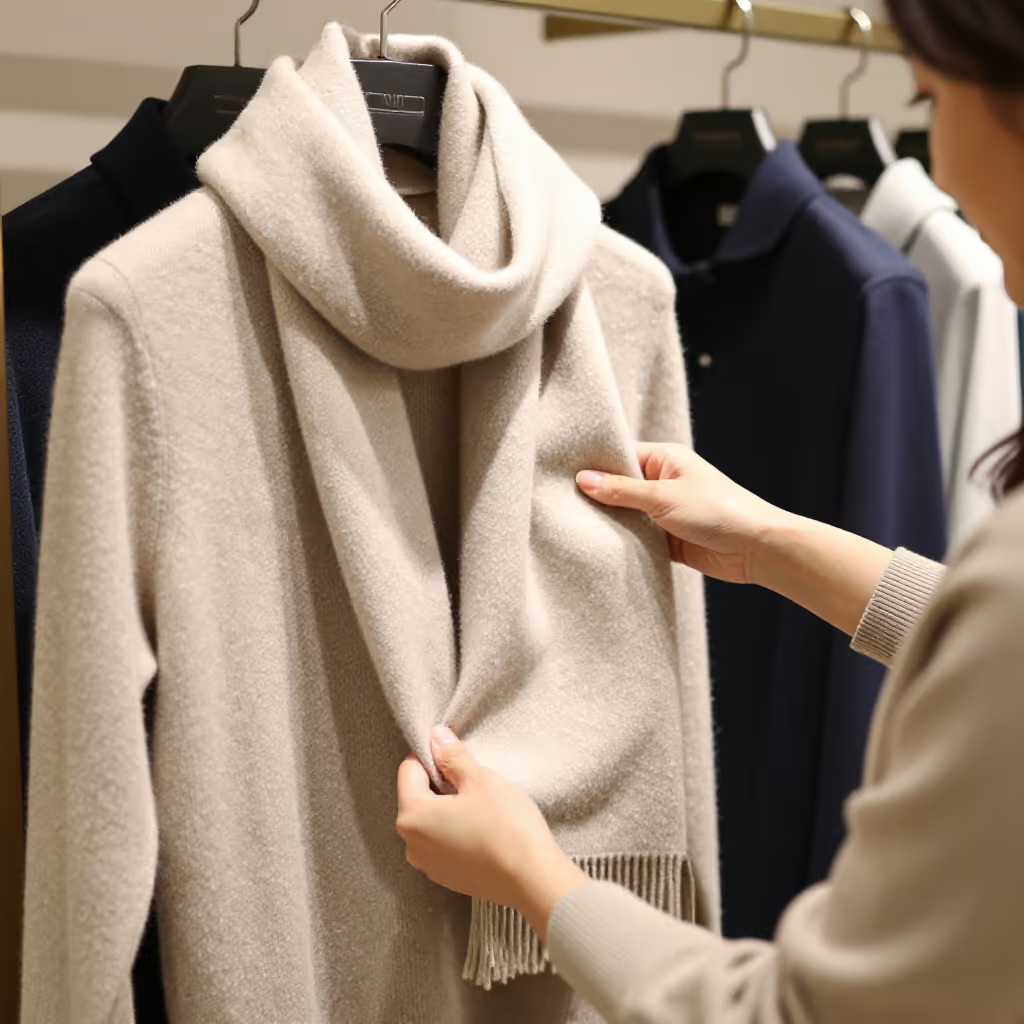
A very fine and soft wool obtained from the undercoat of the cashmere goat, or the fabric made from it.
example
Ihr neuer Schal aus reinem Kaschmir fühlt sich unglaublich weich an.
Her new scarf made of pure cashmere feels incredibly soft.
Usage tips
Uncountable noun
When 'Kaschmir' (cashmere) describes the material itself, it is an uncountable noun. It is then often used without an article.
EXAMPLE
Ich trage im Winter gerne Kaschmir, weil es so warm ist.
I like wearing cashmere in winter because it is so warm.
Use as a material
To describe what something is made of, you can use the preposition 'aus' (made of/from) or form a compound word. Both forms are very common.
EXAMPLE
Ich habe mir einen Pullover aus Kaschmir gekauft.
I bought myself a sweater made of cashmere.
Typical adjectives
Because cashmere is a luxury material, it is often described with adjectives such as 'weich' (soft), 'edel' (fine/elegant), 'fein' (fine), or 'teuer' (expensive).
EXAMPLE
Diese Decke ist aus edlem Kaschmir gefertigt.
This blanket is made from fine cashmere.
Compare with
near_synonym · confusable
Kaschmir vs Wolle
wool
'Wolle' and 'Kaschmir' both belong to the area of soft materials for clothing or fabrics. 'Wolle' is the more general term: it can come from sheep or other animals and can also mean yarn for knitting. 'Kaschmir' is a special, very fine and soft type of wool from the undercoat of the cashmere goat, or a fabric made from it. The words can be confused because cashmere is also wool. If you are speaking generally about yarn or material, 'Wolle' fits; if you mean the special, fine quality, 'Kaschmir' is more precise.
Kaschmir
Der Pullover aus Kaschmir ist sehr weich, deshalb trägt Lena ihn gern.
The cashmere sweater is very soft, so Lena likes wearing it.
Wolle
Zu Hause strickt Frau Müller einen Schal aus blauer Wolle.
At home, Mrs. Müller is knitting a scarf from blue wool.