

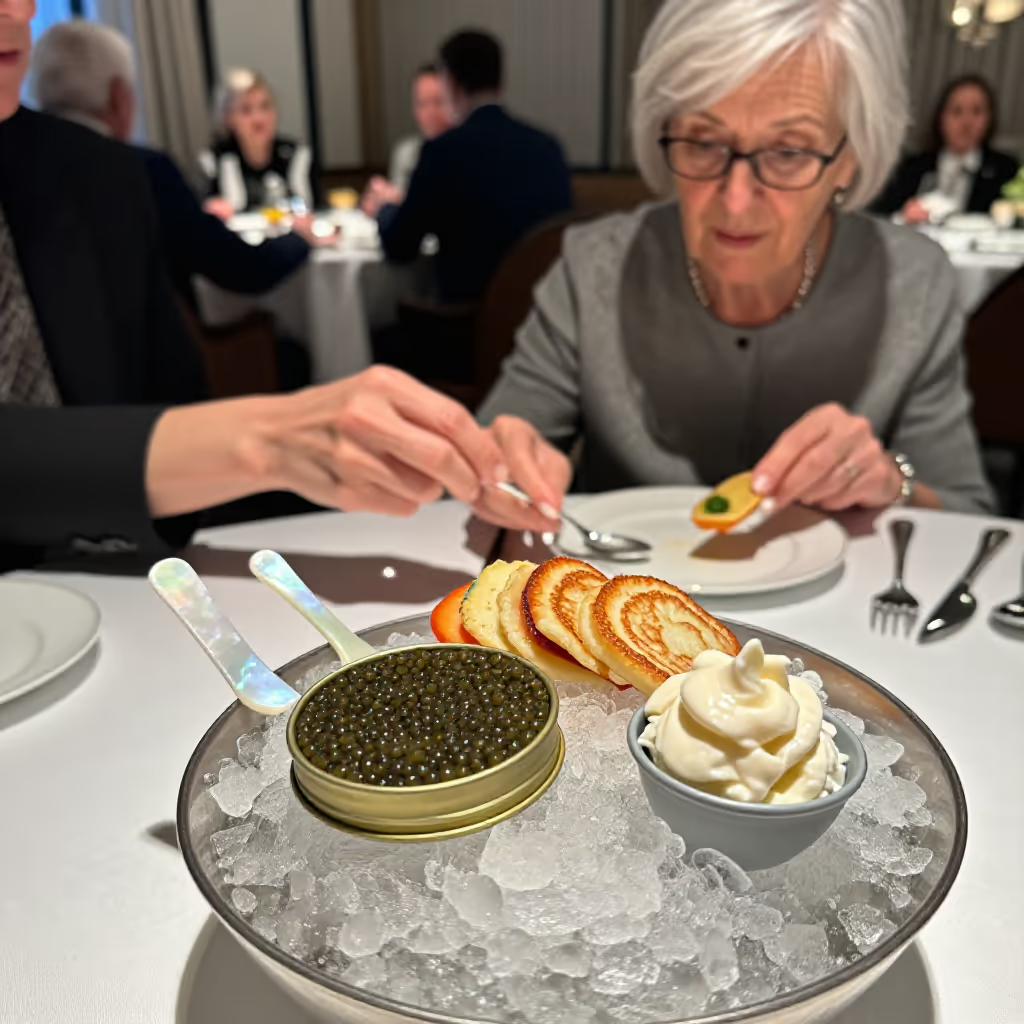
The cleaned and salted roe (fish eggs) of various species of sturgeon, considered an expensive delicacy.
example
Zu besonderen Anlässen gibt es bei uns echten Kaviar mit Blinis und Crème fraîche.
On special occasions, we have real caviar with blinis and crème fraîche.
Usage tips
Use as a mass noun
'Kaviar' (caviar) is a mass noun, similar to 'Milch' (milk) or 'Sand' (sand). It is usually used without an article in the singular when talking about the substance in general. The plural 'die Kaviare' is very rare and is used only by experts for different varieties.
EXAMPLE
Ich habe noch nie Kaviar probiert.
I have never tried caviar.
Cultural context
Real caviar (from sturgeon) is considered a symbol of luxury, wealth, and special occasions. It is often associated with celebrations such as New Year's Eve or exclusive parties.
EXAMPLE
Zur Feier des Tages bestellten sie eine Flasche Champagner und Kaviar.
To celebrate the day, they ordered a bottle of champagne and caviar.
Typical collocations
Caviar is often served in a particular way. Typical combinations are 'Kaviar mit Blinis' (caviar with blinis), 'mit Crème fraîche' (with crème fraîche), or 'auf kleinen Löffeln' (on small spoons).
EXAMPLE
Traditionell isst man Kaviar mit Blinis und einem Klecks Crème fraîche.
Traditionally, people eat caviar with blinis and a dollop of crème fraîche.
Context clues
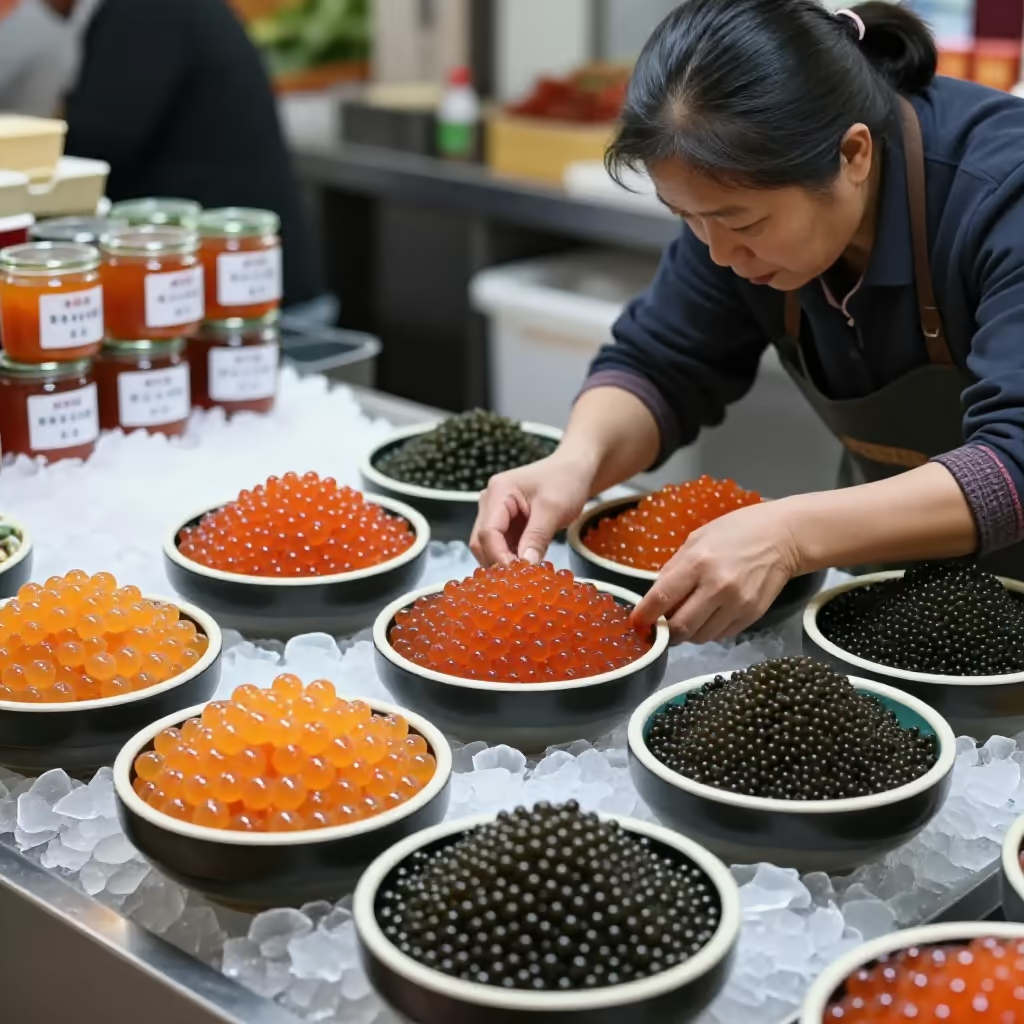
To refer to cheaper caviar from other fish, the fish species is usually named. Watch for additions such as 'Lachskaviar' (salmon caviar), 'Forellenkaviar' (trout caviar), or 'deutscher Kaviar' (German caviar; from lumpfish). If 'Kaviar' (caviar) appears on its own, it usually means the expensive sturgeon caviar.
EXAMPLE
Für das Sushi verwenden wir oft bunten Lachskaviar.
We often use colorful salmon caviar for the sushi.