


der Kelch
chalice
A drinking vessel with a tall stem, used especially for wine or on ceremonial and religious occasions.
EXAMPLE
Der Priester hob den goldenen Kelch während der Messe.
The priest raised the golden chalice during Mass.
chalice / calyx
Loading your saved state.
chalice
A drinking vessel with a tall stem, used especially for wine or on ceremonial and religious occasions.
Der Priester hob den goldenen Kelch während der Messe.
The priest raised the golden chalice during Mass.
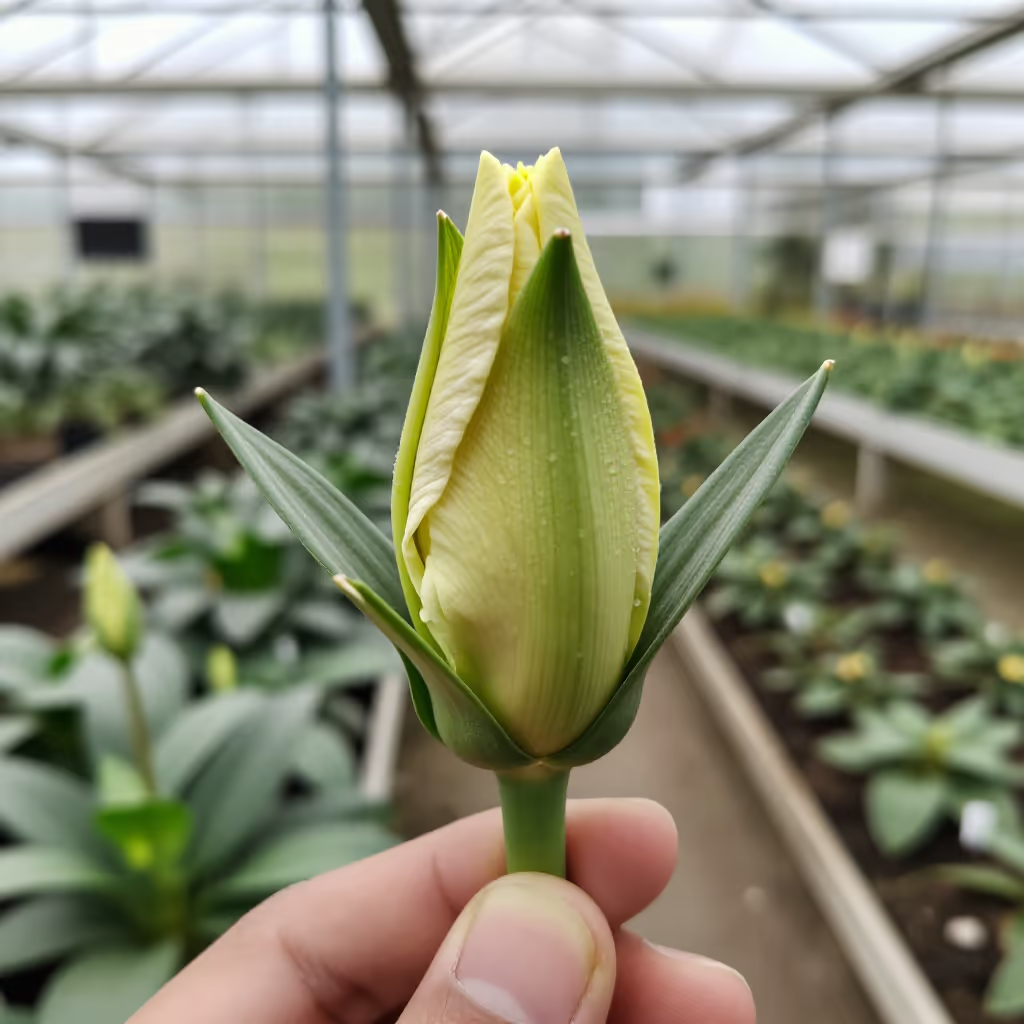
calyx
In botany, the set of sepals that enclose the flower before it blooms.
Der Kelch dieser Tulpe besteht aus drei grünen Kelchblättern.
The calyx of this tulip consists of three green sepals.

to be spared something
A fixed expression that means someone is spared a very unpleasant, difficult, or painful experience.
Ich dachte, ich müsste die ganze Nacht durcharbeiten, aber dieser Kelch ist zum Glück an mir vorübergegangen.
I thought I would have to work through the whole night, but fortunately I was spared that.
You can recognize the meaning of 'Kelch' (chalice/calyx) from the context. If it is about wine, a church, or a celebration, the drinking vessel is meant. In biological or gardening texts, it refers to the flower part. The expression 'an jemandem vorübergehen' (to pass someone by) points to the figurative meaning.
Er trank den Wein aus einem schweren Silberkelch.
He drank the wine from a heavy silver chalice.
The idiom 'der Kelch geht an jemandem vorüber' (someone is spared the chalice) has a fixed structure. The person who is spared the unpleasant experience is always in the dative after the preposition 'an'.
Ich dachte, ich muss am Wochenende arbeiten, aber dieser Kelch ist an mir vorübergegangen.
I thought I would have to work on the weekend, but I was spared that.
In its main meaning, 'Kelch' (chalice) is often used in fixed combinations, for example 'ein Kelch Wein' (a chalice/goblet of wine), 'aus einem Kelch trinken' (to drink from a chalice), or in a religious context as 'der heilige Kelch' (the Holy Chalice).
Zum Nachtisch bestellten wir uns einen Kelch süßen Dessertwein.
For dessert, we ordered a goblet of sweet dessert wine.
The botanical meaning of 'Kelch' (calyx) as part of a flower belongs to the technical language of biology. In everyday language, the word is rarely used in this sense.
Im Biologieunterricht haben wir gelernt, den Kelch einer Blüte zu identifizieren.
In biology class, we learned to identify the calyx of a flower.
cup / trophy
Pokal and Kelch can both refer to a large drinking vessel with a stem. In this sense, Pokal sounds more elevated or historical today and often emphasizes ornate decoration. Kelch focuses especially on the shape and is often suitable for ceremonial or religious use.
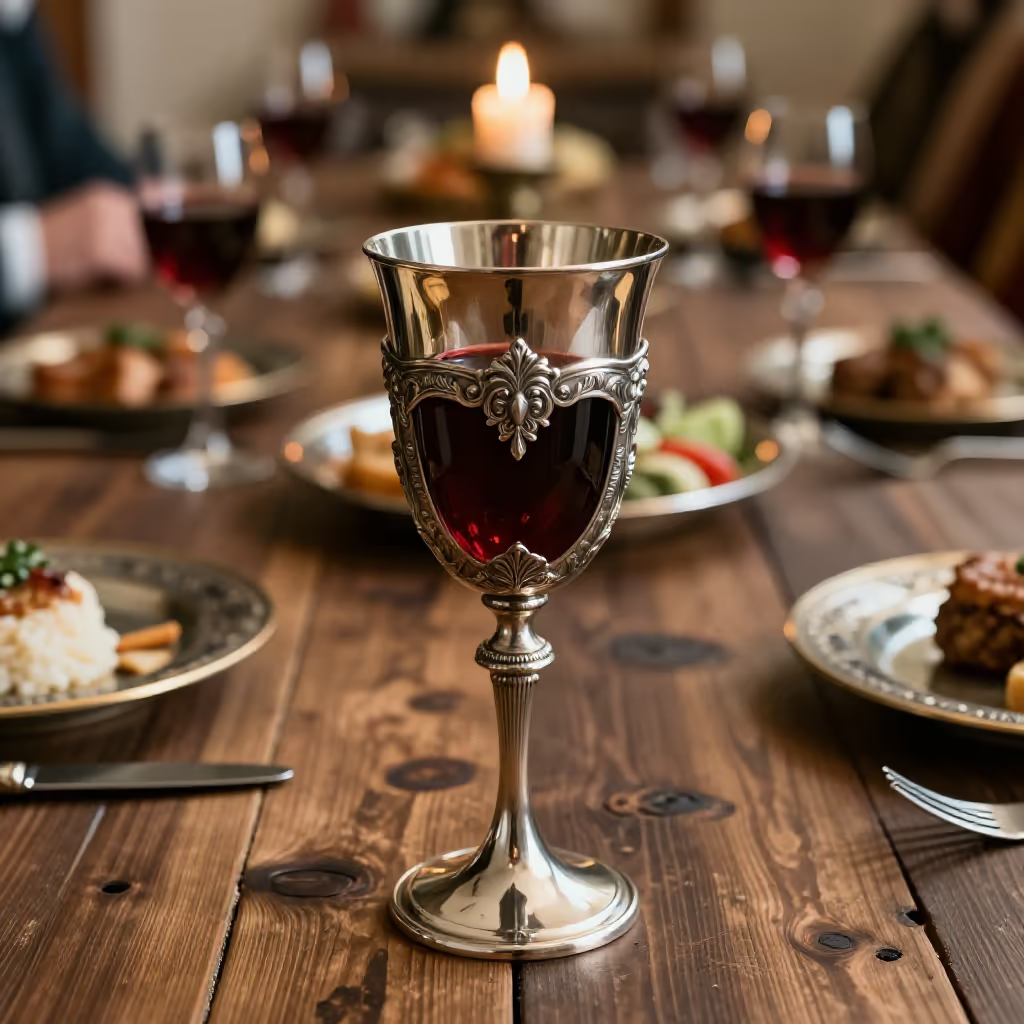
Bei der religiösen Feier trank der Priester Wein aus einem silbernen Kelch.
At the religious ceremony, the priest drank wine from a silver chalice.
Beim historischen Festmahl trank der Fürst Wein aus einem silbernen Pokal.
At the historical feast, the prince drank wine from a silver goblet.