A mason’s tool with a flat blade and a handle, used for applying and smoothing mortar or plaster.
example
Der Maurer verstrich den Mörtel mit einer schnellen Bewegung seiner Kelle auf dem Ziegelstein.
The mason spread the mortar onto the brick with a quick movement of his trowel.
Usage tips
Context is key
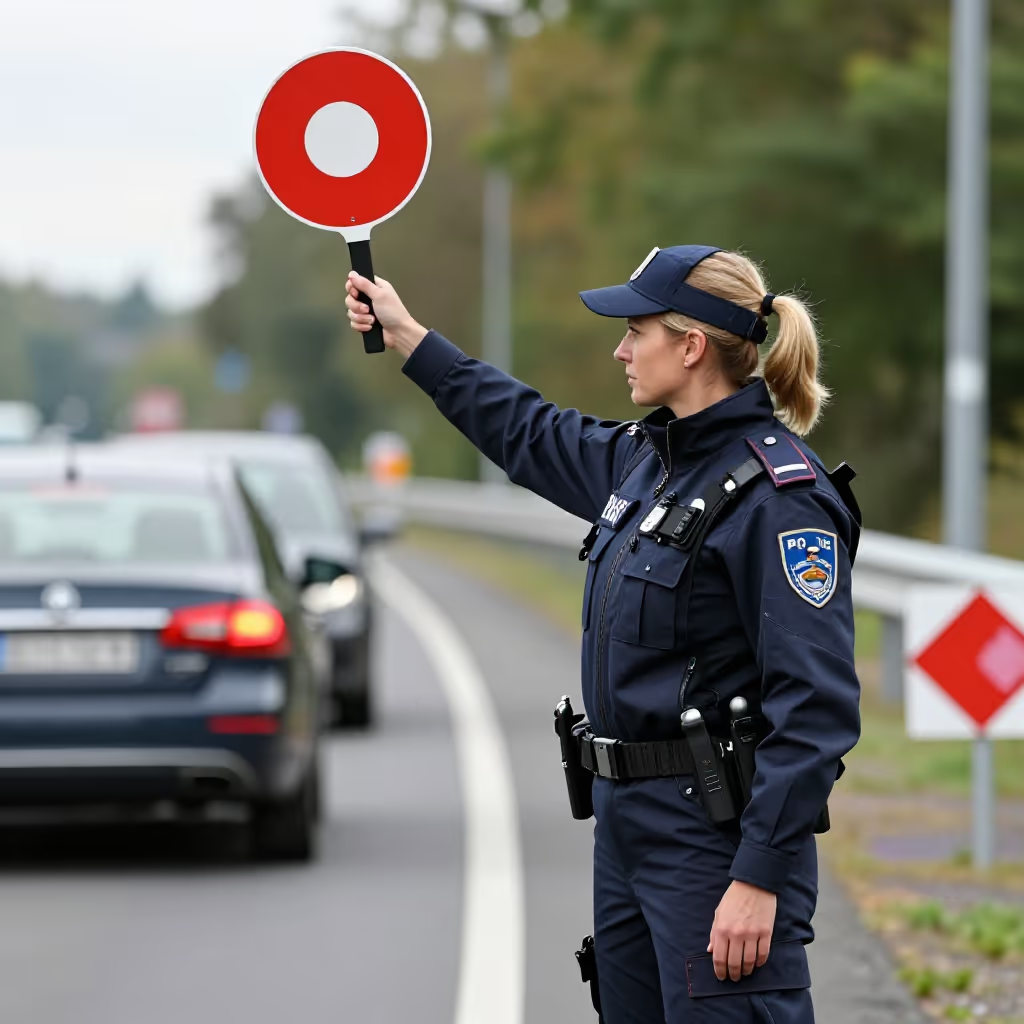
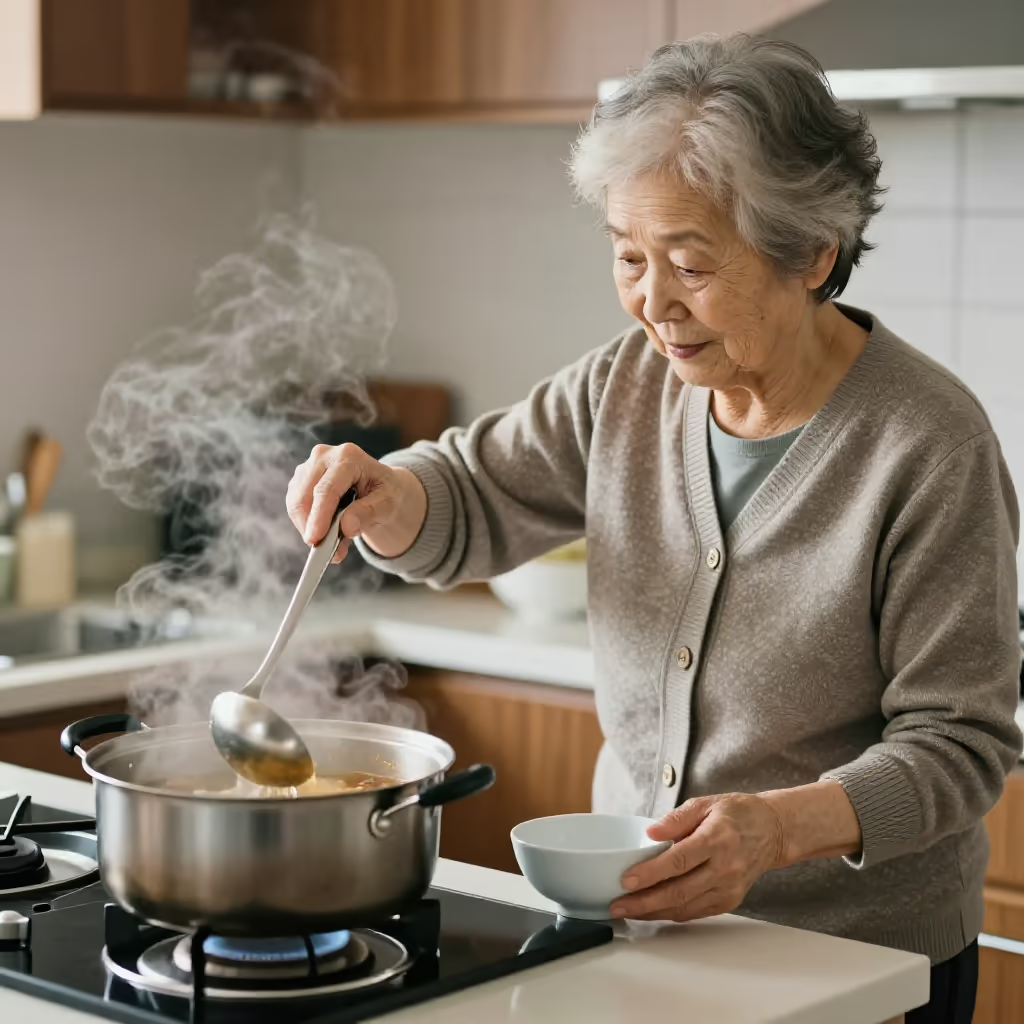
The word 'Kelle' has three very different meanings. The context always makes clear what is meant: construction work (mason’s tool), kitchen (soup ladle), or traffic (police signal).
EXAMPLE
Gib mir mal bitte die Kelle, aber nicht die für die Suppe!
Please pass me the Kelle, but not the one for the soup!
Context: construction site
In this meaning, the 'Kelle' (trowel) is part of the toolkit of masons and plasterers. It is used to apply and spread mortar or plaster.
EXAMPLE
Der Handwerker glättete den frischen Putz an der Wand mit seiner Kelle.
The craftsman smoothed the fresh plaster on the wall with his trowel.
Context: kitchen
In the kitchen, the 'Kelle' (ladle) is a large serving spoon. It is typically used for liquid or mushy foods such as soup or sauce.
EXAMPLE
Er nahm eine große Kelle Eintopf aus dem Topf.
He took a large ladleful of stew from the pot.
Context: traffic control
In this context, the 'Kelle' (stop paddle) is a stop signal, usually used by the police. Typical verbs are 'die Kelle heben' (to raise the stop paddle) or 'herauswinken' (to wave someone over / out of traffic).
EXAMPLE
Als der Polizist die Kelle hob, musste der LKW-Fahrer rechts ranfahren.
When the police officer raised the stop paddle, the truck driver had to pull over to the right.
Compare with
near_synonym · confusable
Kelle vs Löffel
spoon
'der Löffel' and 'die Kelle' can both be utensils or aids for eating and serving. A spoon is usually smaller and is used directly for eating, for example soup, yogurt, or porridge. A ladle is larger, often has a long handle, and is used more for scooping soup or sauce from a pot and serving it. Learners may confuse the words because both have a bowl and a handle. As a practical rule: you eat with a 'Löffel', and you usually serve with a 'Kelle'.
Kelle
Mit der Kelle füllt Paul die Suppe in die tiefen Teller.
Paul uses the ladle to fill the deep plates with soup.
Löffel
Sie nimmt einen Löffel, weil der Joghurt zu weich für die Gabel ist.
She takes a spoon because the yogurt is too soft for a fork.