

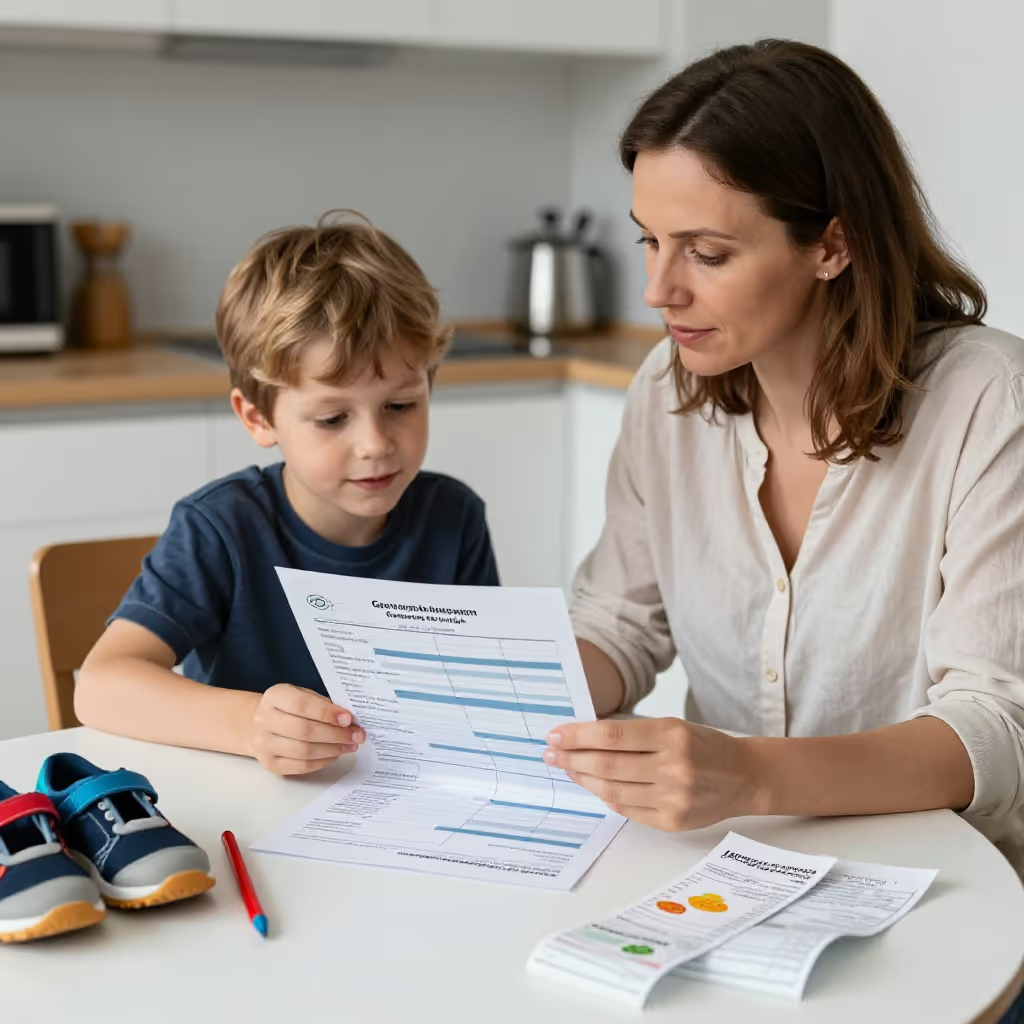
A state financial benefit in Germany and other countries that is paid to parents or legal guardians to support them with the costs of providing for their children.
example
Familien beantragen das Kindergeld nach der Geburt ihres Kindes bei der Familienkasse.
Families apply for child benefit at the Family Benefits Office after the birth of their child.

Usage tips
Word composition
The word is a clear compound of 'Kinder' (plural of Kind, children) and 'das Geld' (money). The article 'das' is determined by the head noun 'Geld'. Literally, it therefore means 'money for children'.
EXAMPLE
Das Kindergeld wird monatlich auf das Konto der Eltern überwiesen.
The child benefit is transferred monthly to the parents' account.
Cultural context
'Kindergeld' (child benefit) is a fixed term in the German social welfare system. It refers to a state benefit and is not a general word for pocket money that children receive from their parents.
EXAMPLE
In Deutschland ist die Familienkasse für die Auszahlung des Kindergeldes zuständig.
In Germany, the Family Benefits Office is responsible for paying out child benefit.
Typical verbs
In connection with 'Kindergeld' (child benefit), verbs are mostly used that describe a bureaucratic process. The most common are 'beantragen' (to apply for), 'bekommen' (to get), 'erhalten' (to receive), and 'auszahlen' (to pay out).
EXAMPLE
Wir müssen das Kindergeld noch vor dem Umzug beantragen.
We still have to apply for child benefit before the move.
Fixed expression
A very common phrase is 'Anspruch auf Kindergeld haben' (to be entitled to child benefit). It means that you have the legal right to receive this benefit. The preposition 'auf' is fixed here.
EXAMPLE
Wer in Deutschland arbeitet und Kinder hat, hat in der Regel Anspruch auf Kindergeld.
Anyone who works in Germany and has children is generally entitled to child benefit.
Compare with
confusable
Kindergeld vs Taschengeld
pocket money
'das Taschengeld' and 'das Kindergeld' both have to do with money for children. But they mean very different things. Children or teenagers usually receive 'Taschengeld' (pocket money) directly from their parents so that they can pay for their own small expenses. Parents or legal guardians receive 'Kindergeld' (child benefit) from the state so that they have support with the costs of the child. Learners confuse the words because both contain '-geld' and are connected with children. In practical terms: the child often uses 'Taschengeld', while the parents receive 'Kindergeld'.
Kindergeld
Das Kindergeld wird jeden Monat auf das Konto der Eltern überwiesen.
The child benefit is transferred to the parents' account every month.
Taschengeld
Meine Tochter spart ihr Taschengeld für ein neues Fahrrad.
My daughter is saving her pocket money for a new bike.