

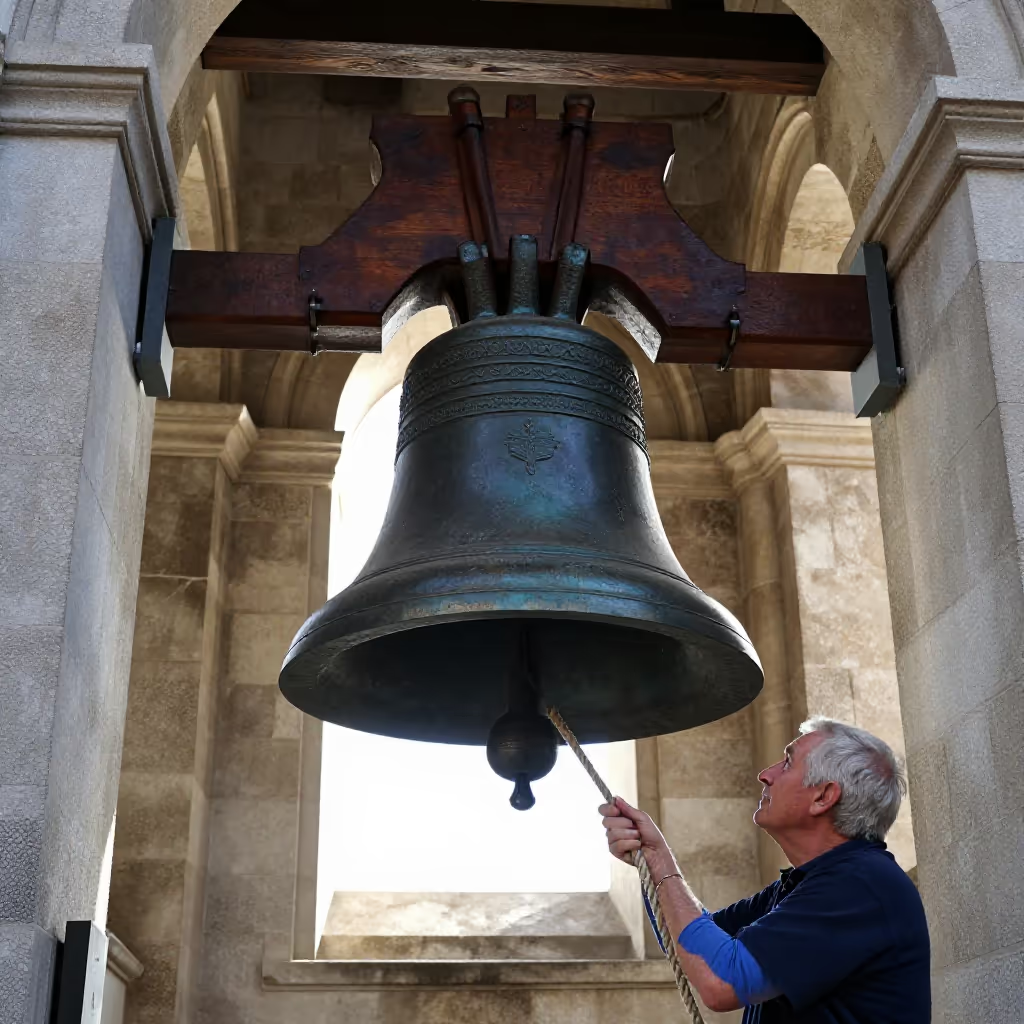
A large bell, usually cast from bronze, that hangs in a church tower. It is rung to call the congregation to a church service, indicate the time, or accompany special events such as weddings and funerals.
example
Jeden Sonntag um zehn Uhr hört man die Kirchenglocken in der ganzen Stadt läuten.
Every Sunday at ten o'clock, you can hear the church bells ringing throughout the whole town.
Usage tips
Compound word
This word is a compound of 'Kirche' (church) and 'Glocke' (bell). The '-n' is a linking element that connects the two nouns.
EXAMPLE
Der Klang der alten Kirchenglocke ist sehr tief.
The sound of the old church bell is very deep.
Typical verbs
The typical verb for the sound of a bell is 'läuten' (to ring). When the bell indicates the hour, the verb 'schlagen' (to strike) is also used.
EXAMPLE
Die Kirchenglocken läuten zur Hochzeit.
The church bells are ringing for the wedding.
Word family
The sound or action of ringing is referred to as 'das Geläut' (the peal of bells) or 'das Läuten' (the ringing). These nouns are closely connected with the church bell.
EXAMPLE
Das Läuten der Kirchenglocken weckte mich am Sonntagmorgen.
The ringing of the church bells woke me on Sunday morning.
Compare with
near_synonym · confusable
Kirchenglocke vs Glocke
bell
'Glocke' and 'Kirchenglocke' can both refer to a large metal bell. 'Glocke' is more general and can be used in many contexts, for example in a church, at a door, or as a signal. 'Kirchenglocke' is more specific: it hangs in a church tower and is rung for church services, times of day, or special events. Learners may confuse the words because a 'Kirchenglocke' is always a 'Glocke'. But not every 'Glocke' is a 'Kirchenglocke'.
Kirchenglocke
Am Sonntagmorgen weckt mich oft die Kirchenglocke vom Marktplatz.
On Sunday mornings, the church bell from the marketplace often wakes me up.
Glocke
Vor dem Unterricht läutet die Glocke auf dem Schulhof.