

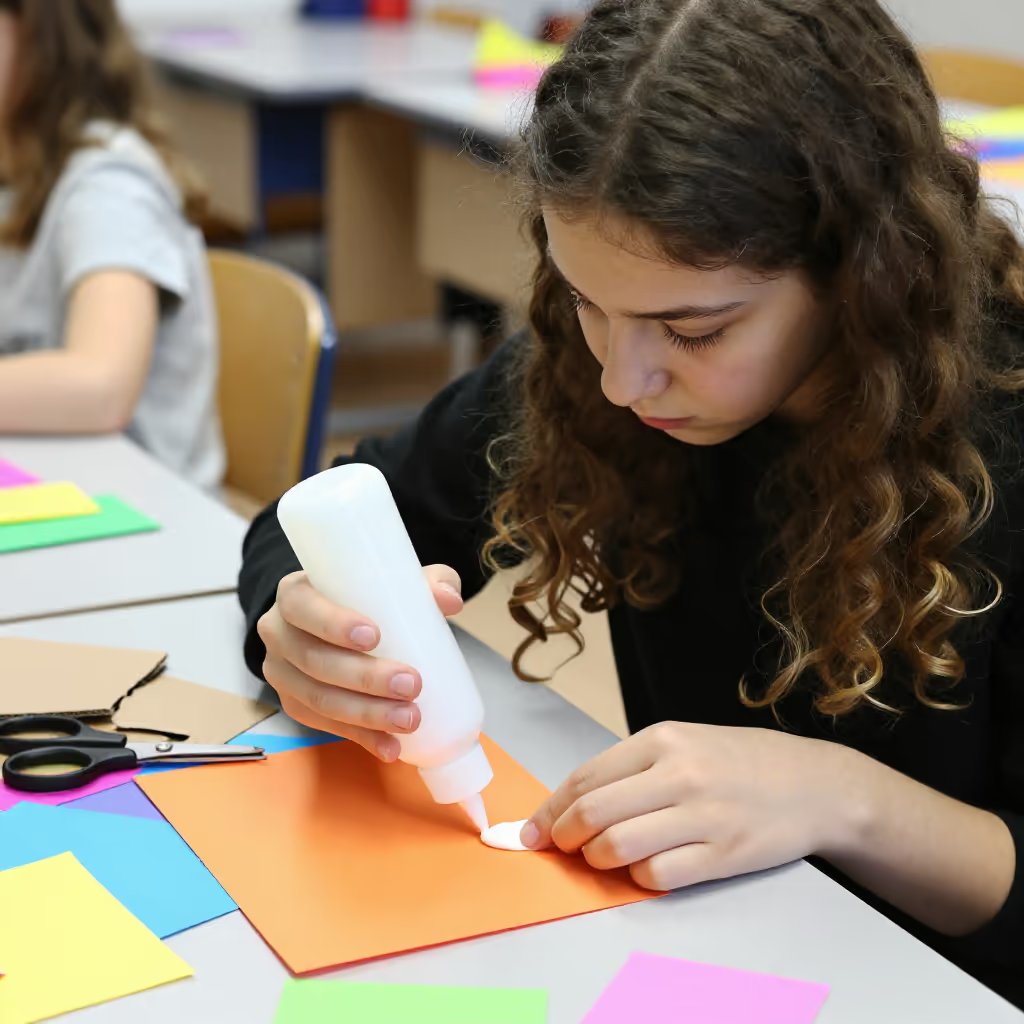
die Klebe
glue
A colloquial, casual term for adhesive or glue.
EXAMPLE
Hast du mal 'n bisschen Klebe für mich? Das Papier ist gerissen.
Do you have a bit of glue for me? The paper is torn.
glue
Loading your saved state.
glue
A colloquial, casual term for adhesive or glue.
Hast du mal 'n bisschen Klebe für mich? Das Papier ist gerissen.
Do you have a bit of glue for me? The paper is torn.
“Die Klebe” (glue) is a colloquial word. Use it in informal conversations with friends, but not in formal or written contexts.
Gib mir mal die Klebe rüber, ich muss das Plakat reparieren.
Pass me the glue, I need to fix the poster.
The noun “die Klebe” (glue) is derived directly from the verb “kleben” (to stick/glue something with adhesive). This connection helps you understand and remember the meaning.
Dieser Umschlag klebt nicht mehr richtig.
This envelope no longer sticks properly.
“Klebe” (glue) is an uncountable noun. It is therefore often used with quantity expressions such as “etwas” (some), “ein bisschen” (a little bit), or “ein Tropfen” (a drop).
Für diese kleine Bastelei brauchen wir nur ein bisschen Klebe.
For this little craft project, we only need a little bit of glue.
glue / sticker
Kleber and Klebe can refer to the same adhesive. Kleber is the usual everyday term, while Klebe sounds much more casual and less standard. Kleber is therefore more appropriate in neutral situations; Klebe is also possible in a very informal conversation.
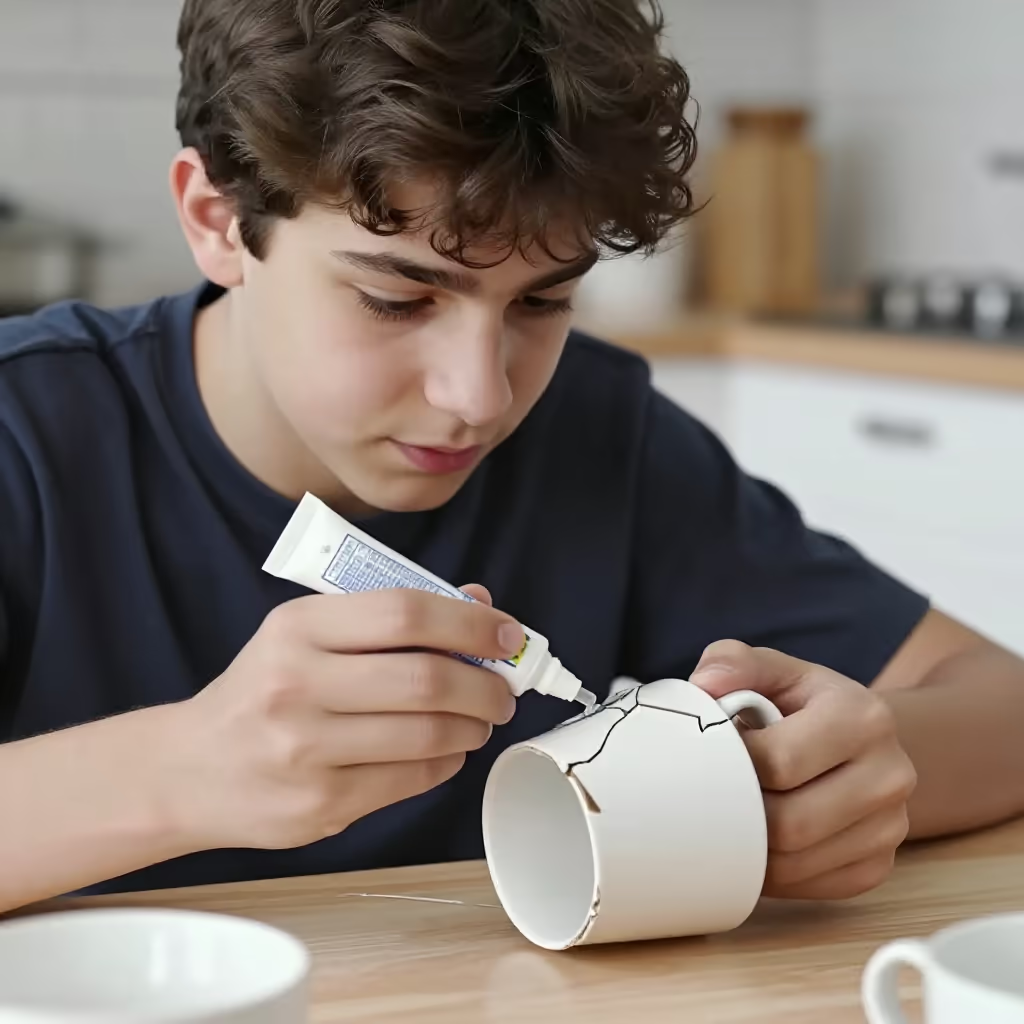
Unter Freunden fragt Mia salopp, wo die Klebe liegt.
Among friends, Mia casually asks where the glue is.
Im Bastelkurs fragt Mia, wo der Kleber liegt.
In the arts and crafts class, Mia asks where the glue is.