

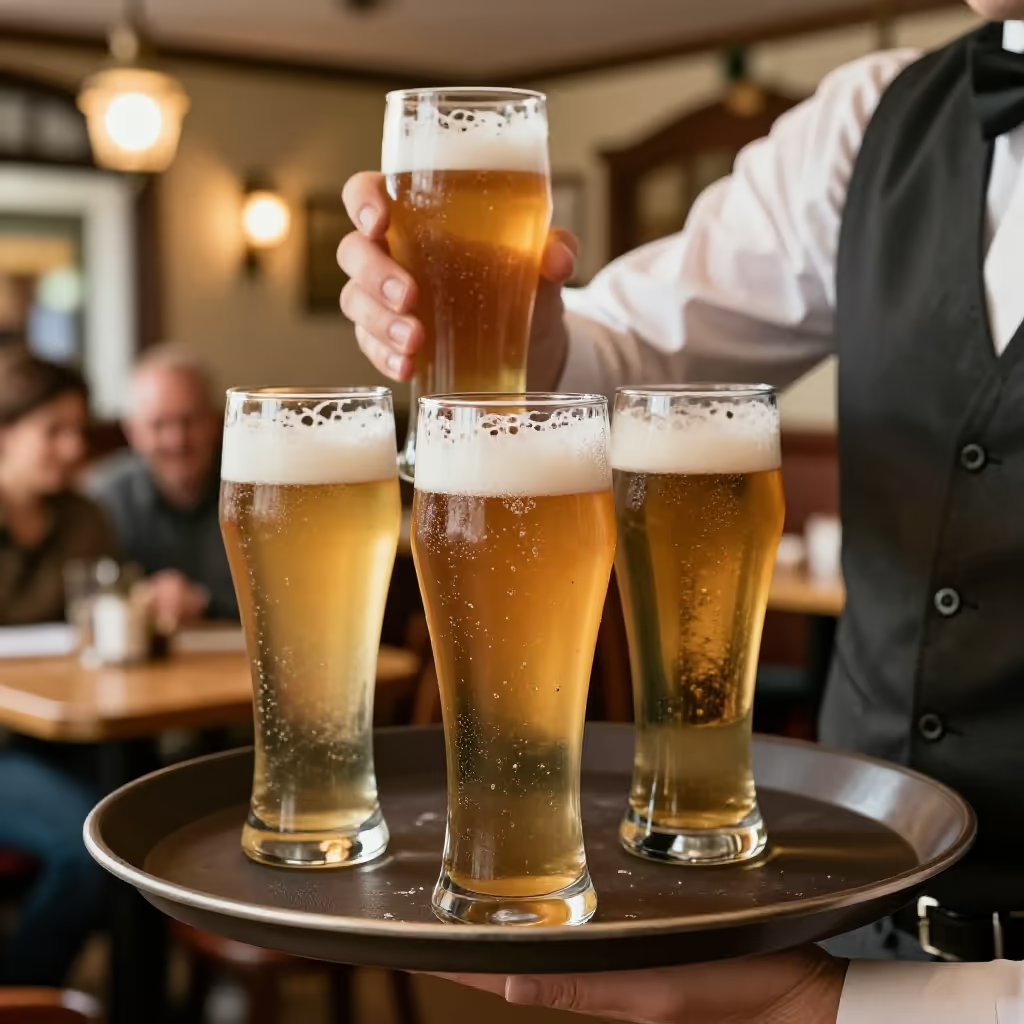
A pale, top-fermented beer traditionally brewed in and around Cologne. It is typically served in a slim, cylindrical glass called a 'Stange' (Kölsch glass).
example
Wenn man in Köln ist, sollte man unbedingt ein frisches Kölsch probieren.
When you're in Cologne, you should definitely try a fresh Kölsch beer.

Usage tips
Word structure
The word 'Kölsch' is derived from the name of the city 'Köln' (Cologne). The ending '-sch' is often used to express belonging to a city or region.
EXAMPLE
Die kölsche Lebensart ist für ihre Offenheit bekannt.
The Cologne way of life is known for its openness.
Context clue
You can tell whether the beer or the dialect is meant from the verb. Verbs like 'trinken' (to drink), 'bestellen' (to order), or 'zapfen' (to tap) refer to the beer. Verbs like 'sprechen' (to speak), 'verstehen' (to understand), or 'singen' (to sing) refer to the dialect.
EXAMPLE
Er bestellt ein Kölsch und fängt an, auf Kölsch zu erzählen.
He orders a Kölsch beer and starts telling a story in Kölsch.
Typical collocations
When referring to the beer, you often hear 'ein Kölsch bestellen' (to order a Kölsch beer) or 'ein Glas Kölsch' (a glass of Kölsch). The typical narrow beer glass for it is called 'die Stange' (Kölsch glass).
EXAMPLE
Der Kellner brachte uns sofort zwei frische Kölsch in hohen Stangen.
The waiter immediately brought us two fresh Kölsch beers in tall Stangen.
Typical collocations
When talking about the dialect, typical phrases are 'Kölsch sprechen' (to speak Kölsch), 'Kölsch verstehen' (to understand Kölsch), or 'auf Kölsch singen' (to sing in Kölsch), which is especially important during Cologne Carnival.
EXAMPLE
Viele Kölner Karnevalslieder werden traditionell auf Kölsch gesungen.
Many Cologne Carnival songs are traditionally sung in Kölsch.
Compare with
near_synonym · confusable
Kölsch vs Lager
warehouse / camp
'das Lager' and 'das Kölsch' can both appear in a drinks context, but in the meanings given here they do not mean the same thing. 'Kölsch' is a specific pale beer from Cologne and the surrounding area. 'Lager' here means a place where goods or supplies are stored. The words can be confused when talking in everyday life about beer, drinks, or stock. For the drink, you say 'Kölsch'; for the storage place, you say 'Lager'.
Kölsch
In Köln bestellt Paul ein Kölsch in einem schmalen Glas.
In Cologne, Paul orders a Kölsch in a narrow glass.
Lager
Im Lager stehen mehrere Kisten mit Getränken für das Stadtfest.
There are several crates of drinks in the warehouse for the town festival.