


A cushion filled with soft material such as feathers or foam, on which you place your head when sleeping or lying down.
example
Ich brauche ein neues Kopfkissen, weil mein altes zu flach ist.
I need a new pillow because my old one is too flat.
Usage tips
Word composition
The word is built very logically. It consists of 'Kopf' (head) and 'Kissen' (pillow). So it is literally a pillow for the head.
EXAMPLE
Ohne mein Kopfkissen kann ich nicht gut schlafen.
I can't sleep well without my pillow.
Typical verbs
In everyday life, a 'Kopfkissen' (pillow) is often 'aufgeschüttelt' (fluffed up) to make it looser again. You can also 'beziehen' (put a cover on) a pillow, which means putting a clean pillowcase over it.
EXAMPLE
Jeden Morgen schüttle ich mein Kopfkissen kräftig auf.
Every morning I give my pillow a good fluff.
Regional variant
In Austria, the word 'der Polster' is also very common for 'Kopfkissen' (pillow). In Germany, 'Polster' is used more for sofa cushions or decorative cushions.
EXAMPLE
Für die Reise habe ich meinen eigenen Polster mitgenommen.
I took my own pillow with me for the trip.
Compare with
near_synonym · confusable
Kopfkissen vs Kissen
pillow / cushion
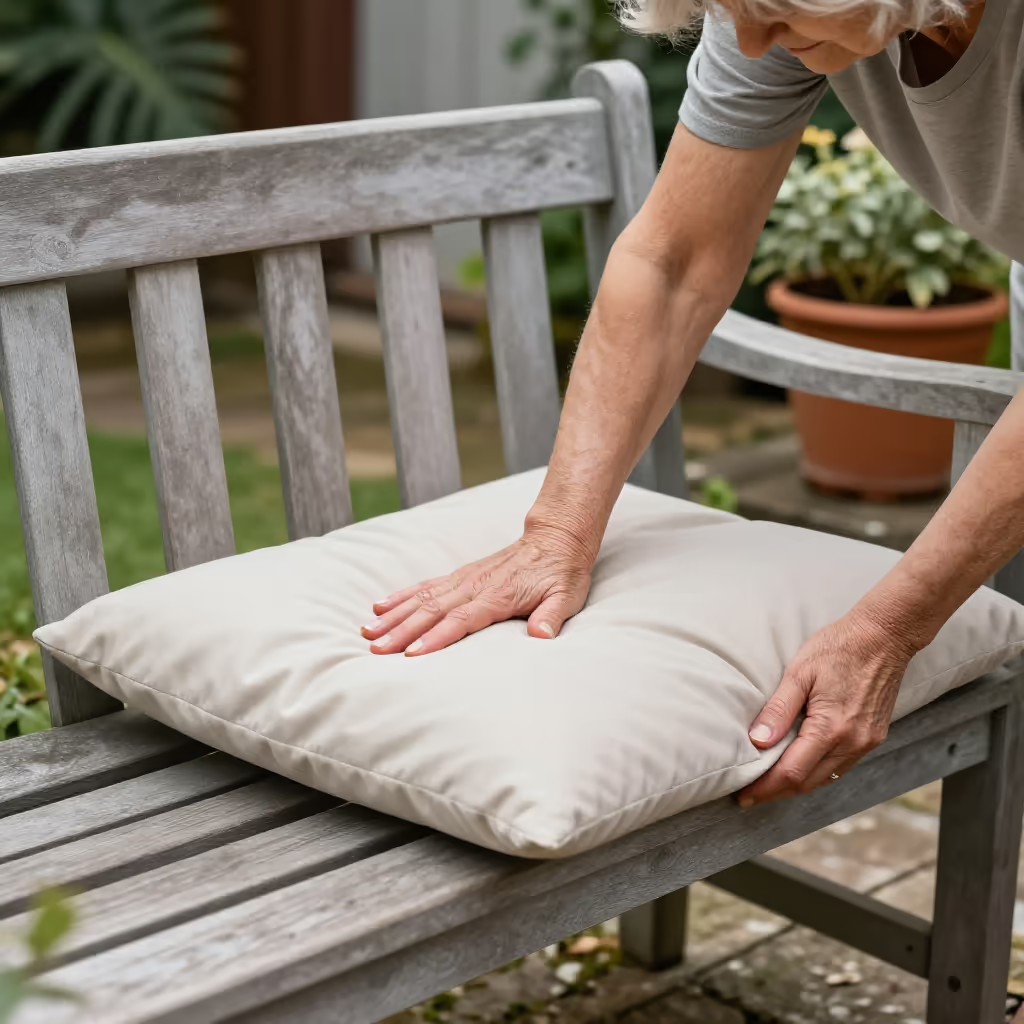
'das Kissen' and 'das Kopfkissen' can both mean the soft thing you rest your head on when sleeping. 'Kopfkissen' is more precise and clearly says that it is for the head in bed. 'Kissen' is more general: it can also be a sofa cushion, seat cushion, or decorative cushion. The words are easy to confuse because in the bedroom people often simply say 'Kissen' and mean a 'Kopfkissen'. If the context is not clear, 'Kopfkissen' is more precise.
Kopfkissen
Nach der Arbeit wechsle ich das Kopfkissen, weil ich besser schlafen will.
After work, I change the pillow because I want to sleep better.
Kissen
Ich lege ein kleines Kissen auf den Stuhl, damit er bequemer ist.
I put a small cushion on the chair to make it more comfortable.